Jupiter beams bright, Saturn and the Moon cozy up, and the Beehive Cluster appears
Jupiter is at its biggest and brightest all year, the Moon and Saturn pair up, and the Beehive Cluster buzzes into view.
Skywatching Highlights
Jan. 10: Jupiter at opposition
Jan. 23: Saturn and Moon conjunction
Jan. (throughout): Beehive Cluster
Transcript
Jupiter is at its biggest and brightest
The Moon and Saturn share the sky
And the beehive cluster makes an appearance
That’s what’s up, this January
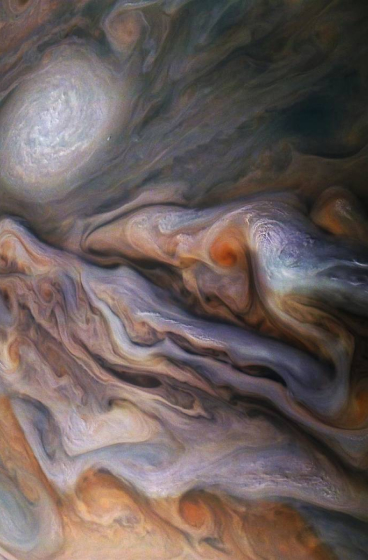
January 10, Jupiter will be at its most brilliant of the entire year!
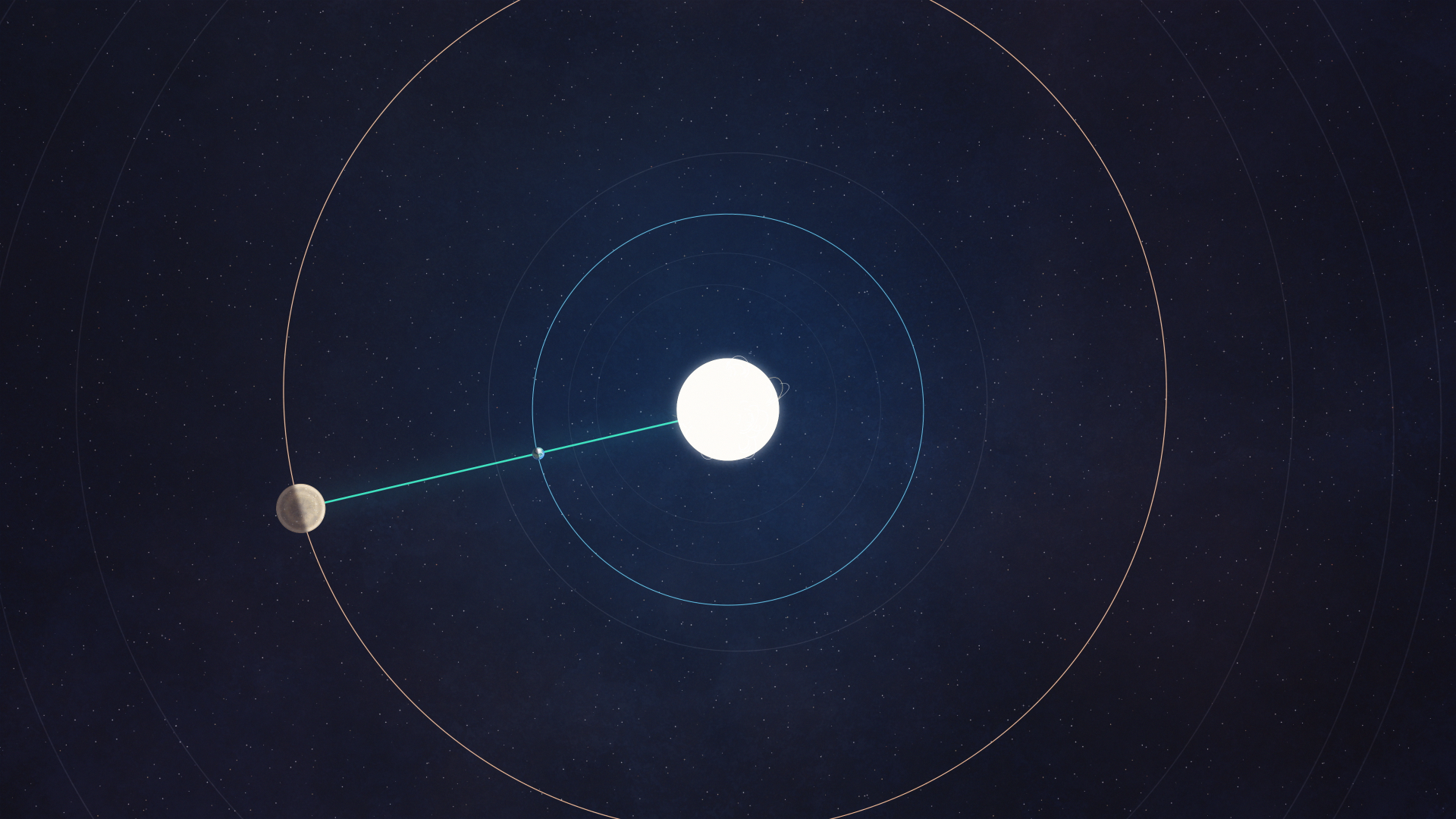
This night, Jupiter will be at what’s called “opposition,” meaning that Earth will be directly between Jupiter and the Sun.
NASA/JPL-Caltech
In this alignment, Jupiter will appear bigger and brighter in the night sky than it will all year – talk about starting off the new year bright!
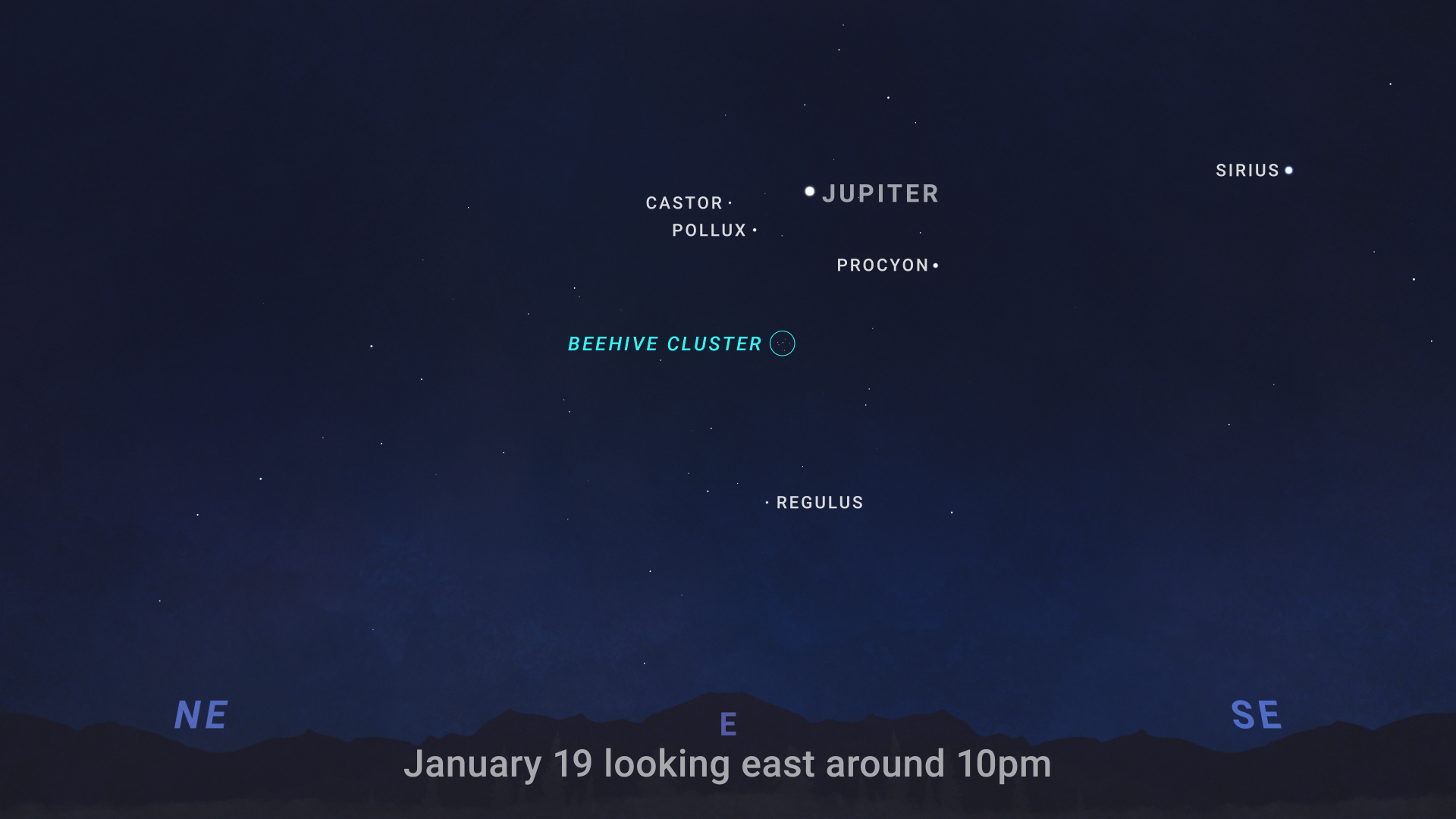
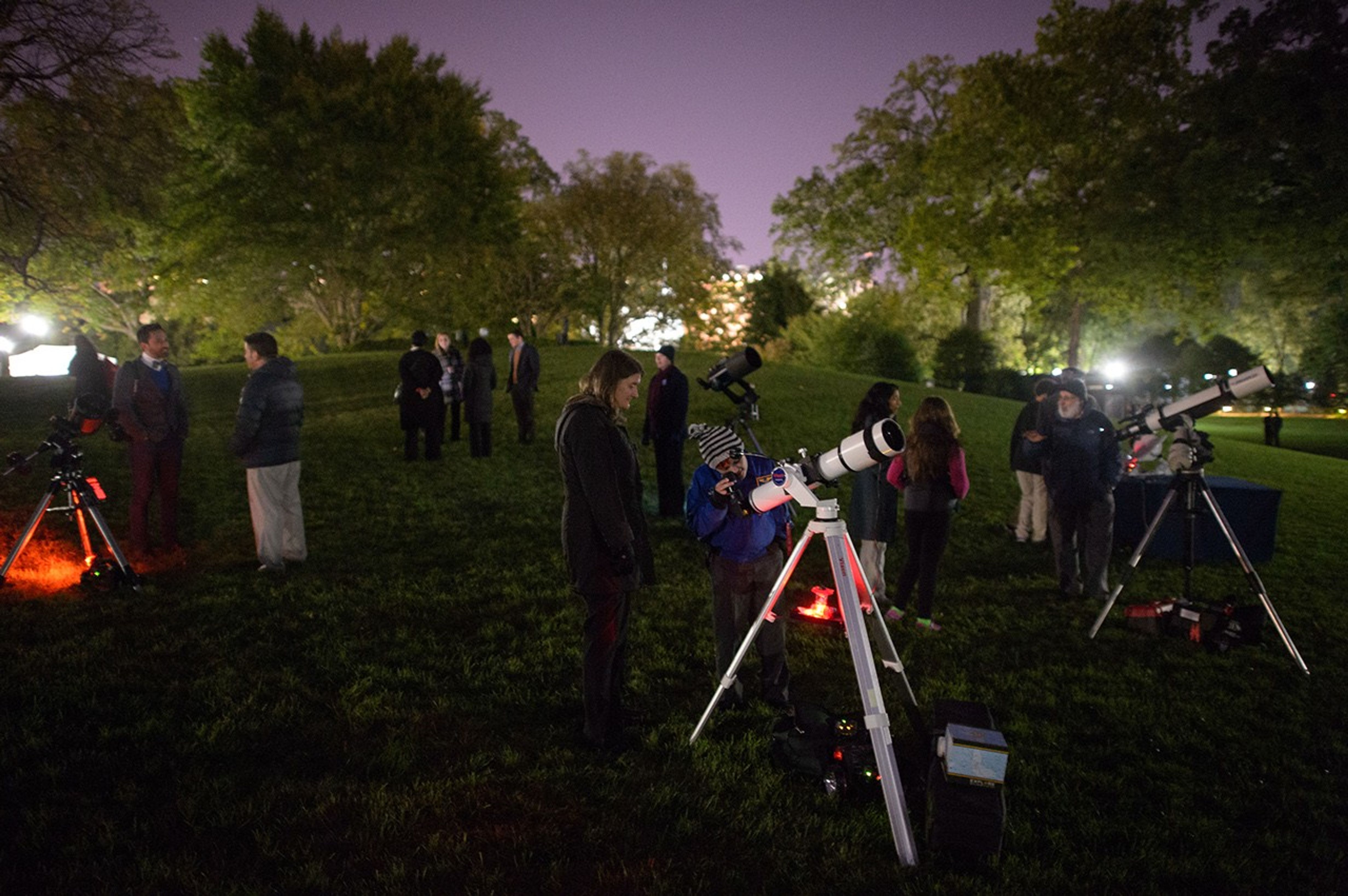
To see Jupiter at its best this year, look to the east and all evening long, you’ll be able to see the planet in the constellation Gemini. It will be one of the brightest objects in the night sky (only the moon and Venus will be brighter)
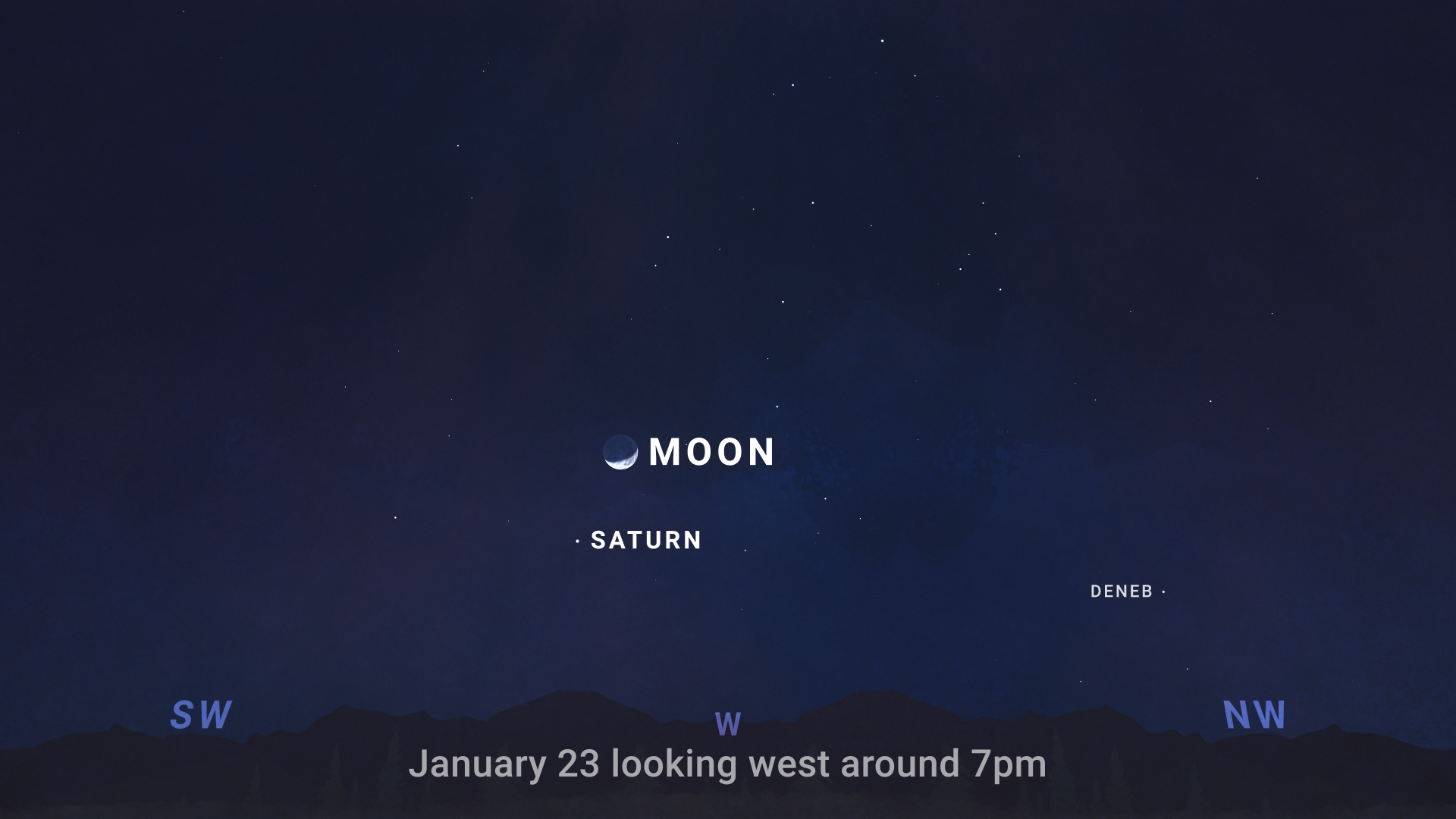
Saturn and the Moon will share the sky on January 23rd as part of a conjunction!
NASA/JPL-Caltech
A conjunction is when objects in the sky look close together even though they’re actually far apart.
To spot the pair, look to the west and you’ll see Saturn just below the moon, sparkling in the night sky.
The beehive cluster will be visible in the night sky throughout January!
The beehive cluster, more formally known as Messier 44, or M44, is made of at least 1,000 stars
It’s an open star cluster, meaning it’s a loosely-bound group of stars. There are thousands of open star clusters like the beehive in the Milky Way Galaxy!
NASA/JPL-Caltech
To see the beehive cluster, look to the eastern night sky after sunset and before midnight throughout the month – especially great nights to spot the cluster are around the middle of January when the cluster isn’t too high or low in the sky to see.
With dark skies you might be able to spot the beehive with just your eyes, but binoculars or a small telescope will help.
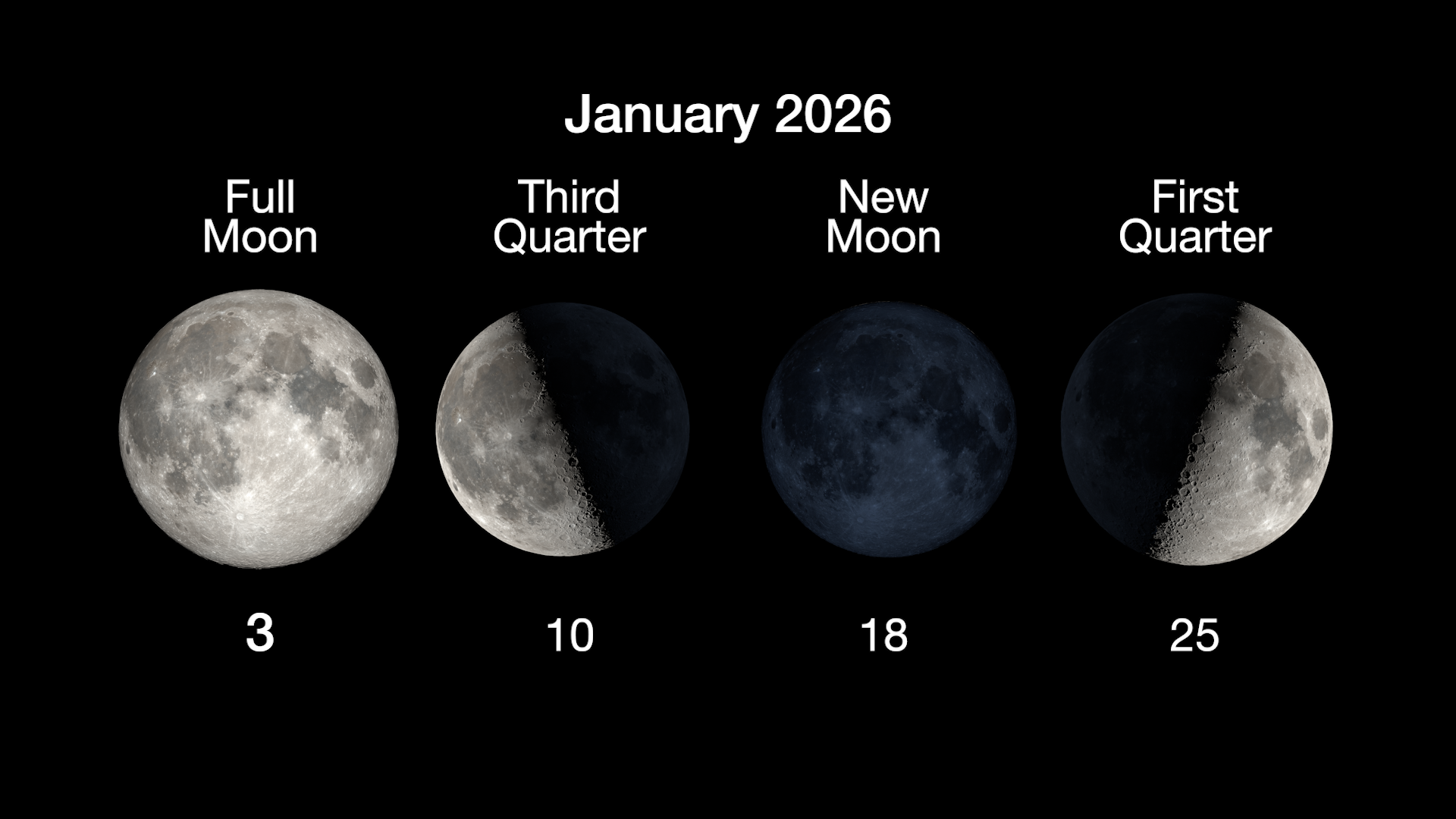
Here are the phases of the Moon for January.
NASA/JPL-Caltech
You can stay up to date on all of NASA’s missions exploring the solar system and beyond at science.nasa.gov.
I’m Chelsea Gohd from NASA’s Jet Propulsion Laboratory, and that’s What’s Up for this month.
NASA announced Monday the selection of industry proposals to advance technologies for the agency’s Habitable Worlds Observatory concept – the first mission that would directly image Earth-like planets around stars like our Sun and study the chemical composition of their atmospheres for signs of life. This flagship space telescope also would enable wide-ranging studies of our universe and support future human exploration of Mars, our solar system, and beyond.
“The Habitable Worlds Observatory is exactly the kind of bold, forward-leaning science that only NASA can undertake,” said NASA Administrator Jared Isaacman. “Humanity is waiting for the breakthroughs this mission is capable of achieving and the questions it could help us answer about life in the universe. We intend to move with urgency, and expedite timelines to the greatest extent possible to bring these discoveries to the world.”
To achieve its science goals, the Habitable Worlds Observatory would need a stable optical system that moves no more than the width of an atom while it conducts observations. The mission also would require a coronagraph – an instrument that blocks the light of a star to better see its orbiting planets – thousands of times more capable than any space coronagraph ever built. The Habitable Worlds Observatory would be designed to allow servicing in space, to extend its lifetime and bolster its science over time.
To further the readiness of these technologies, NASA has selected proposals for three-year, fixed-price contracts from the following companies:
Astroscale U.S. Inc., Denver
BAE Systems Space and Mission Systems, Inc., Boulder, Colorado
Busek Co. Inc, Natick, Massachusetts
L3Harris Technologies Inc., Rochester, New York
Lockheed Martin Inc., Palo Alto, California
Northrop Grumman Inc., Redondo Beach, California
Zecoat Co. Inc., Granite City, Illinois
“Are we alone in the universe? is an audacious question to answer, but one that our nation is poised to pursue, leveraging the groundwork we’ve laid from previous NASA flagship missions. With the Habitable Worlds Observatory, NASA will chart new frontiers for humanity’s exploration of the cosmos,” said Shawn Domagal-Goldman, director of the Astrophysics Division at NASA Headquarters in Washington. “Awards like these are a critical component of our incubator program for future missions, which combines government leadership with commercial innovation to make what is impossible today rapidly implementable in the future.”
The newly selected proposals build on previous industry involvement, which began in 2017 under NASA’s “System-Level Segmented Telescope Design” solicitations and continued with awards for large space telescope technologies in 2024. The newly selected proposals will help inform NASA’s approach to planning for the Habitable Worlds Observatory concept, as the agency builds on technologies and lessons learned from its Hubble Space Telescope, James Webb Space Telescope, and upcoming Nancy Grace Roman Space Telescope.
To learn more about NASA’s Habitable Worlds Observatory, visit:
NASA Hubble Helps Detect ‘Wake’ of Betelgeuse’s Elusive Companion Star
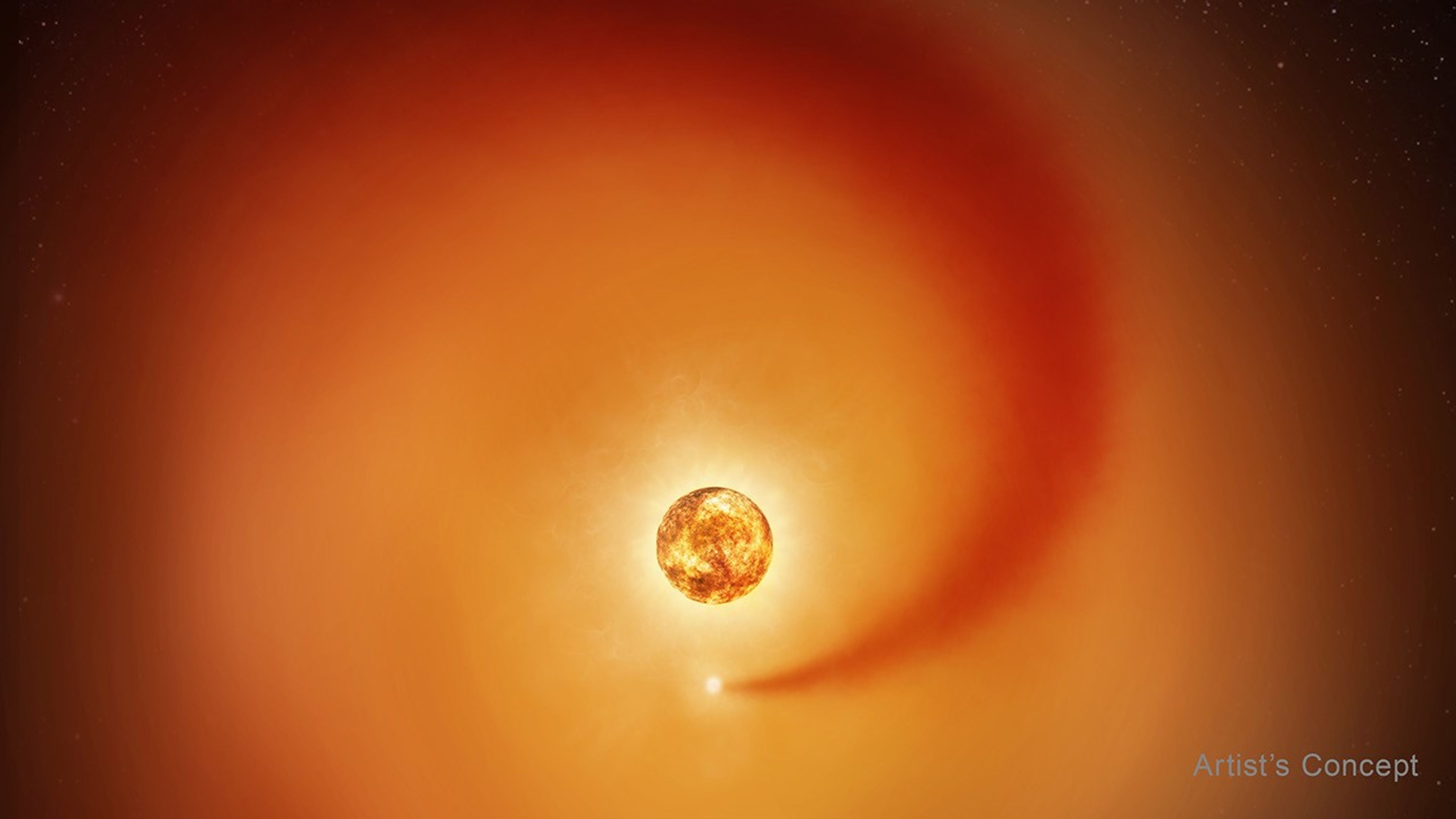
This artist’s concept shows the red supergiant star Betelgeuse and an orbiting companion star.
Credits: Artwork: NASA, ESA, Elizabeth Wheatley (STScI); Science: Andrea Dupree (CfA)
Using new observations from NASA’s Hubble Space Telescope and ground-based observatories, astronomers tracked the influence of a recently discovered companion star, Siwarha, on the gas around Betelgeuse. The research, from scientists at the Center for Astrophysics | Harvard & Smithsonian (CfA), reveals a trail of dense gas swirling through Betelgeuse’s vast, extended atmosphere, shedding light on why the giant star’s brightness and atmosphere have changed in strange and unusual ways.
The results of the new study were presented Monday at a news conference at the 247th meeting of the American Astronomical Society in Phoenix and are accepted for publication in The Astrophysical Journal.
The team detected Siwarha’s wake by carefully tracking changes in the star’s light over nearly eight years. These changes show the effects of the previously unconfirmed companion as it plows through the outer atmosphere of Betelgeuse. This discovery resolves one of the biggest mysteries about the giant star, helping scientists to explain how it behaves and evolves while opening new doors to understanding other massive stars nearing the end of their lives.
Located roughly 650 light-years away from Earth in the constellation Orion, Betelgeuse is a red supergiant star so large that more than 400 million Suns could fit inside. Because of its enormous size and proximity, Betelgeuse is one of the few stars whose surface and surrounding atmosphere can be directly observed by astronomers, making it an important and accessible laboratory for studying how giant stars age, lose mass, and eventually explode as supernovae.
This artist’s concept shows the red supergiant star Betelgeuse and an orbiting companion star. The companion, which is orbiting clockwise from this point of view, generates a dense wake of gas that expands outward. It is so close to Betelgeuse that it is passing through the extended outer atmosphere of the supergiant. The companion star is not to scale; it would be a pinprick compared to Betelgeuse, which is hundreds of times larger. The companion’s distance from Betelgeuse is to scale relative to the diameter of Betelgeuse.
Artwork: NASA, ESA, Elizabeth Wheatley (STScI); Science: Andrea Dupree (CfA)
Using NASA’s Hubble and ground-based telescopes at the Fred Lawrence Whipple Observatory and Roque de Los Muchachos Observatory, the team was able to see a pattern of changes in Betelgeuse, which provided clear evidence of a long-suspected companion star and its impact on the red supergiant’s outer atmosphere. Those include changes in the star’s spectrum, or the specific colors of light given off by different elements, and the speed and direction of gases in the outer atmosphere due to a trail of denser material, or wake. This trail appears just after the companion crosses in front of Betelgeuse every six years, or about 2,100 days, confirming theoretical models.
“It’s a bit like a boat moving through water. The companion star creates a ripple effect in Betelgeuse’s atmosphere that we can actually see in the data,” said Andrea Dupree, an astronomer at the CfA, and the lead study author. “For the first time, we’re seeing direct signs of this wake, or trail of gas, confirming that Betelgeuse really does have a hidden companion shaping its appearance and behavior.”
For decades, astronomers have tracked changes in Betelgeuse’s brightness and surface features in hopes of figuring out why the star behaves the way it does. Curiosity intensified after the giant star appeared to “sneeze” and became unexpectedly faint in 2020. Two distinct periods of variation in the star were especially puzzling for scientists: a short 400-day cycle, recently attributed to pulsations within the star itself, and the long, 2,100-day secondary period.
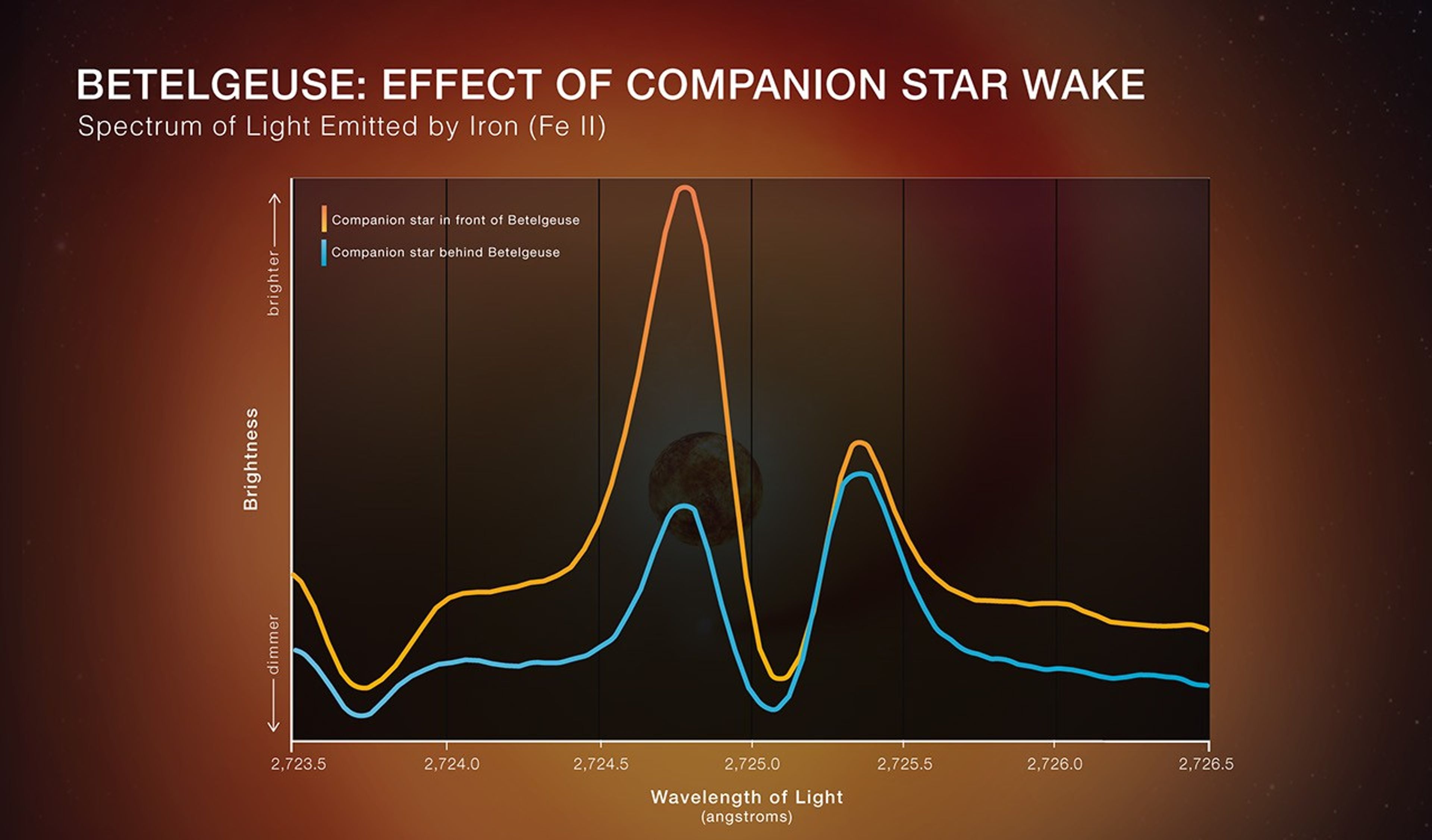
Scientists used NASA’s Hubble Space Telescope to look for evidence of a wake being generated by a companion star orbiting Betelgeuse. The team found a noticeable difference in light shown in the lefthand peak when the companion star was at different points in its orbit.
Illustration: NASA, ESA, Elizabeth Wheatley (STScI); Science: Andrea Dupree (CfA)
Until now, scientists have considered everything from large convection cells and clouds of dust to magnetic activity, and the possibility of a hidden companion star. Recent studies concluded that the long secondary period was best explained by the presence of a low-mass companion orbiting deep within Betelgeuse’s atmosphere, and another team of scientists reported a possible detection, but until now, astronomers lacked the evidence to prove what they believed was happening. Now, for the first time, they have firm evidence that a companion is disrupting the atmosphere of this supergiant star.
“The idea that Betelgeuse had an undetected companion has been gaining in popularity for the past several years, but without direct evidence, it was an unproven theory,” said Dupree. “With this new direct evidence, Betelgeuse gives us a front-row seat to watch how a giant star changes over time. Finding the wake from its companion means we can now understand how stars like this evolve, shed material, and eventually explode as supernovae.”
With Betelgeuse now eclipsing its companion from our point of view, astronomers are planning new observations for its next emergence in 2027. This breakthrough may also help explain similar mysteries in other giant and supergiant stars.
The Hubble Space Telescope has been operating for over three decades and continues to make ground-breaking discoveries that shape our fundamental understanding of the universe. Hubble is a project of international cooperation between NASA and ESA (European Space Agency). NASA’s Goddard Space Flight Center in Greenbelt, Maryland, manages the telescope and mission operations. Lockheed Martin Space, based in Denver, also supports mission operations at Goddard. The Space Telescope Science Institute in Baltimore, which is operated by the Association of Universities for Research in Astronomy, conducts Hubble science operations for NASA.
Betelgeuse and Wake of its Companion Star (Artist’s Concept)
This artist’s concept shows the red supergiant star Betelgeuse and an orbiting companion star. The companion, which is orbiting clockwise from this point of view, generates a dusty wake that expands outward.
Betelgeuse: Effect of Companion Star Wake
Scientists used NASA’s Hubble Space Telescope to look for evidence of a wake being generated by a companion star orbiting Betelgeuse. The team found a noticeable difference in light shown in the lefthand peak when the companion star was at different points in its orbit.
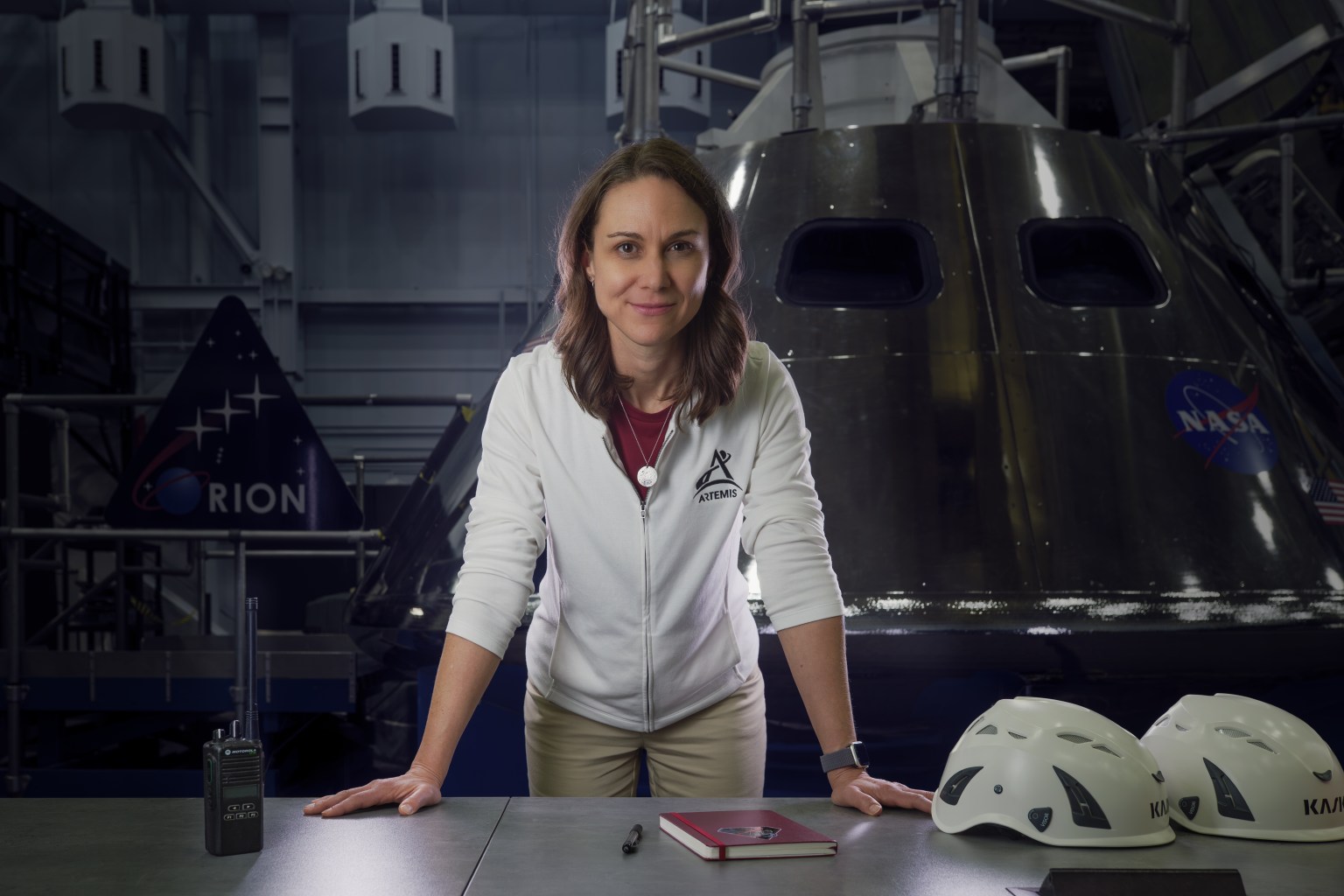
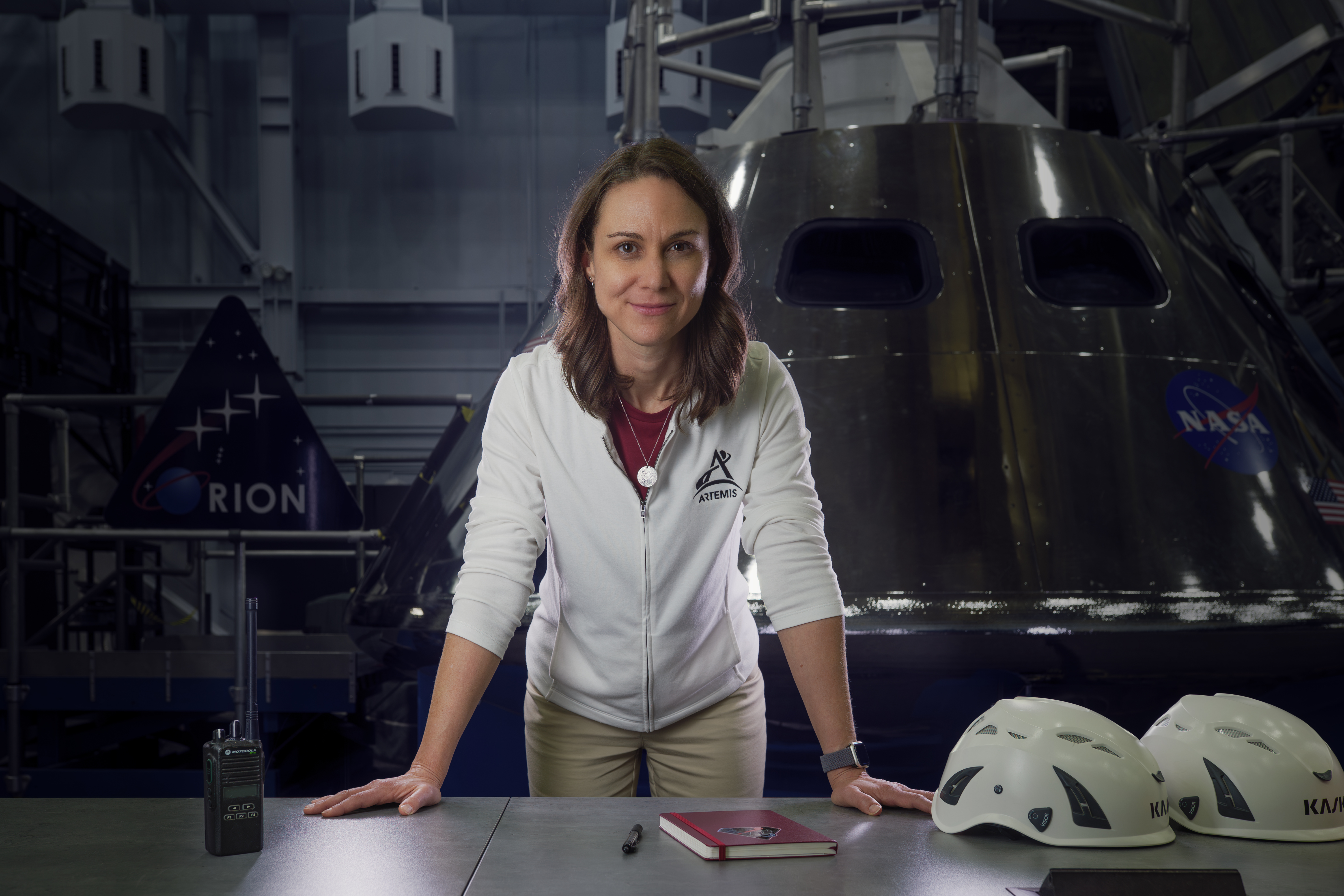
Jacki Mahaffey, Artemis II chief training officer at NASA’s Johnson Space Center in Houston, stands in front of the Orion mockup in Johnson’s Space Vehicle Mockup Center.
Credits: NASA/Rad Sinyak
Listen to this audio excerpt from Jacki Mahaffey, Artemis II chief training officer:
0:00 / 0:00
When the Artemis II crew travels around the Moon aboard the Orion spacecraft, they will have spent countless hours training for their lunar mission, and Jacki Mahaffey will have played a role in preparing them for their journey.
As the Artemis II chief training officer at NASA’s Johnson Space Center in Houston, Mahaffey manages the planning, development, and implementation of the astronauts’ training and integrated simulations. Her job is to ensure that when the Artemis II crew travels around the Moon inside Orion, the astronauts and flight controllers are ready for every moment — expected and unexpected.
Training is all risk mitigation for the mission. By preparing the astronauts and flight controllers for what they might encounter, we enable mission success.
Jacki Mahaffey
Artemis II Chief Training Officer
The Artemis II crew began their rigorous training in 2023, but the work of Mahaffey and her team started long before that. Years before the training began, her team gathered the experts on how to operate the different aspects of Orion, and what the crew will need to know to execute their mission.
“One of my favorite moments from that process was when we all got together in one room, and everyone brought a piece of paper for every single lesson or training event that they expected to do with the crew,” Mahaffey said. “And we laid the entire thing out to figure out what’s the most logical order to put all of this training in, to help build that big picture for the crew.”
Training for Artemis II began shortly after the crew was announced, with Mahaffey and her team introducing the astronauts to Orion’s systems and operational basics. Once the necessary simulators and mockups were ready, the crew transitioned into hands-on training to build familiarity with their spacecraft.
At Johnson, Mahaffey’s team utilizes a range of specialized facilities, including the Space Vehicle Mockup Facility, where astronauts rehearse living and working inside the Orion mockup; the Orion Mission Simulator, which replicates flight software and displays; and the Neutral Buoyancy Laboratory, where the crew practices water survival techniques for post-splashdown scenarios.
Jacki Mahaffey, Artemis II Chief Training Officer at NASA’s Johnson Space Center in Houston, stands in front of the Orion mockup in Johnson’s Space Vehicle Mockup Facility.
NASA/Rad Sinyak
“We try to simulate as much as we can here on Earth,” said Mahaffey. “But we still have gravity, so we rely on the crew’s experience to imagine how they’ll use the space in microgravity”
Three of the four Artemis II astronauts have flown in space before, and Mahaffey sees their experience as a powerful asset. They bring insights that shape procedures and training plans, and they learn from each other’s unique problem-solving styles.
“They are teaching us back about how to have that crew perspective of working in space and the things that are going to matter most,” she said.
Mahaffey’s journey began with a love for engineering and a role as a flight controller in Johnson’s Mission Control Center. She found joy in training others and eventually transitioned into a full-time training role. Now, she leads a team of about 100 contributors, all working to prepare the crew for their historic mission.
“I didn’t start out wanting to be a trainer — I studied engineering because I loved physics and math,” she said. “But as the job shifted toward applying that engineering knowledge, communicating, and planning how to operate a spacecraft, the natural next step was teaching others.”
In our organization, once you’ve learned to fish, you teach someone else to fish.
Jacki Mahaffey
Artemis II Chief Training Officer
For Mahaffey, Artemis is a bridge connecting her family’s legacy with the future of space exploration. Her grandfather worked on control systems for Apollo, and she sees her work as a continuation of that story, now with more advanced technology and new frontiers.
“We’re doing some of the same things Apollo did, but expanding on them,” she said. “We’re learning more about the Moon, our Earth’s history, and how we’ll get to Mars.”
Her role during Artemis II also includes serving as an Artemis capcom, short for capsule communicator, the position in mission control that directly communicates with the crew members. Mahaffey plans to work the entry shift for Artemis II — helping to guide the crew to splashdown and ensuring their safe recovery. The moment will be a culmination of her entire team’s hard work.
“I’ll feel good when the recovery forces report that the hatch is open,” Mahaffey said. “That moment will be incredible.”
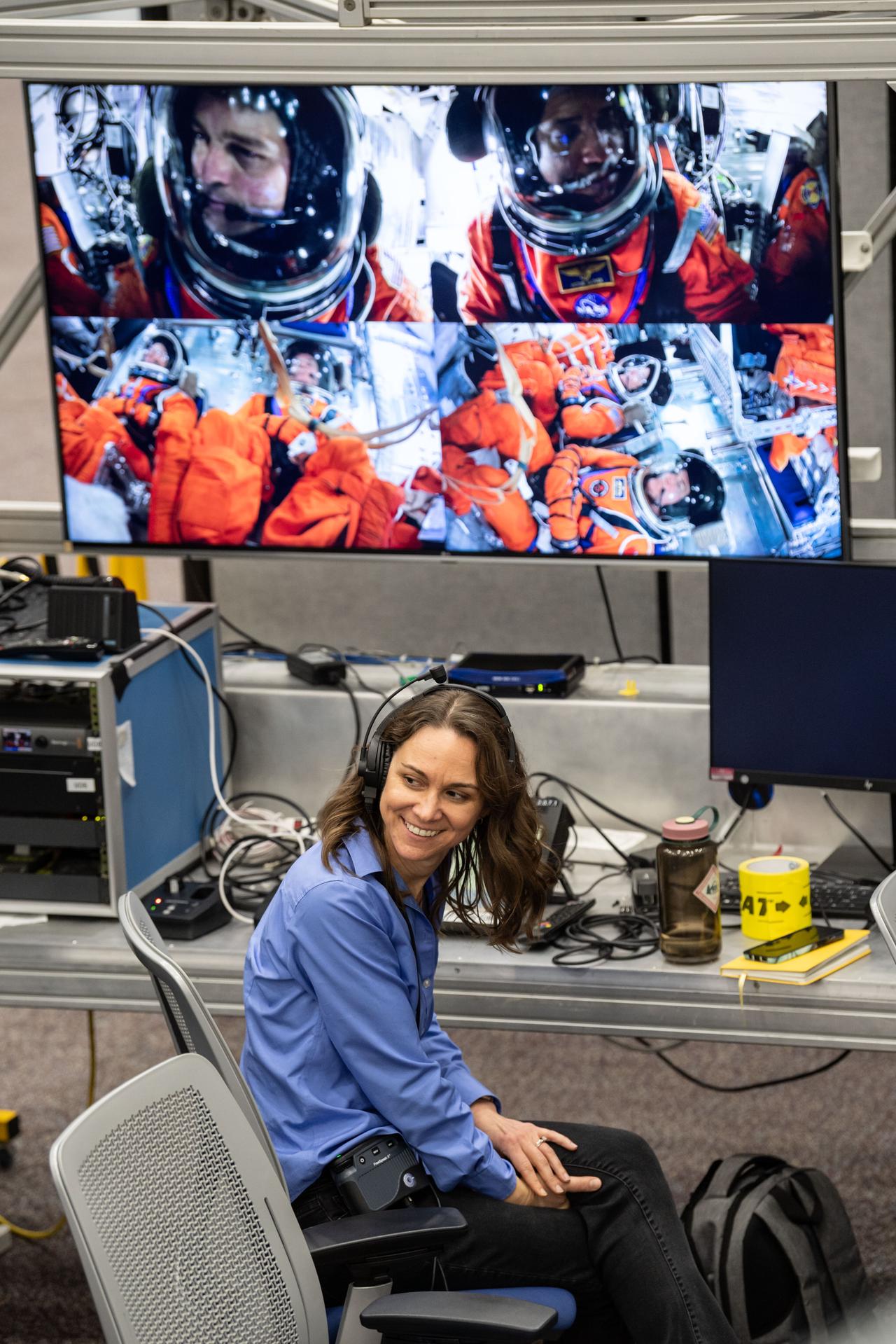
The Artemis II crew’s Chief Training Officer Jacki Mahaffey smiles during post insertion and deorbit preparation training at Johnson’s Space Vehicle Mockup Facility in Houston, Texas. The crew practiced getting the Orion spacecraft configured once in orbit, how to make it habitable, and suited up in their entry pressure suits to prepare for their return from the Moon.
NASA’s Hubble Examines Cloud-9, First of New Type of Object
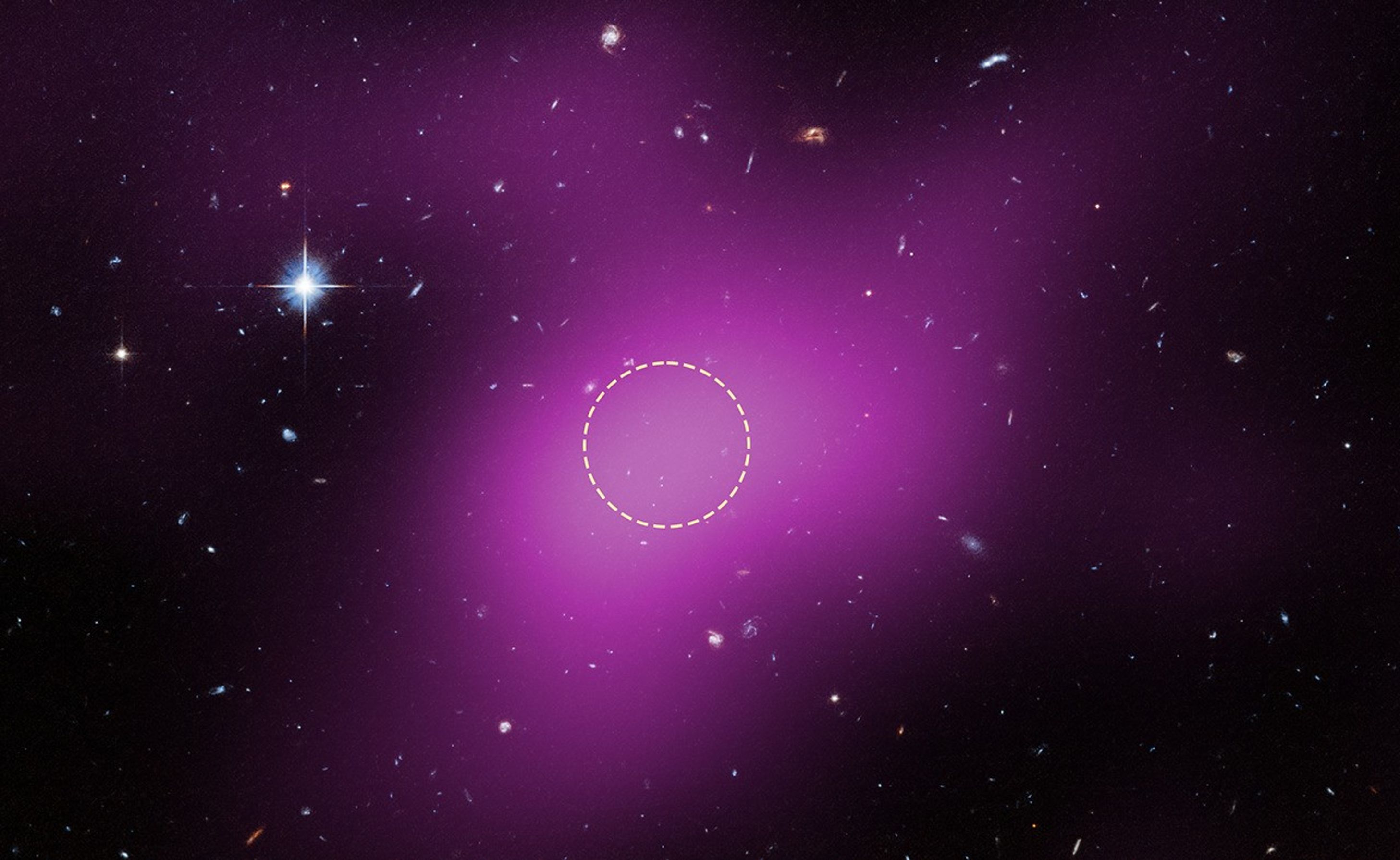
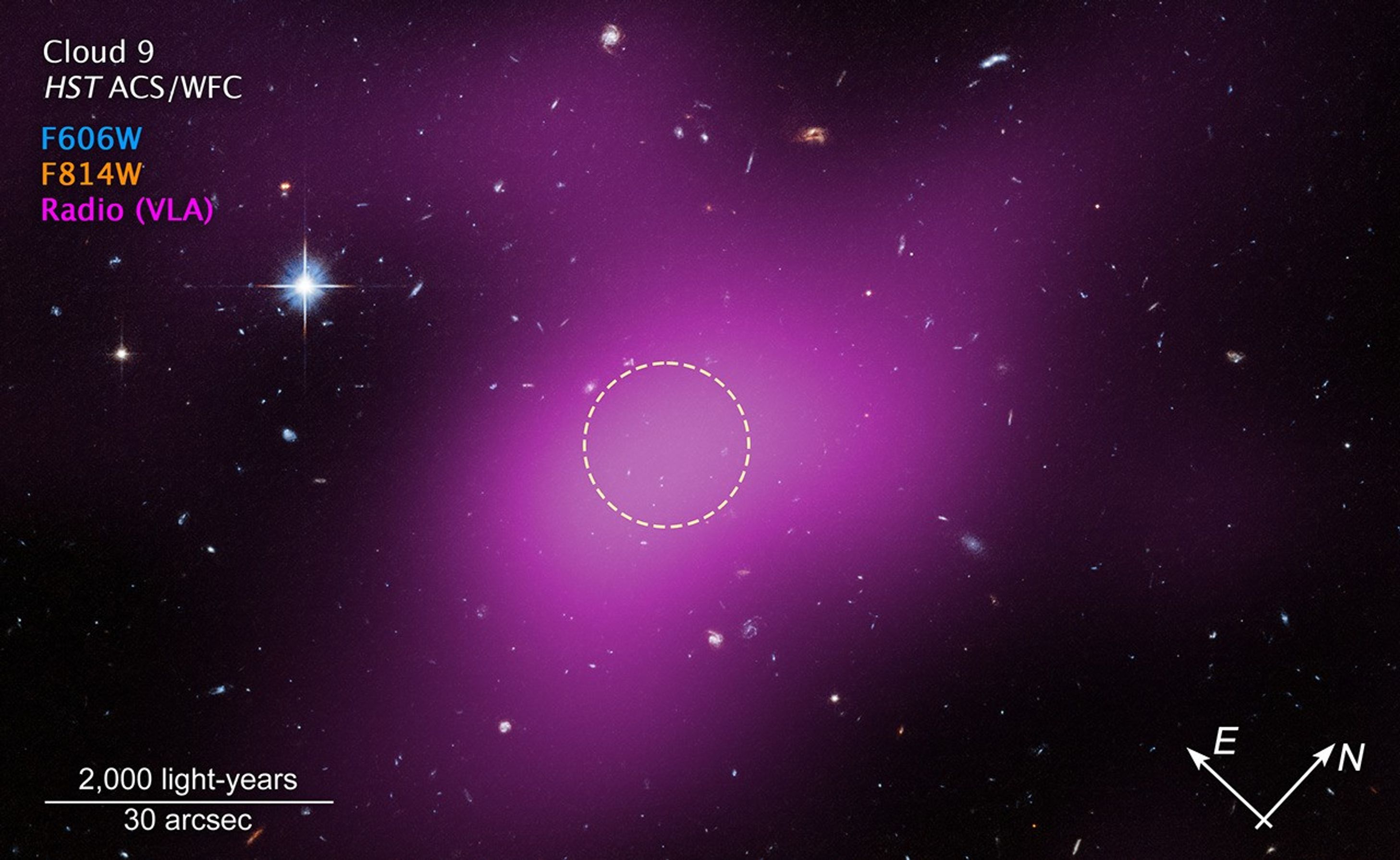
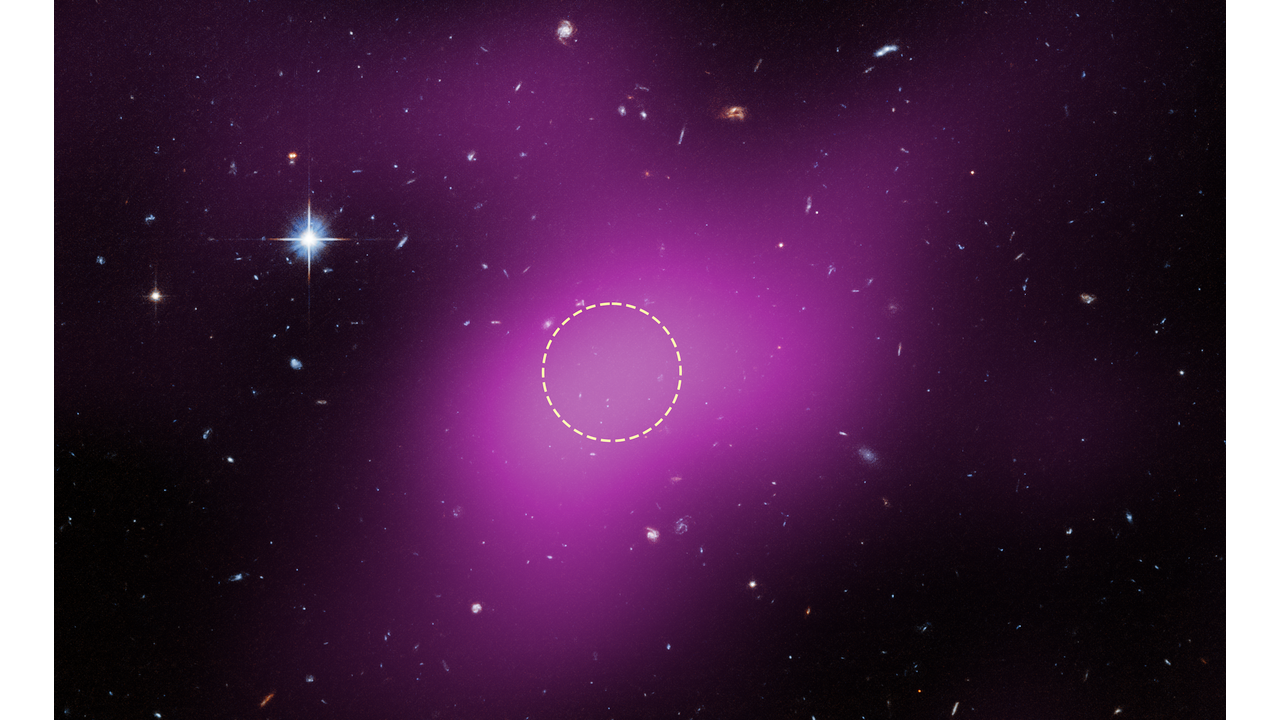
Magenta is radio data from the ground-based Very Large Array showing the presence of Cloud-9. The dashed circle marks the peak of radio emission, which is where researchers focused their search for stars. Hubble found no stars within Cloud-9. The few objects within its boundaries are background galaxies.
Credits: NASA, ESA, VLA, Gagandeep Anand (STScI), Alejandro Benitez-Llambay (University of Milano-Bicocca); Image Processing: Joseph DePasquale (STScI)
A team using NASA’s Hubble Space Telescope has uncovered a new type of astronomical object — a starless, gas-rich, dark-matter cloud considered a “relic” or remnant of early galaxy formation. Nicknamed “Cloud-9,” this is the first confirmed detection of such an object in the universe — a finding that furthers the understanding of galaxy formation, the early universe, and the nature of dark matter itself.
“This is a tale of a failed galaxy,” said the program’s principal investigator, Alejandro Benitez-Llambay of the Milano-Bicocca University in Milan, Italy. “In science, we usually learn more from the failures than from the successes. In this case, seeing no stars is what proves the theory right. It tells us that we have found in the local universe a primordial building block of a galaxy that hasn’t formed.”
“This cloud is a window into the dark universe,” said team member Andrew Fox of the Association of Universities for Research in Astronomy/Space Telescope Science Institute (AURA/STScI) for the European Space Agency. “We know from theory that most of the mass in the universe is expected to be dark matter, but it’s difficult to detect this dark material because it doesn’t emit light. Cloud-9 gives us a rare look at a dark-matter-dominated cloud.”
This image shows the location of Cloud-9, which is 14 million light-years from Earth. The diffuse magenta is radio data from the ground-based Very Large Array (VLA) showing the presence of the cloud. The dashed circle marks the peak of radio emission, which is where researchers focused their search for stars. Follow-up observations by the Hubble Space Telescope’s Advanced Camera for Surveys found no stars within the cloud. The few objects that appear within its boundaries are background galaxies. Before the Hubble observations, scientists could argue that Cloud-9 is a faint dwarf galaxy whose stars could not be seen with ground-based telescopes due to the lack of sensitivity. Hubble’s Advanced Camera for Surveys shows that, in reality, the failed galaxy contains no stars.
Science: NASA, ESA, VLA, Gagandeep Anand (STScI), Alejandro Benitez-Llambay (University of Milano-Bicocca); Image Processing: Joseph DePasquale (STScI)
The object is called a Reionization-Limited H I Cloud, or “RELHIC.” The term “H I” refers to neutral hydrogen, and “RELHIC” describes a natal hydrogen cloud from the universe’s early days, a fossil leftover that has not formed stars. For years, scientists have looked for evidence of such a theoretical phantom object. It wasn’t until they turned Hubble toward the cloud, confirming that it is indeed starless, that they found support for the theory.
“Before we used Hubble, you could argue that this is a faint dwarf galaxy that we could not see with ground-based telescopes. They just didn’t go deep enough in sensitivity to uncover stars,” said lead author Gagandeep Anand of STScI. “But with Hubble’s Advanced Camera for Surveys, we’re able to nail down that there’s nothing there.”
The discovery of this relic cloud was a surprise. “Among our galactic neighbors, there might be a few abandoned houses out there,” said STScI’s Rachael Beaton, who is also on the research team.
Astronomers think RELHICs are dark matter clouds that couldn’t accumulate enough gas to form stars. They represent a window into the early stages of galaxy formation. Cloud-9 suggests the existence of many other small, dark matter-dominated structures in the universe — other failed galaxies. This discovery provides new insights into the dark components of the universe that are difficult to study through traditional observations, which focus on bright objects like stars and galaxies.
Scientists have studied hydrogen clouds near the Milky Way for many years, but these clouds tend to be much bigger and more irregular than Cloud-9. Compared with other observed hydrogen clouds, Cloud-9 is smaller, more compact, and highly spherical, making it look very different from the others.
The core of this object is composed of neutral hydrogen and is about 4,900 light-years in diameter. Researchers measured the hydrogen gas in Cloud-9 by the radio waves it emits, measuring it to be approximately one million times the mass of the Sun. Assuming that the gas pressure is balancing the dark matter cloud’s gravity, which appears to be the case, researchers calculated Cloud-9’s dark matter must be about five billion solar masses.
Cloud-9 is an example of structures and mysteries that don’t involve stars. Just looking at stars doesn’t give the full picture. Studying the gas and dark matter helps provide a more complete understanding of what’s going on in these systems that would otherwise be unknown.
Observationally, identifying these failed galaxies is challenging because nearby objects outshine them. Such systems are also vulnerable to environmental effects like ram-pressure stripping, which can remove gas as the cloud moves through intergalactic space. These factors further reduce their expected numbers.
The starless relic was discovered three years ago as part of a radio survey by the Five-hundred-meter Aperture Spherical Telescope (FAST) in Guizhou, China, a finding later confirmed by the Green Bank Telescope and the Very Large Array facilities in the United States. But only with Hubble could researchers definitively determine that the failed galaxy contains no stars.
Cloud-9 was simply named sequentially, having been the ninth gas cloud identified on the outskirts of a nearby spiral galaxy, Messier 94 (M94). The cloud is close to M94 and appears to have a physical association with the galaxy. High-resolution radio data shows slight gas distortions, possibly indicating interaction between the cloud and galaxy.
The cloud may eventually form a galaxy in the future, provided it grows more massive — although how that would occur is under speculation. If it were much bigger, say, more than 5 billion times the mass of our Sun, it would have collapsed, formed stars, and become a galaxy that would be no different than any other galaxy we see. If it were much smaller than that, the gas could have been dispersed and ionized and there wouldn’t be much left. But it’s in a sweet spot where it could remain as a RELHIC.
The lack of stars in this object provides a unique window into the intrinsic properties of dark matter clouds. The rarity of such objects and the potential for future surveys is expected to enhance the discovery of more of these “failed galaxies” or “relics,” resulting in insights into the early universe and the physics of dark matter.
The Hubble Space Telescope has been operating for more than three decades and continues to make ground-breaking discoveries that shape our fundamental understanding of the universe. Hubble is a project of international cooperation between NASA and ESA (European Space Agency). NASA’s Goddard Space Flight Center in Greenbelt, Maryland, manages the telescope and mission operations. Lockheed Martin Space, based in Denver, also supports mission operations at Goddard. The Space Telescope Science Institute in Baltimore, which is operated by the Association of Universities for Research in Astronomy, conducts Hubble science operations for NASA.
Magenta is radio data from the ground-based Very Large Array (VLA) showing the presence of Cloud-9. The dashed circle marks the area where researchers focused their search for stars. Hubble found no stars within Cloud-9. The few objects within its boundaries are background galaxies.
Cloud 9, Starless Gas Cloud Compass Image
This is an annotated composite image of Cloud-9, a Reionization-Limited H I Cloud (RELHIC), as captured by the Hubble Space Telescope’s ACS (Advanced Camera for Surveys) and the ground-based Very Large Array (VLA) radio telescope.
Cloud 9, Starless Gas Cloud Video
This annotated video shows the location of Cloud-9 on the sky. As the video zooms into this gas-rich, dark-matter cloud, it becomes evident that there are no stars within it. Only background galaxies appear behind Cloud-9, which has survived since the universe’s early days….
NASA astronaut and Expedition 72 Flight Engineer Anne McClain is pictured near one of the International Space Station’s main solar arrays during a spacewalk to upgrade the orbital outpost’s power generation system and relocate a communications antenna.
Credit: NASA
NASA astronauts will conduct two spacewalks Thursday, Jan. 8, and Thursday, Jan. 15, outside the International Space Station, and the agency will provide comprehensive coverage.
The first spacewalk is scheduled to begin at 8 a.m. EST on Jan. 8 and last about six hours and 30 minutes. NASA will provide live coverage beginning at 6:30 a.m. on NASA+, Amazon Prime, and the agency’s YouTube channel. Learn how to stream NASA content through a variety of online platforms, including social media.
During U.S. spacewalk 94, NASA astronauts Mike Fincke and Zena Cardman will exit the station’s Quest airlock to prepare the 2A power channel for future installation of International Space Station Roll-Out Solar Arrays. Once installed, the array will provide additional power for the orbital laboratory, including critical support of its safe and controlled deorbit.
Fincke will serve as spacewalk crew member 1 and will wear a suit with red stripes, while Cardman will serve as spacewalk crew member 2 and will wear an unmarked suit. This spacewalk will be Cardman’s first and Fincke’s 10th, tying him for the most spacewalks by a NASA astronaut.
The second spacewalk is scheduled to begin at 7:10 a.m. on Jan. 15 and last about 6 hours and 30 minutes. NASA will provide live coverage beginning at 5:40 a.m. on NASA+, Amazon Prime, and the agency’s YouTube channel.
During U.S. spacewalk 95, two NASA astronauts will replace a high-definition camera on camera port 3, install a new navigational aid for visiting spacecraft, called a planar reflector, on the Harmony module’s forward port, and relocate an early ammonia servicer jumper — a flexible hose assembly that connects parts of a fluid system — along with other jumpers on the station’s S6 and S4 truss.
NASA will announce which astronauts are scheduled for the second spacewalk after the Jan. 8 spacewalk.
The spacewalks will be the 278th and 279th in support of space station assembly, maintenance and upgrades. Also, they are the first two International Space Station spacewalks of 2026, and the first by Expedition 74.
Learn more about International Space Station research and operations at:
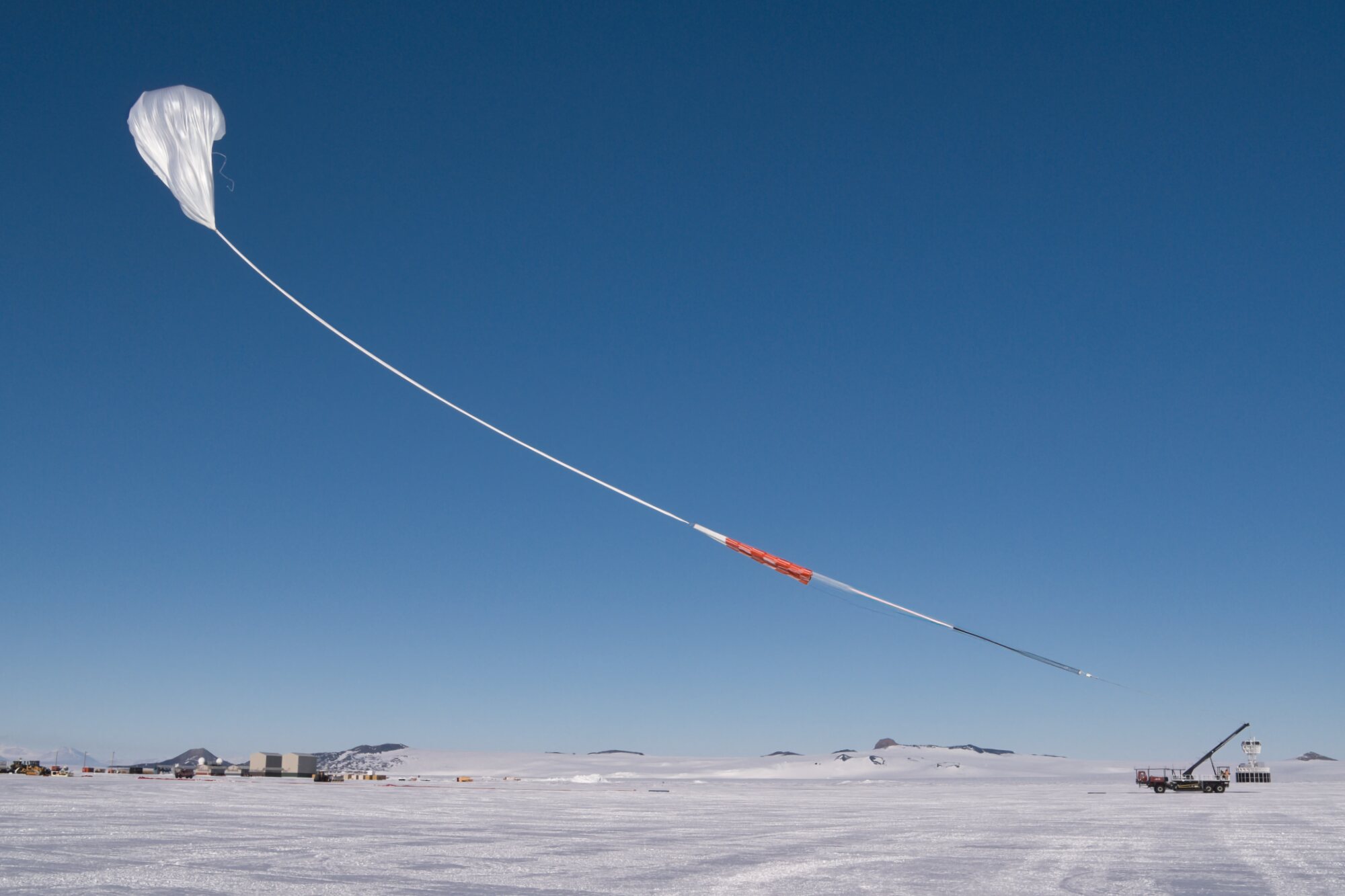
A scientific balloon starts its ascent into the air as it prepares to launch carrying NASA’s Payload for Ultrahigh Energy Observations (PUEO) mission. The mission lifted off from Antarctica at 5:56 a.m. NZST, Saturday, Dec. 20 (11:56 a.m., Friday, Dec. 19 in U.S. Eastern Time).
The PUEO mission is designed to detect radio signals created when highly energetic particles called neutrinos from space hit the ice. The PUEO payload will collect data that give us insight into events like the creation of black holes and neutron star mergers. Alongside the PUEO mission are two other balloons carrying calibration equipment sending test signals to help scientists make sure the payload equipment is working correctly when it tries to detect real signals from space.
Preparations for Next Moonwalk Simulations Underway (and Underwater)
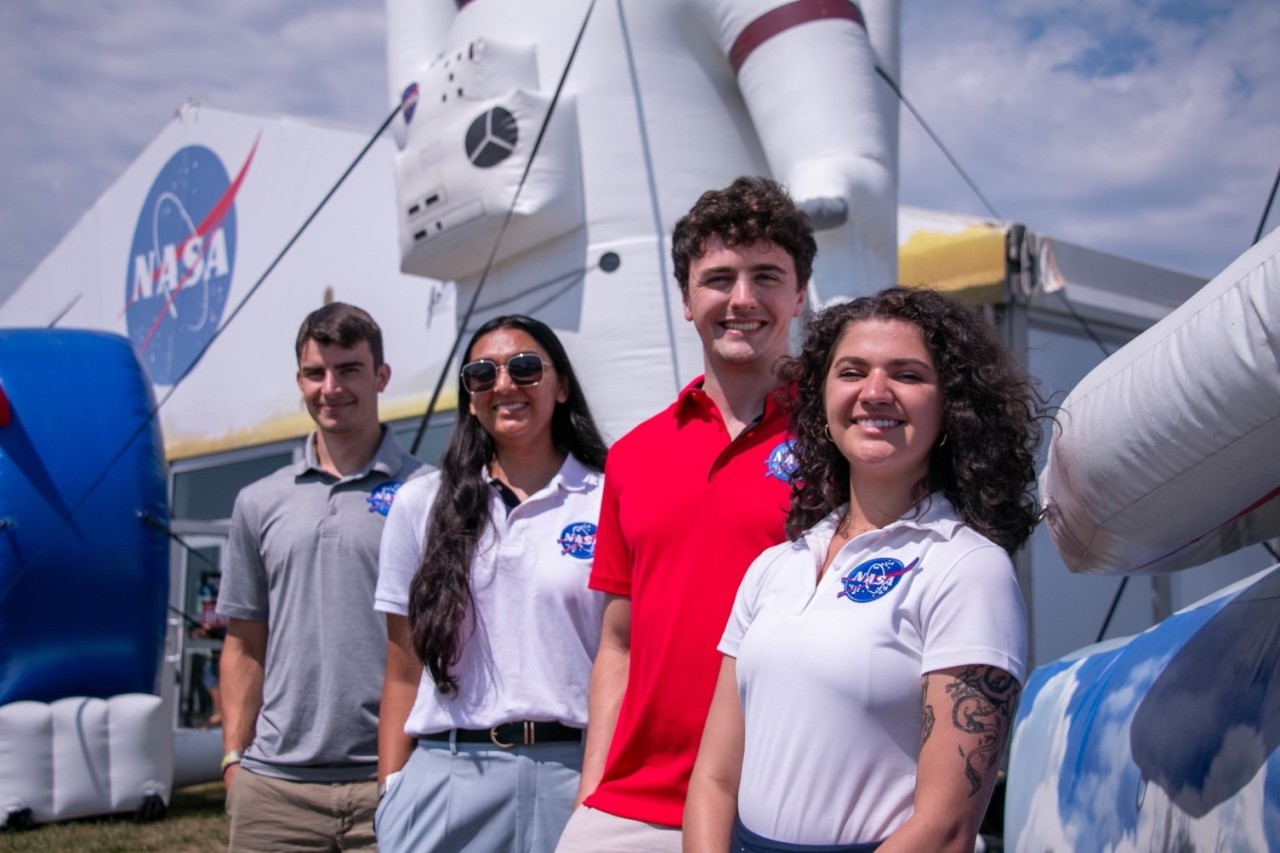
Four NASA interns pose in front of the NASA Pavilion at the EAA AirVenture Oshkosh, an annual airshow in Oshkosh, Wisconsin.
NASA
A NASA internship provides a stellar opportunity to launch your future as part of America’s aerospace workforce. NASA interns take on meaningful work and contribute to exciting agency projects with the guidance of a supportive mentor. The agency’s internship program regularly ranks as the nation’s most prestigious and competition is steep: in fiscal year 2025, NASA’s Office of STEM Engagement received about 250,000 internship applications for its roughly 1,800 internship opportunities.
To give you the best shot at a NASA internship, we’ve compiled a list of tips mentors say can make an application stand out from the crowd. It is NASA’s mentors who create internship project descriptions, review applications, and take the lead in choosing candidates to work on their specific internship projects. Here’s what they had to say:
1. Your personal statement is your chance to make a lasting impression.
Mentors pay close attention to personal statements to identify the best candidate for their project and team. A powerful personal statement shares personal background, experience, and goals, and how they relate to the needs of the project.
NASA mentors are looking for interns who will enjoy the work and fit in with the team culture. Beyond your academic background, grades, and interests, this is your chance to share your curiosity, enthusiasm, passion, or resilience. Show us who you are and what you can do!
2. Show off your academic achievements.
Mentors love to see what academic expertise and hands-on experience you can bring to the internship project. Your transcripts, grade point average, coursework, research, academic projects, awards, and accomplishments are valuable highlights in your application.
3. Tell us about your extracurriculars, too!
Who are you outside the classroom?
Mentors like to see well-rounded candidates whose interests take them beyond their chosen academic and career path. Include any extracurricular activities you participate in, such as a club or team at school or an organization in your community. Whether you’re involved in a local rocketry club, a school athletic team, or a musical ensemble, these pursuits may demonstrate academic skills or soft skills such as collaboration. Shared hobbies can also be a great point of personal connection with a future mentor.
4. Include as many of your skills as possible.
Share the valuable skills that you can bring to an internship project. These could be technical skills, such as experience with specific tools or computer programming languages, and non-technical skills, which may include communications skills or leadership experience. Mentors search for skills that meet their project requirements and, match with the role, but also for unique skills that might be an added asset.
5. Give yourself a chance.
Don’t count yourself out before you get started! If you have a passion for spaceflight or aviation, it’s worth applying for a NASA internship – even if you’re not a math, science, engineering, or technology major. That’s because NASA achieves its exploration goals with the support of a nationwide team with a wide variety of skills: communicators, creatives, business specialists, legal experts, and so many more. Take a look at NASA’s internship opportunities and you’ll find projects in a wide range of fields.
Yes, competition is fierce. But someone is going to land that internship – and that person could be you!
Learn More
Check eligibility requirements, see current deadlines, and launch your internship journey at https://intern.nasa.gov.
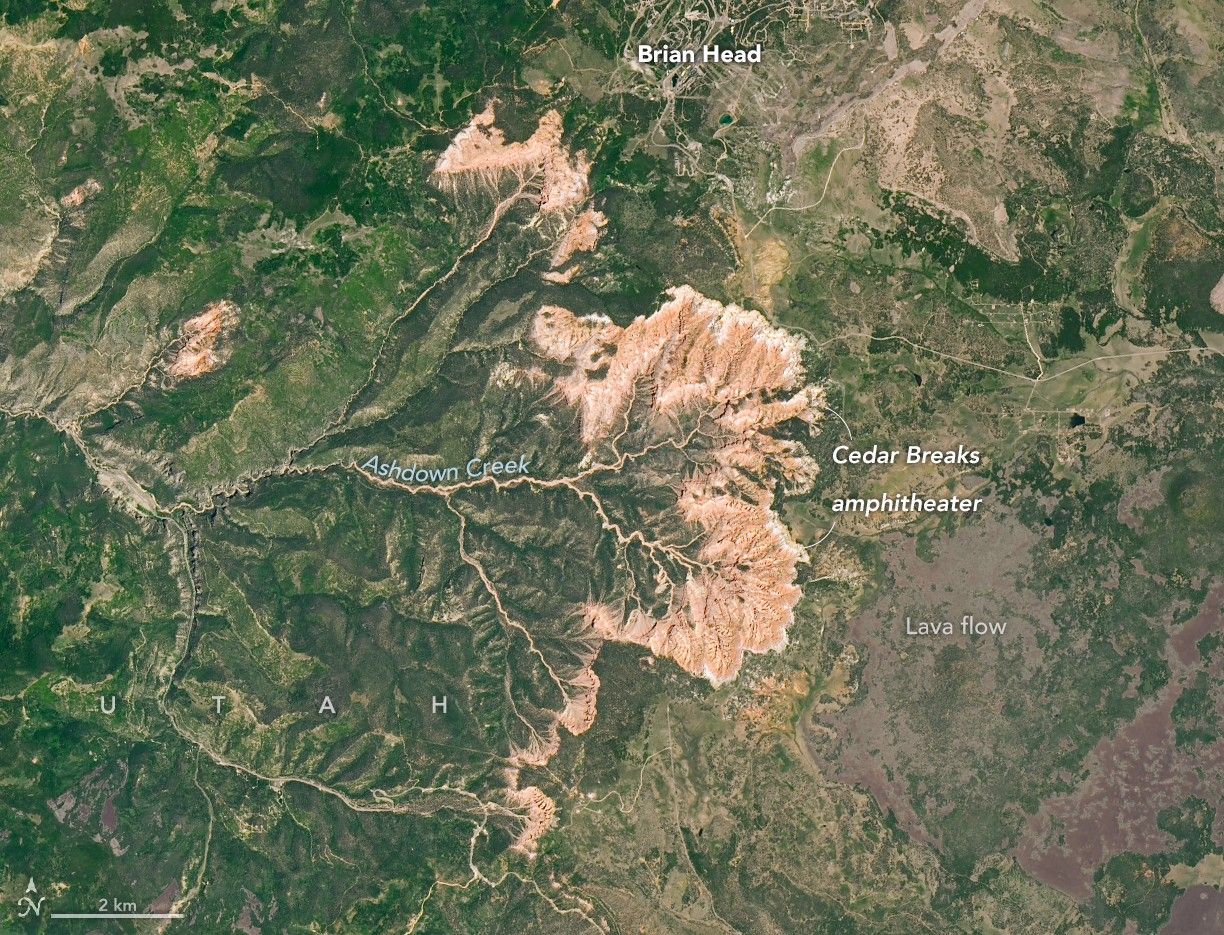
When people stand at the rim of the amphitheater in Utah’s Cedar Breaks National Monument and look down on an otherworldly landscape of multicolored rock spires, pinnacles, and other geologic oddities, they’re looking across tens of millions of years of Earth’s history. The same can be said when viewing the bowl-shaped escarpment from space.
The OLI-2 (Operational Land Imager-2) on Landsat 9 captured this view of the amphitheater’s semicircular rim and deeply eroded drainages on June 18, 2025. The erosive power of water from Ashdown Creek and several tributaries, along with relentless physical and chemical weathering, is evident in the many channels, cliffs, and canyons that radiate outward from the rim and define the escarpment and amphitheater.
The feature’s striking rock formations are composed of sedimentary rock layers laid down roughly 50 to 25 million years ago within a basin that, at times, held a large body of water called Lake Claron. Many of the amphitheater’s limestone layers began as sediments that settled on its lakebed as carbonate-rich muds.
Differences in rock type and color, evident in the layering seen in ground photographs and to a degree in Landsat images, reflect differences in environmental conditions during deposition. Lake Claron, for instance, was sometimes quite deep, but during dry periods it was shallow or nonexistent. In wet conditions, iron in muddy sediments was scarce or had too little exposure to oxygen to oxidize, or rust, leaving the resulting rock white or gray. During drier periods, iron in sediments had greater exposure to oxygen, forming minerals that turned layers red and orange.
The rim at Cedar Breaks, the top of the staircase, sits about 10,000 feet (3,000 meters) above sea level, roughly 7,000 feet above the Colorado River in the Grand Canyon. The high elevation influences everything from the weather to the plants and animals that live there. Winters are long, cold, and snowy, with nearby Brian Head seeing 30 feet (10 meters) of snowfall each year on average.
While the cool temperatures and short growing season are an impediment to many types of vegetation, the slow-growing and notoriously long-lived bristlecone pines found along the escarpment’s rim use the harsh conditions to their advantage. Slow growth makes their wood unusually dense, which protects the trees from disease and insects. Likewise, their ability to survive in thin soils, on mostly barren limestone outcrops where little else can grow, protects them from wildfires. Some of the oldest bristlecones in the monument are more than 1,700 years old.
Sitting atop the sedimentary layers, signs of a more volcanically active period also appear in the image. The dark basaltic lava flows visible to the east of the amphitheater formed between 5 million and 10,000 years ago, when several volcanoes on the Markagunt Plateau erupted regularly. Areas of soft, gray rock around the summit of Brian Head—now the site of a ski resort—formed when pyroclastic flows left deposits of tuff strewn across the landscape.
NASA Earth Observatory images by Michala Garrison, using Landsat data from the U.S. Geological Survey. Story by Adam Voiland.
References & Resources
Cedar Breaks National Monument Bristlecone Pines. Accessed December 18, 2025.
Global Volcanism Program (2013) Markagunt Plateau. Accessed December 18, 2025.