Category: Ciencia

  • Betelgeuse and the Crab Nebula: Stellar Death and Rebirth

    3 Min Read

    Betelgeuse and the Crab Nebula: Stellar Death and Rebirth

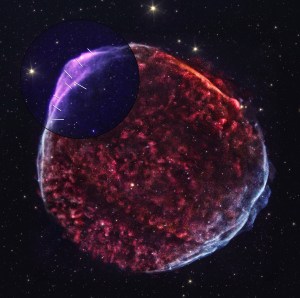
    Crab Nebula in Multiple Wavelengths
    This highly detailed image of the Crab Nebula was assembled by combining data from five telescopes spanning nearly the entire breadth of the electromagnetic spectrum: The Very Large Array (radio) in red; Spitzer Space Telescope (infrared) in yellow; Hubble Space Telescope (visible) in green; XMM-Newton (ultraviolet) in blue; and Chandra X-ray Observatory (X-ray) in purple.
    Credits:
    NASA, ESA, G. Dubner (IAFE, CONICET-University of Buenos Aires) et al.; A. Loll et al.; T. Temim et al.; F. Seward et al.; VLA/NRAO/AUI/NSF; Chandra/CXC; Spitzer/JPL-Caltech; XMM-Newton/ESA; and Hubble/STScI

    What happens when a star dies? In 2019, Betelgeuse dimmed in brightness, sparking speculation that it may soon explode as a supernova. While it likely won’t explode quite yet, we can preview its fate by observing the nearby Crab Nebula.

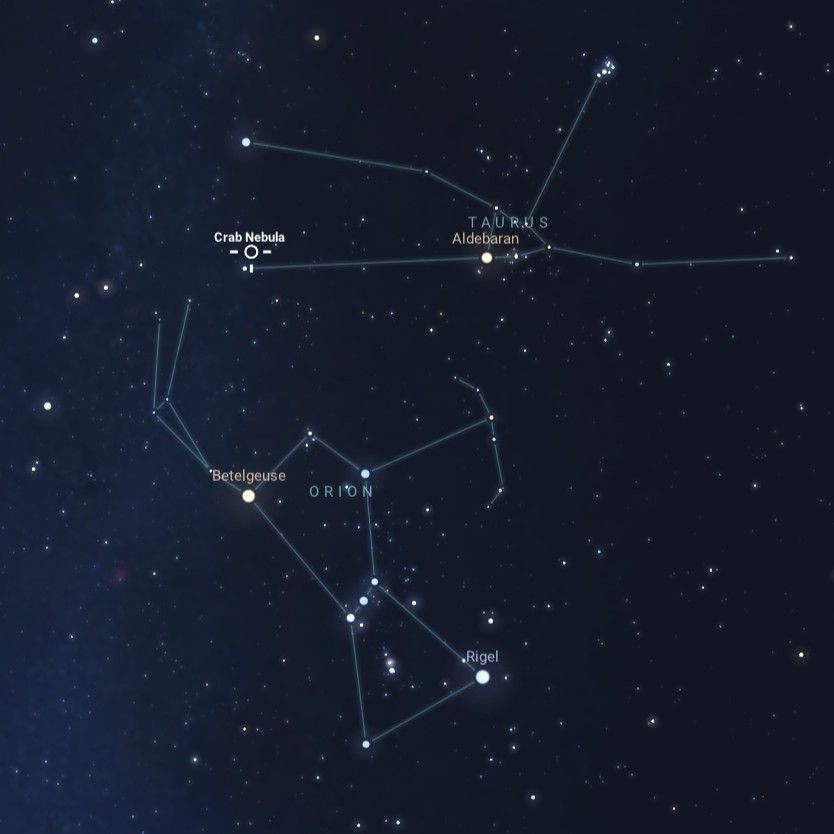
    A dark night-sky star map showing the constellations Orion and Taurus outlined with thin lines. Labeled stars include Betelgeuse and Rigel in Orion and Aldebaran in Taurus. The Crab Nebula is marked near the boundary between Taurus and Orion, with many faint background stars scattered across the image.
    A view of the constellations Orion and Taurus, along with notable features: Betelgeuse in Orion, and Aldebaran and the Crab Nebula in Taurus.
    Stellarium Web

    Betelgeuse is easy to find as the red-hued shoulder star of Orion. A variable star, Betelgeuse, usually competes with the brilliant blue-white Rigel for the position of the brightest star in Orion. Betelgeuse is a young star, estimated to be a few million years old, but due to its giant size, it leads a fast and furious life. This massive star, known as a supergiant, exhausted the hydrogen fuel in its core and began to fuse helium instead, which caused the outer layers of the star to cool and swell dramatically in size. Betelgeuse is one of the few stars for which we have any detailed surface observations, due to its vast size – somewhere between the diameters of the orbits of Mars and Jupiter – and its relatively close distance of about 642 light-years. Betelgeuse is also a “runaway star,” with its remarkable speed possibly triggered by a merger with a smaller companion star. If that is the case, Betelgeuse may actually have millions of years left! So, Betelgeuse may not explode soon after all, or it might explode tomorrow! We have much more to learn about this intriguing star.  

    This image of the Crab Nebula combines data from five different telescopes. It is know as the expanding gaseous remnant from a star that self-detonated as a supernova, briefly shining as brightly as 400 million suns.
    This image of the Crab Nebula combines data from five different telescopes: The Very Large Array (radio) in red; Spitzer Space Telescope (infrared) in yellow; Hubble Space Telescope (visible) in green; XMM-Newton (ultraviolet) in blue; and Chandra X-ray Observatory (X-ray) in purple. It is known as the expanding gaseous remnant from a star that self-detonated as a supernova, briefly shining as brightly as 400 million suns.
    NASA, ESA, G. Dubner (IAFE, CONICET-University of Buenos Aires) et al.; A. Loll et al.; T. Temim et al.; F. Seward et al.; VLA/NRAO/AUI/NSF; Chandra/CXC; Spitzer/JPL-Caltech; XMM-Newton/ESA; and Hubble/STScI

    The Crab Nebula (M1) is relatively close to Betelgeuse in the sky, in the nearby constellation of Taurus. Its ghostly, spidery gas clouds result from a massive explosion; a supernova observed by astronomers in 1054! A backyard telescope allows you to see some details. Still, only advanced telescopes reveal the rapidly spinning neutron star found in its center: the last stellar remnant from that cataclysmic event. These gas clouds were created during the giant star’s violent demise and expand ever outward to enrich the universe with heavy elements like silicon, iron, and nickel. These element-rich clouds are like a cosmic fertilizer, making rocky planets like our own Earth possible. Supernovae also send out powerful shock waves that help trigger star formation. In fact, if it weren’t for a long-ago supernova, our solar system – along with all of us – wouldn’t exist! You can learn much more about the Crab Nebula in a video from NASA’s James Webb Space Telescope: bit.ly/CrabNebulaVisual

    Want to know more about the life cycle of stars? Explore stellar evolution with “The Lives of Stars” activity and handout at bit.ly/starlifeanddeath, part of our SUPERNOVA! toolkit.

    Originally posted by Dave Prosper: February 2020

    Last Updated by Kat Troche: December 2025

  • Hubble Glimpses Galactic Gas Making a Getaway

    2 min read

    Hubble Glimpses Galactic Gas Making a Getaway

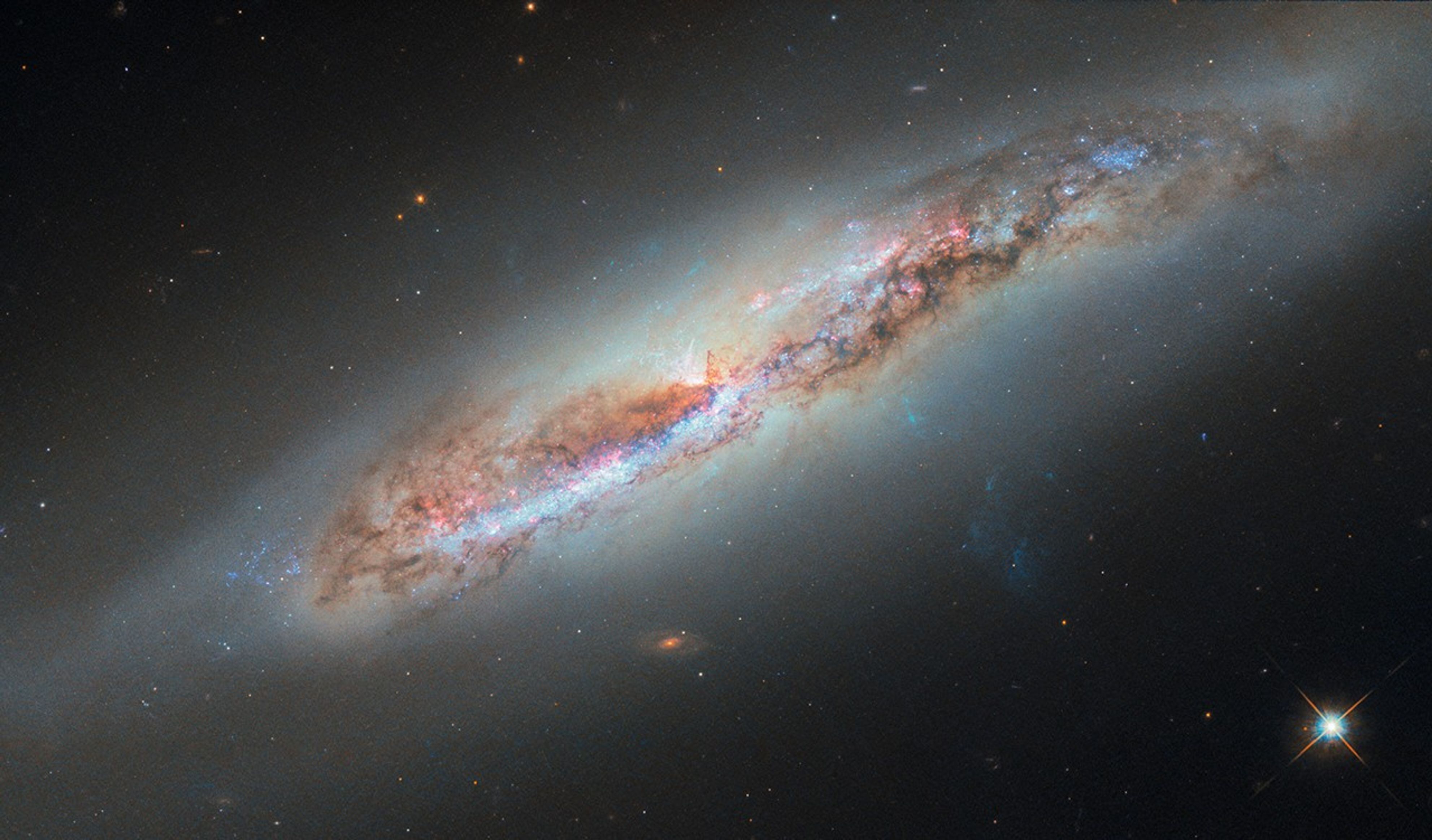
    A nearly edge-on spiral galaxy. Its disk holds pink light from star-forming nebulae and blue light from clusters of hot stars. Thick dark clouds of dust block the strong white light from galaxy’s center. A faint, glowing halo of gas surrounds the disk, fading into the black background of space. A bluish plume of gas also extends from the galaxy’s core extending toward the lower-right corner of the image.
    This NASA/ESA Hubble Space Telescope image features the galaxy NGC 4388, a member of the Virgo galaxy cluster.
    ESA/Hubble & NASA, S. Veilleux, J. Wang, J. Greene

    A sideways spiral galaxy shines in this NASA/ESA Hubble Space Telescope image. Located about 60 million light-years away in the constellation Virgo (the Maiden), NGC 4388 is a resident of the Virgo galaxy cluster. This enormous cluster of galaxies contains more than a thousand members and is the nearest large galaxy cluster to the Milky Way.

    NGC 4388 appears to tilt at an extreme angle relative to our point of view, giving us a nearly edge-on prospect of the galaxy. This perspective reveals a curious feature that wasn’t visible in a previous Hubble image of this galaxy released in 2016: a plume of gas from the galaxy’s nucleus, here seen billowing out from the galaxy’s disk toward the lower-right corner of the image. But where did this outflow come from, and why does it glow?

    The answer likely lies in the vast stretches of space that separate the galaxies of the Virgo cluster. Though the space between galaxies appears empty, this space is occupied by hot wisps of gas called the intracluster medium. As NGC 4388 moves within the Virgo cluster, it plunges through the intracluster medium. Pressure from hot intracluster gas whisks away gas from within NGC 4388’s disk, causing it to trail behind as NGC 4388 moves.

    The source of the ionizing energy that causes this gas cloud to glow is more uncertain. Researchers suspect that some of the energy comes from the center of the galaxy, where a supermassive black hole spins gas around it into a superheated disk. The blazing radiation from this disk might ionize the gas closest to the galaxy, while shock waves might be responsible for ionizing filaments of gas farther out.

    This image incorporates new data, including several additional wavelengths of light, that bring the ionized gas cloud into view. The image holds data from several observing programs that aim to illuminate galaxies with active black holes at their centers.

    Media Contact:

    Claire Andreoli (claire.andreoli@nasa.gov)
    NASA’s Goddard Space Flight CenterGreenbelt, MD

  • NASA Announces 2025 International Space Apps Challenge Global Winners

    NASA Space Apps announced Thursday 10 winners of the 2025 NASA Space Apps Challenge. During this two-day hackathon, participants gathered at 551 local events across 167 countries and territories to showcase their STEM skills and proposed ways to transform NASA’s open data into actionable tools.

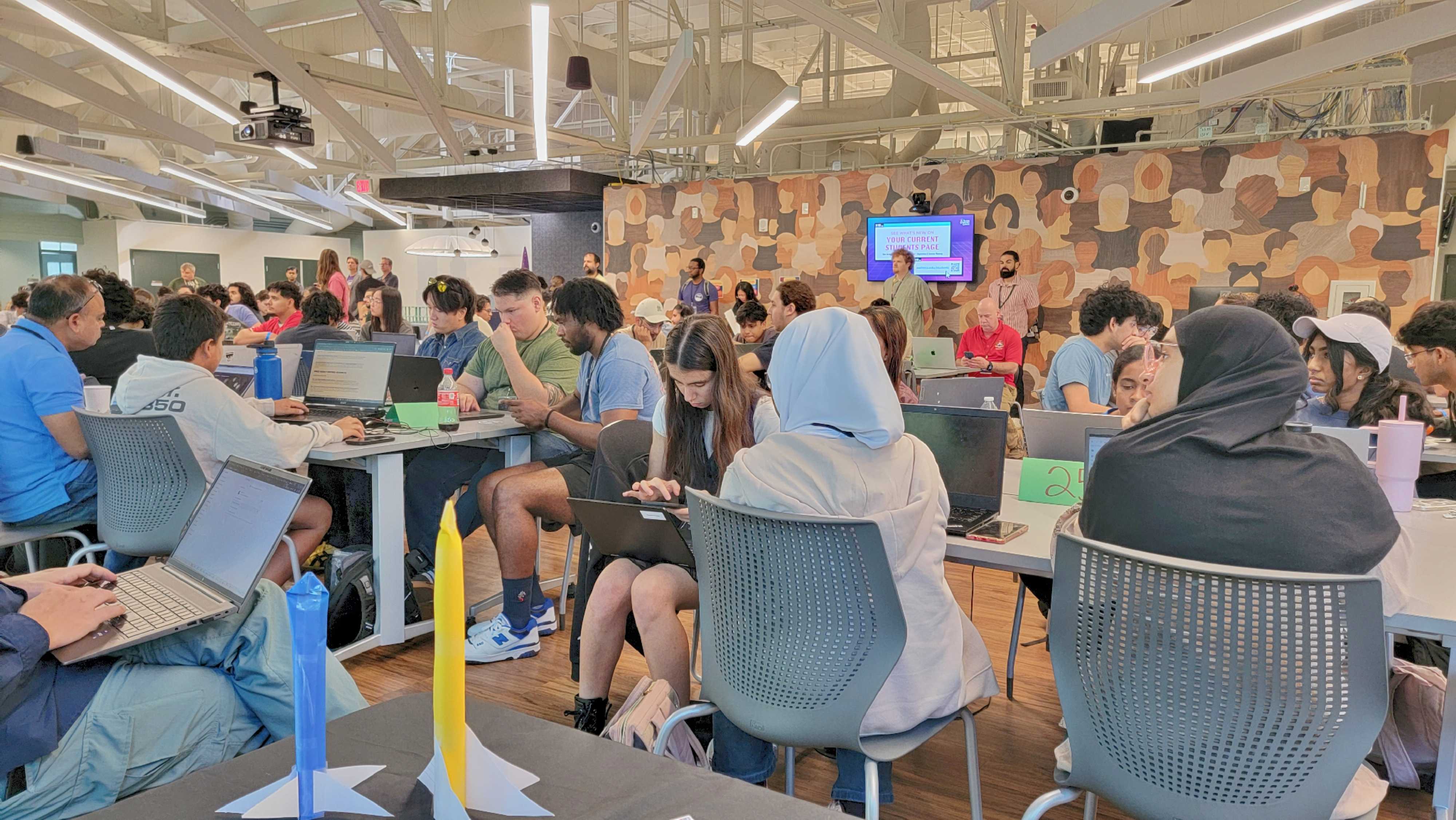
    crowd of people in a large room
    Participants work on their projects at the NASA Space Apps Challenge in Austin, Texas, at one of more than 50 local events held in the United States.
    NASA Space Apps

    More than 114,000 participants came together to address challenges created by NASA subject matter experts. These challenges ranged in complexity and topic, tasking participants with everything from leveraging artificial intelligence, to improving access to NASA research, and developing tools to evaluate air quality.

    “The Space Apps Challenge puts NASA’s free and open data into the hands of explorers around the world,” said Karen St. Germain, director, NASA Earth Science Division at NASA Headquarters in Washington. “With participants as varied as NASA enthusiasts, future scientists, regional decision-makers and members of the public, this challenge demonstrates the excitement of discovery and the real-world applications of agency data. Space apps also fosters a global community of creative and innovative ideas.”

    The winners were determined from more than 11,500 project submissions and judged by subject matter experts from NASA and agency partners:

    Best Use of Science Award: SpaceGenes+
    Team Members: Saloni T.
    Challenge: Build a Space Biology Knowledge Engine
    Country/Territory: Germany

    Team SpaceGenes+ created an interactive dashboard designed to help researchers uncover how radiation and microgravity together impact astronaut health at the molecular level. It gives researchers and mission planners an easy way to identify important molecular changes, supporting more effective protection strategies for long-duration spaceflight.
    Learn more about SpaceGenes+’ project

    Best Use of Data Award: Resonant Exoplanets
    Team Members: Adhvaidh S., Gabriel S., Jack A., Sahil S.
    Challenge: A World Away: Hunting for Exoplanets with AI
    Country/Territory: United States 
     
    Team Resonant Exoplanets developed an AI-powered system that ingests large sets of telescope and satellite data, including spectra from missions like the James Webb Space Telescope. This tool automatically analyzes data for exoplanets and detects possible biosignatures, rather than identifying them manually.
    Learn more about Resonant Exoplanets’ project

    Best Use of Technology Award: Twisters
    Team Members: Fernando A., Marcelo T., Mariana D., Regina R., Regina F.
    Challenge: Will It Rain on My Parade?
    Country/Territory: Mexico
     
    Team Twisters developed SkySense, a web-app platform that uses NASA Earth observation data and AI analysis to provide ultra-local, personalized weather predictions and to analyze weather variables such as rain, wind, temperature, humidity, and visibility, generating real-time risk assessments and suggesting the safest time windows for activities.
    Learn more about Twisters’ project

    Galactic Impact Award: Astro Sweepers: We Catch What Space Leaves Behind
    Team Members: Harshiv T., Pragathy S., Pratik J., Sherlin D., Yousra H., Zienab E.
    Challenge: Commercializing Low Earth Orbit (LEO)
    Country/Territory: Universal Event
     
    Team Astro Sweepers developed an end-to-end orbital debris compliance and risk intelligence platform that automatically ingests public orbital data to generate Debris Assessment Software reports and compute the Astro Sweepers Risk Index  for every resident space object. This project considers the operational, regulatory, and environmental challenges of commercialized space travel.
    Learn more about Astro Sweepers’ project

    Best Mission Concept Award: PureFlow
    Team Members: Esthefany M., João F., Laiza L., Lara D., Pedro H., Thayane D. 
    Challenge: Your Home in Space: The Habitat Layout Creator
    Country/Territory: Brazil
     
    PureFlow developed an interactive systems engineering platform that allows users to design, model in 3D, and validate space habitats, and then test the design against real space-weather threats, such as solar storms. This system considers the critical functions required for living in space, including waste management, power, life support, communications, and more.
    Learn more about PureFlows’ project

    Most Inspirational Award: Photonics Odyssey
    Team Members: Manish D., Deeraj K., Prasanth G., Rajalingam N., Rashi M., Sakthi R.
    Challenge: Commercializing Low Earth Orbit (LEO)
    Country/Territory: India
     
    Photonics Odyssey reimagined satellite internet as a sovereign national infrastructure rather than a private service, proposing a phased-array antenna approach that reduces ground dependency and expands broadband access to remote regions of India. The concept aims to help connect more than 700 million people who lack access to broadband internet.
    Learn more about Photonics Odysseys’ project

    Best Use of Storytelling Award: HerCode Space
    Team Members: Alice R., Joselyn R., Paula C., Pierina J.
    Challenge: Stellar Stories: Space Weather Through the Eyes of Earthlings
    Country/Territory: Universal Event
     
    HerCode Space combined NASA data and heliophysics concepts with powerful storytelling and vibrant illustrations to teach kids how space weather affects daily life and why it matters. HerCode Science hopes their story, “A Solar Tale,” can bridge science and imagination, and bring heliophysics to life in classrooms, libraries, and outreach programs.
    Learn more about HerCode Spaces’ project

    Global Connection Award: Gaia+LEO
    Team Members: Adam H., Katia L., Prajwal S., Upendra K. 
    Challenge: Commercializing Low Earth Orbit (LEO)
    Country/Territory: United States
     
    Team Gaia+LEO developed a mixed-integer optimization framework that co-designs orbital and terrestrial data-center networks to support large-scale AI training and climate modeling in orbit. Their goal is to reduce the power, and water demands of Earth-based systems and help accelerate the shift toward space-based, green computing within the emerging orbital economy.
    Learn more about Gaia+LEOs’ project

    Art & Technology Award: Zumorroda-X
    Team Members: Alaa A., Esraa A., Malak S., Mennatulla E.
    Challenge: NASA Farm Navigators: Using NASA Data Exploration in Agriculture
    Country/Territory: Egypt
     
    Team Zumorroda-X created mini games that allow players to step into the shoes of a farmer who sets off on an epic journey around the world. Through this game, players can learn how farmers globally adapt to heat waves, flooding, and other environmental challenges. 
    Learn more about Zumorroda-Xs’ project

    Local Impact Award: QUEÑARIS
    Team Members: Borax Q., Carlos Y., Marcelo S., Máximo S., Oscar M., Pamela P.
    Challenge: BloomWatch: An Earth Observation Application for Global Flowering Phenology
    Country/Territory: Peru
     
    Team QUEÑARIS’ project addresses critical water scarcity in Peru’s second-largest city, Arequipa, caused by the degradation of queñua forests, which are vital for water retention. Their platform combines native microorganisms, NASA satellite data, drones, and artificial intelligence to accelerate tree growth, identify the best areas for reforestation, and monitor ecosystem health.
    Learn more about QUEÑARIS’ project

    Stay up to date with #SpaceApps by following these accounts:
    X: @SpaceApps 
    Instagram: @nasa_spaceapps 
    Facebook: @spaceappschallenge 
    YouTube: @NASASpaceAppsChallenge

    NASA Space Apps is funded by NASA’s Earth Science Division through a contract with Booz Allen Hamilton, Mindgrub, and SecondMuse.

    To learn more about what inspired these winning projects, visit:

    https://www.spaceappschallenge.org

    Details

    Last Updated

    Dec 19, 2025

    Related Terms

  • Hi ya! Hyha

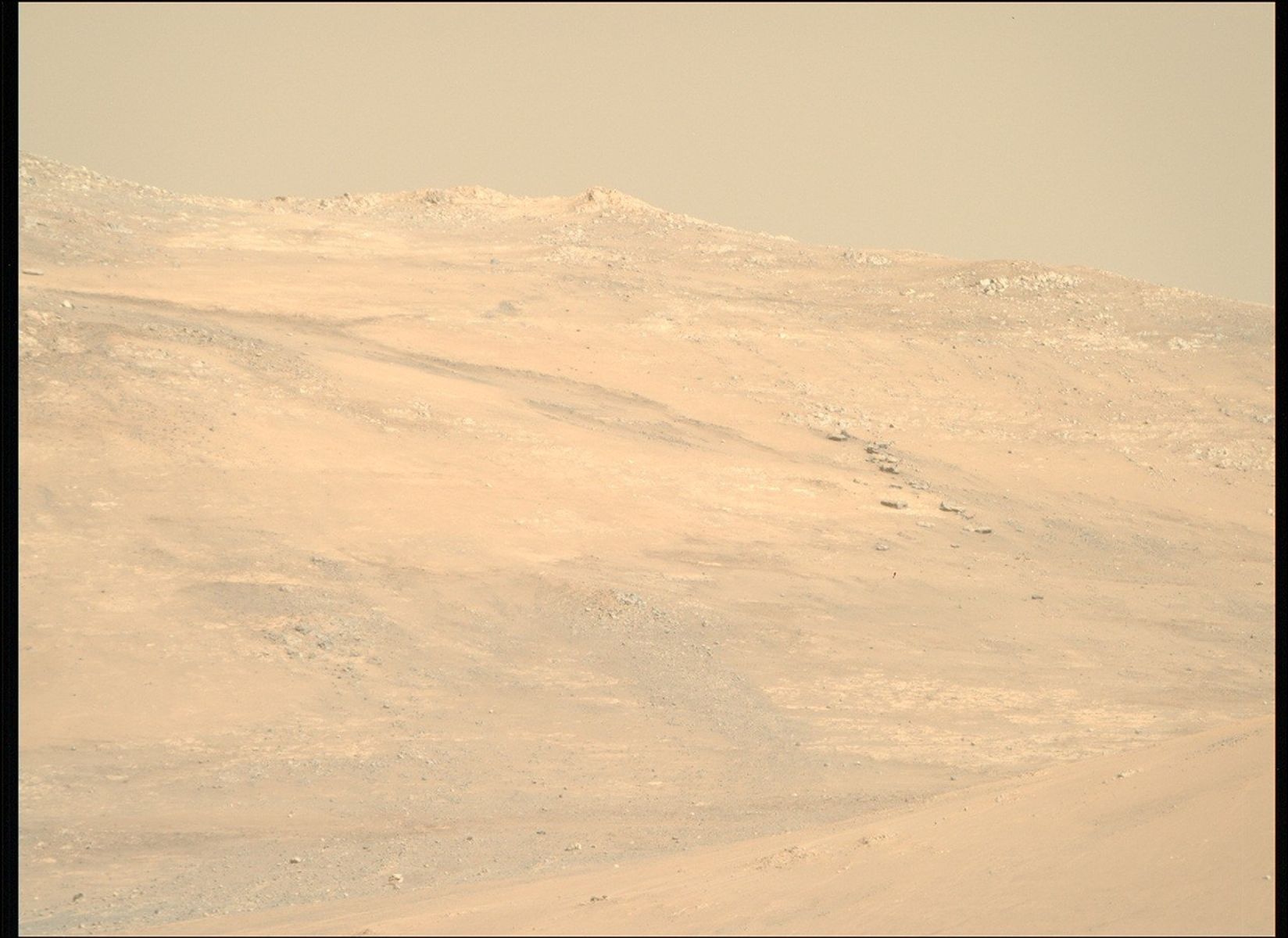
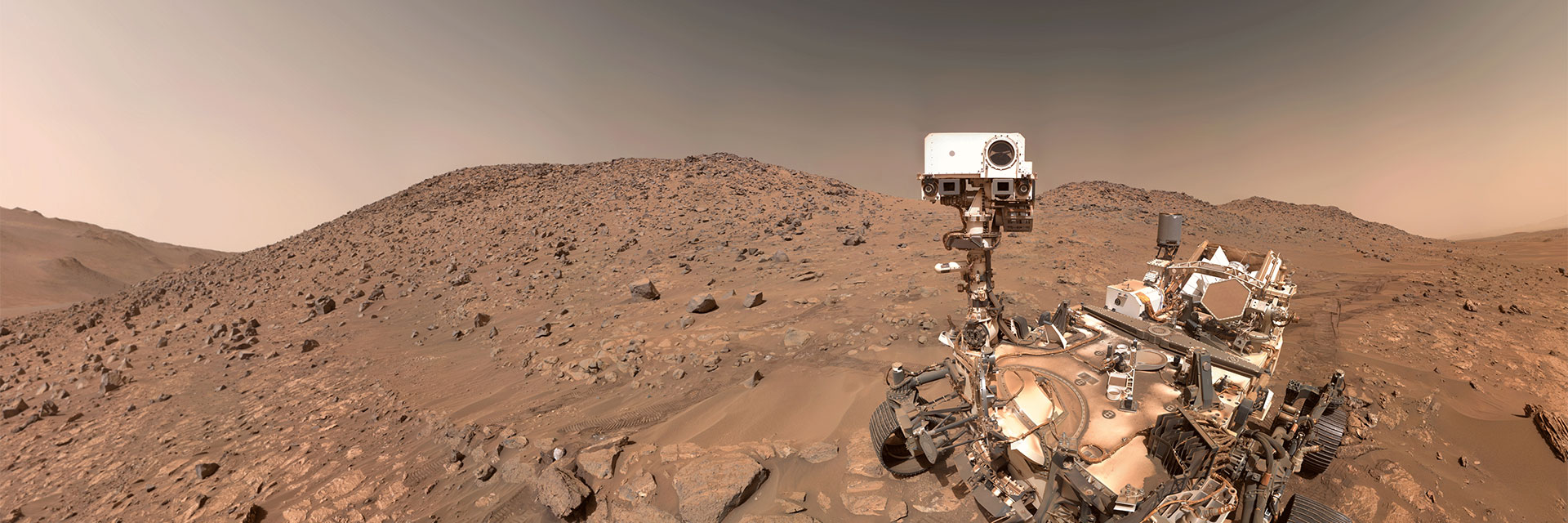
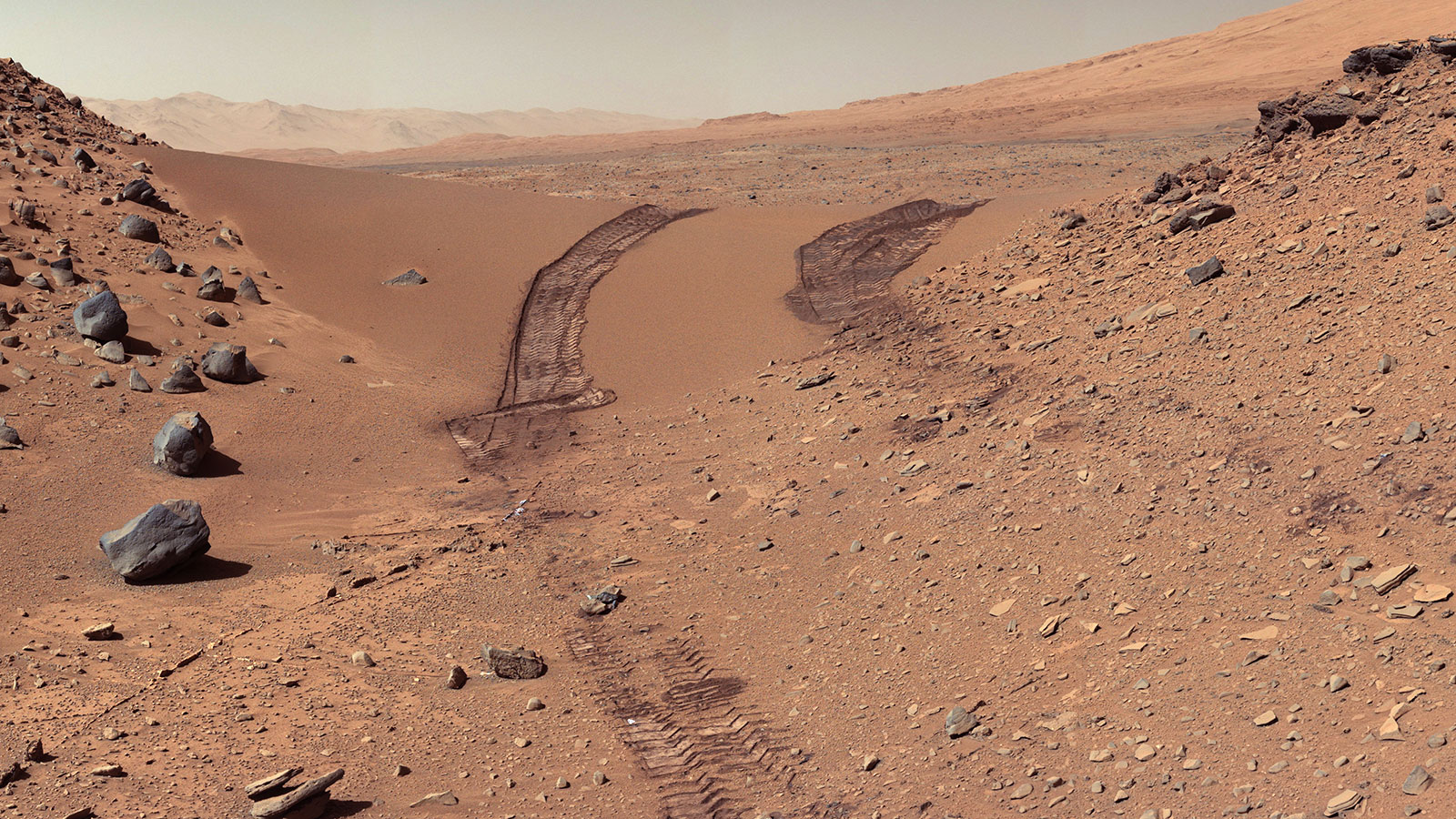
    A color photograph from the Martian surface shows mostly smooth, pale orange colored terrain beneath a sky of flat, warm beige; the ground extends into the distance where an undulating line of gentle peaks forms a horizon about two-thirds of the way above the bottom of the frame. Closer to the foreground the terrain slopes from the upper left of the image toward lower right, with scattered rocks and streaks of gray along the ground.
    This image from NASA’s Mars Perseverance rover shows a potential megablock on the Jezero crater rim, taken by the Mastcam-Z instrument’s “right eye.” Mastcam-Z is a pair of cameras located high on the rover’s mast. Perseverance acquired this image looking east across the rim heading towards “Lac de Charmes” on Dec. 7, 2025 — Sol 1706, or Martian day 1,706 of the Mars 2020 mission — at the local mean solar time of 13:38:46.
    NASA/JPL-Caltech/ASU

    Written by Margaret Deahn, Ph.D. student at Purdue University 

    NASA’s Mars 2020 rover is currently trekking towards exciting new terrain. After roughly four months of climbing up and over the rim of Jezero crater, the rover is taking a charming tour of the plains just beyond the western crater rim, fittingly named “Lac de Charmes.” This area just beyond Jezero’s rim will be the prime place to search for pre-Jezero ancient bedrock and Jezero impactites — rocks produced or affected by the impact event that created Jezero crater.  

    The formation of a complex crater like Jezero is, well… complex. Scientists who study impact craters like to split the formation process into three stages: contact & compression (when the impactor hits), excavation (when materials are thrown out of the crater), and modification (when gravity causes everything to collapse). This process happens incredibly fast, fracturing the impacted rock and even melting some of the target material. Sometimes on Earth, the classic “bowl” shaped crater has been completely weathered and unrecognizable, so geologists are able to identify craters by the remnants of their impactites. Just when you thought it couldn’t get any more complicated — Jezero crater’s rim is located on the rim of another, even bigger basin called Isidis. That means there is an opportunity to have impactites from both cratering events exposed in and just around the rim — some of which could be several billions of years old! We may have already encountered one of these blocks on our trek towards Lac de Charmes. In the foreground of this image taken by the Mastcam-Z instrument on the rover, there is a potential impactite called a “megablock” that the team has named “Hyha.” We can actually see this block from orbit, it is that large! The team is excited to continue exploring these ancient rocks as we take our next steps off Jezero’s rim.

  • NASA’s Perseverance Mars Rover Ready to Roll for Miles in Years Ahead

    NASA’s Perseverance Mars rover captured this view of a location nicknamed “Mont Musard” on Sept. 8, 2025. Made up of three images, the panorama also captures another region, “Lac de Charmes,” where the rover’s team will be looking for more rock core samples to collect in the year ahead.
    NASA/JPL-Caltech/ASU/MSSS

    After nearly five years on Mars, NASA’s Perseverance rover has traveled almost 25 miles (40 kilometers), and the mission team has been busy testing the rover’s durability and gathering new science findings on the way to a new region nicknamed “Lac de Charmes,” where it will be searching for rocks to sample in the coming year.

    Like its predecessor Curiosity, which has been exploring a different region of Mars since 2012, Perseverance was made for the long haul. NASA’s Jet Propulsion Laboratory in Southern California, which built Perseverance and leads the mission, has continued testing the rover’s parts here on Earth to make sure the six-wheeled scientist will be strong for years to come. This past summer, JPL certified that the rotary actuators that turn the rover’s wheels can perform optimally for at least another 37 miles (60 kilometers); comparable brake testing is underway as well.

    Over the past two years, engineers have extensively evaluated nearly all the vehicle’s subsystems in this way, concluding that they can operate until at least 2031.

    NASA’s Perseverance used its navigation cameras to capture its record-breaking drive of 1,350.7 feet (411.7 meters) on June 19, 2025. The navcam images were combined with rover data and placed into a 3D virtual environment, resulting in this reconstruction with virtual frames inserted about every 4 inches (0.1 meters) of drive progress. Credit: NASA/JPL-Caltech

    “These tests show the rover is in excellent shape,” said Perseverance’s deputy project manager, Steve Lee of JPL, who presented the results on Wednesday at the American Geophysical Union’s annual meeting, the largest gathering of planetary scientists in the United States. “All the systems are fully capable of supporting a very long-term mission to extensively explore this fascinating region of Mars.”

    Perseverance has been driving through Mars’ Jezero Crater, the site of an ancient lake and river system, where it has been collecting scientifically compelling rock core samples. In fact, in September, the team announced that a sample from a rock nicknamed “Cheyava Falls” contains a potential fingerprint of past microbial life.

    More efficient roving

    In addition to a hefty suite of six science instruments, Perseverance packs more autonomous capabilities than past rovers. A paper published recently in IEEE Transactions on Field Robotics highlights an autonomous planning tool called Enhanced Autonomous Navigation, or ENav. The software looks up to 50 feet (15 meters) ahead for potential hazards, then chooses a path without obstacles and tells Perseverance’s wheels how to steer there.

    Engineers at JPL meticulously plan each day of the rover’s activities on Mars. But once the rover starts driving, it’s on its own and sometimes has to react to unexpected obstacles in the terrain. Past rovers could do this to some degree, but not if these obstacles were clustered near each other. They also couldn’t react as far in advance, resulting in the vehicles driving slower while approaching sand pits, rocks, and ledges. In contrast, ENav’s algorithm evaluates each rover wheel independently against the elevation of terrain, trade-offs between different routes, and “keep-in” or “keep-out” areas marked by human operators for the path ahead.

    “More than 90% of Perseverance’s journey has relied on autonomous driving, making it possible to quickly collect a diverse range of samples,” said JPL autonomy researcher Hiro Ono, a paper lead author. “As humans go to the Moon and even Mars in the future, long-range autonomous driving will become more critical to exploring these worlds.”

    New science

    A paper published Wednesday in Science details what Perseverance discovered in the “Margin Unit,” a geologic area at the margin, or inner edge, of Jezero Crater. The rover collected three samples from that region. Scientists think these samples may be particularly useful for showing how ancient rocks from Mars’ deep interior interacted with water and the atmosphere, helping create conditions supportive for life.

    From September 2023 to November 2024, Perseverance ascended 1,312 feet (400 meters) of the Margin Unit, studying rocks along the way — especially those containing the mineral olivine. Scientists use minerals as timekeepers because crystals within them can record details about the precise moment and conditions in which they formed.

    Jezero Crater and the surrounding area holds large reserves of olivine, which forms at high temperatures, typically deep within a planet, and offers a snapshot of what was going on in the planet’s interior. Scientists think the Margin Unit’s olivine was made in an intrusion, a process where magma pushes into underground layers and cools into igneous rock. In this case, erosion later exposed that rock to the surface, where it could interact with water from the crater’s ancient lake and carbon dioxide, which was abundant in the planet’s early atmosphere.

    Those interactions form new minerals called carbonates, which can preserve signs of past life, along with clues as to how Mars’ atmosphere changed over time.

    “This combination of olivine and carbonate was a major factor in the choice to land at Jezero Crater,” said the new paper’s lead author, Perseverance science team member Ken Williford of Blue Marble Space Institute of Science in Seattle. “These minerals are powerful recorders of planetary evolution and the potential for life.”

    Together, the olivine and carbonates record the interplay between rock, water, and atmosphere inside the crater, including how each changed over time. The Margin Unit’s olivine appeared to have been altered by water at the base of the unit, where it would have been submerged. But the higher Perseverance went, the more the olivine bore textures associated with magma chambers, like crystallization, and fewer signs of water alteration.

    As Perseverance leaves the Margin Unit behind for Lac de Charmes, the team will have the chance to collect new olivine-rich samples and compare the differences between the two areas.

    More about Perseverance

    Managed for NASA by Caltech, NASA’s Jet Propulsion Laboratory in Southern California built and manages operations of the Perseverance rover on behalf of the agency’s Science Mission Directorate as part of NASA’s Mars Exploration Program portfolio.

    To learn more about Perseverance, visit:

    https://science.nasa.gov/mission/mars-2020-perseverance

    News Media Contacts

    Andrew Good / DC Agle
    Jet Propulsion Laboratory, Pasadena, Calif.
    818-393-2433 / 818-393-9011
    andrew.c.good@jpl.nasa.gov / agle@jpl.nasa.gov

    Karen Fox / Molly Wasser
    NASA Headquarters, Washington
    240-285-5155 / 240-419-1732
    karen.c.fox@nasa.gov / molly.l.wasser@nasa.gov

    2025-143

  • NASA Ignites New Golden Age of Exploration, Innovation in 2025

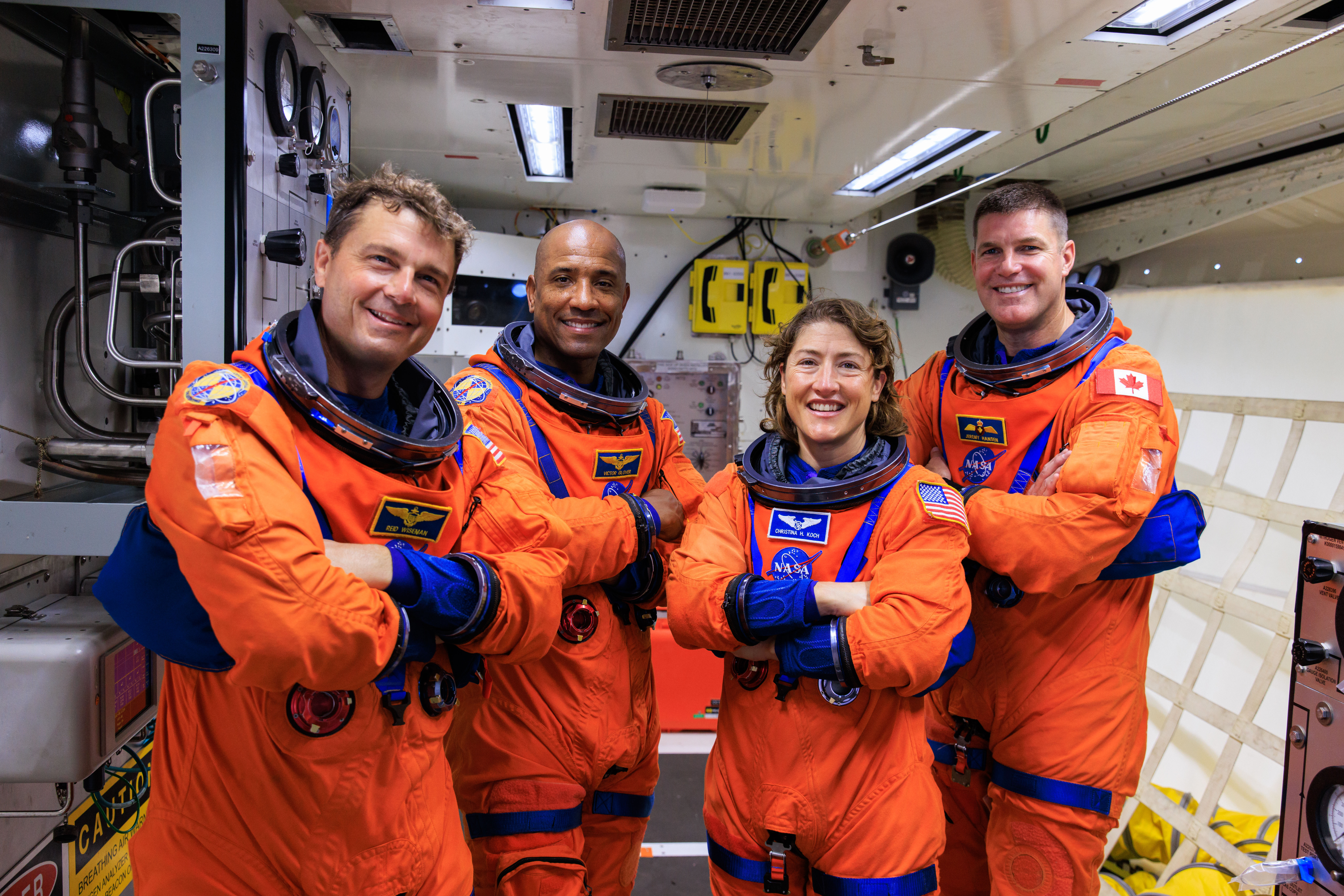
    Artemis II NASA astronauts (left to right) Reid Wiseman, Victor Glover, and Christina Koch, and CSA (Canadian Space Agency) astronaut Jeremy Hansen stand in the white room on the crew access arm of the mobile launcher at Launch Pad 39B as part of an integrated ground systems test at the agency’s Kennedy Space Center in Florida on Sept. 20, 2023.
    Credit: NASA/Frank Michaux

    With a second Trump Administration at the helm in 2025, NASA marked significant progress toward the Artemis II test flight early next year, which is the first crewed mission around the Moon in more than 50 years, as well as built upon its momentum toward a human return to the lunar surface in preparation to send the first astronauts — Americans — to Mars.

    As part of the agency’s Golden Age of innovation and exploration, NASA and its partners landed two robotic science missions on the Moon; garnered more signatories for the Artemis Accords with 59 nations now agreeing to safe, transparent, and responsible lunar exploration; as well as advanced a variety of medical and technological experiments for long-duration space missions like hand-held X-ray equipment and navigation capabilities.

    NASA also led a variety of science discoveries, including launching a joint satellite mission with India to regularly monitor Earth’s land and ice-covered surfaces, as well as identifying and tracking the third interstellar object in our solar system; achieved 25 continuous years of human presence aboard the International Space Station; and, for the first time, flew a test flight of the agency’s X-59 supersonic plane that will help revolutionize air travel.

    Sean Duffy, named by President Trump, is serving as the acting administrator while NASA awaits confirmation of Jared Isaacman to lead the agency. Isaacman’s nomination hearing took place in early December, and his nomination was passed out of committee with bipartisan support. The full Senate will consider Isaacman’s nomination soon. President Trump also nominated Matt Anderson to serve as deputy administrator, and Greg Autry to serve as chief financial officer, both of whom are awaiting confirmation hearings. NASA named Amit Kshatriya to associate administrator, the agency’s highest-ranking civil servant position.

    Key accomplishments by NASA in 2025 include:

    Astronauts exploring Moon, Mars is on horizon

    Under Artemis, NASA will send astronauts on increasingly difficult missions to explore more of the Moon for scientific discovery, economic benefits, and to build upon our foundation for the first crewed mission to Mars. The Artemis II test flight is the first flight with crew under NASA’s Artemis campaign and is slated to launch in early 2026. The mission will help confirm systems and hardware for future lunar missions, including Artemis III’s astronaut lunar landing.

    NASA also introduced 10 new astronaut candidates in September, selected from more than 8,000 applicants. The class is undertaking nearly two years of training for future missions to low Earth orbit, the Moon, and Mars. 

    Progress to send the first crews around the Moon and on the lunar surface under Artemis includes:

    • NASA completed stacking of its Space Launch System rocket and Orion spacecraft for Artemis II. Teams integrated elements manufactured across the country at NASA’s Kennedy Space Center in Florida, including the rocket’s boosters and core stage, as well as Orion’s stage adapter and launch abort system, to name a few.
    • Ahead of America’s 250th birthday next year, the SLS rocket’s twin-pair of solid rocket boosters showcases the America 250 emblem.
    • The Artemis II crew participated in more than 30 mission simulations alongside teams on the ground, ensuring the crew and launch, flight, and recovery teams are prepared for any situation that may arise during the test flight. Soon, crew will don their survival suits and get strapped into Orion during a countdown demonstration test, serving as a dress rehearsal for launch day.
    • The agency worked with the Department of War to conduct a week-long underway recovery test in preparation to safely collect the Artemis II astronauts after they splashdown following their mission.
    • To support later missions, teams conducted a booster firing test for future rocket generations, verified new RS-25 engines, test-fired a new hybrid rocket motor to help engineering teams better understand the physics of rocket exhaust and lunar landers, as well using various mockups to test landing capabilities in various lighting conditions. Teams also conducted human-in-the-loop testing in Japan with JAXA (Japan Aerospace Exploration Agency) with a rover mockup from their agency.
    • NASA also continued work with Axiom Space, to develop and test the company’s spacesuit, including completing a test run at the Neutral Buoyancy Laboratory at NASA Johnson ahead of using the suit for Artemis training. The spacesuit will be worn by Artemis astronauts during the Artemis III mission to the lunar South Pole.
    • On the Moon, future crew will use a lunar terrain vehicle, or LTV, to travel away from their landing zone. NASA previously awarded three companies feasibility studies for developing LTV, followed by a request for proposals earlier this year. The agency is expected to make an award soon to develop, deliver, and demonstrate LTV on the lunar surface later this decade. The agency also selected two science instruments that will be included on the LTV to study the Moon’s surface composition and scout for potential resources.
    • For operations around the Moon, NASA and its partners continued to develop Gateway to support missions between lunar orbit and the Moon’s surface. Construction and production of the first two elements, a power and propulsion system and habitation element, each progressed, as did development and testing of potential science and technology demonstrations operated from Gateway. International partners also continued work that may contribute technology to support those elements, as well as additional habitation capabilities and an airlock.
    • This past year, NASA’s Lunar Surface Innovation Consortium team collaborated with over 3,900 members from academia, industry, and government on key lunar surface capabilities. Members from across the U.S. and 71 countries participated in two biannual meetings, three lunar surface workshops, and monthly topic meetings, resulting in 10 studies, four reports, and nine conference presentations. 

    Building on previous missions and planning for the future, NASA will conduct more science and technology demonstrations on and around the Moon than ever before. Work toward effort included:

    • Selected a suite of science studies for the Artemis II mission, including studies that focus on astronauts’ health.
    • Launched two CLPS (Commercial Lunar Payload Services) flights with NASA as a key customer, including Firefly’s Blue Ghost Mission One, which landed on the Moon March 2, and Intuitive Machines’ Nova C lunar lander, which touched down on March 6.
      • Experiments and tech demos aboard these flights included an electrodynamic dust shield, lunar navigation system, high-performance computing, collection of more than 9,000 first-of-a-kind images of the lunar lander’s engine plumes, and more.
    • For future CLPS flights, NASA awarded Blue Origin a task order with an option to deliver the agency’s VIPER (Volatiles Investigating Polar Exploration Rover) to the lunar South Pole in late 2027, as well as awarded Firefly another flight, slated for 2030.
    • Teams studied regolith (lunar dirt and rocks) in a simulated lunar gravity environment and tested how solid materials catch fire in space.
    • The agency’s 55-pound CubeSat in lunar orbit, CAPSTONE, exceeded 1,000 days in space, serving as a testbed for autonomous navigation and in-space communications.
    • Published findings from this Artemis I experiment highlighting why green algae may be a very good deep space travel companion.
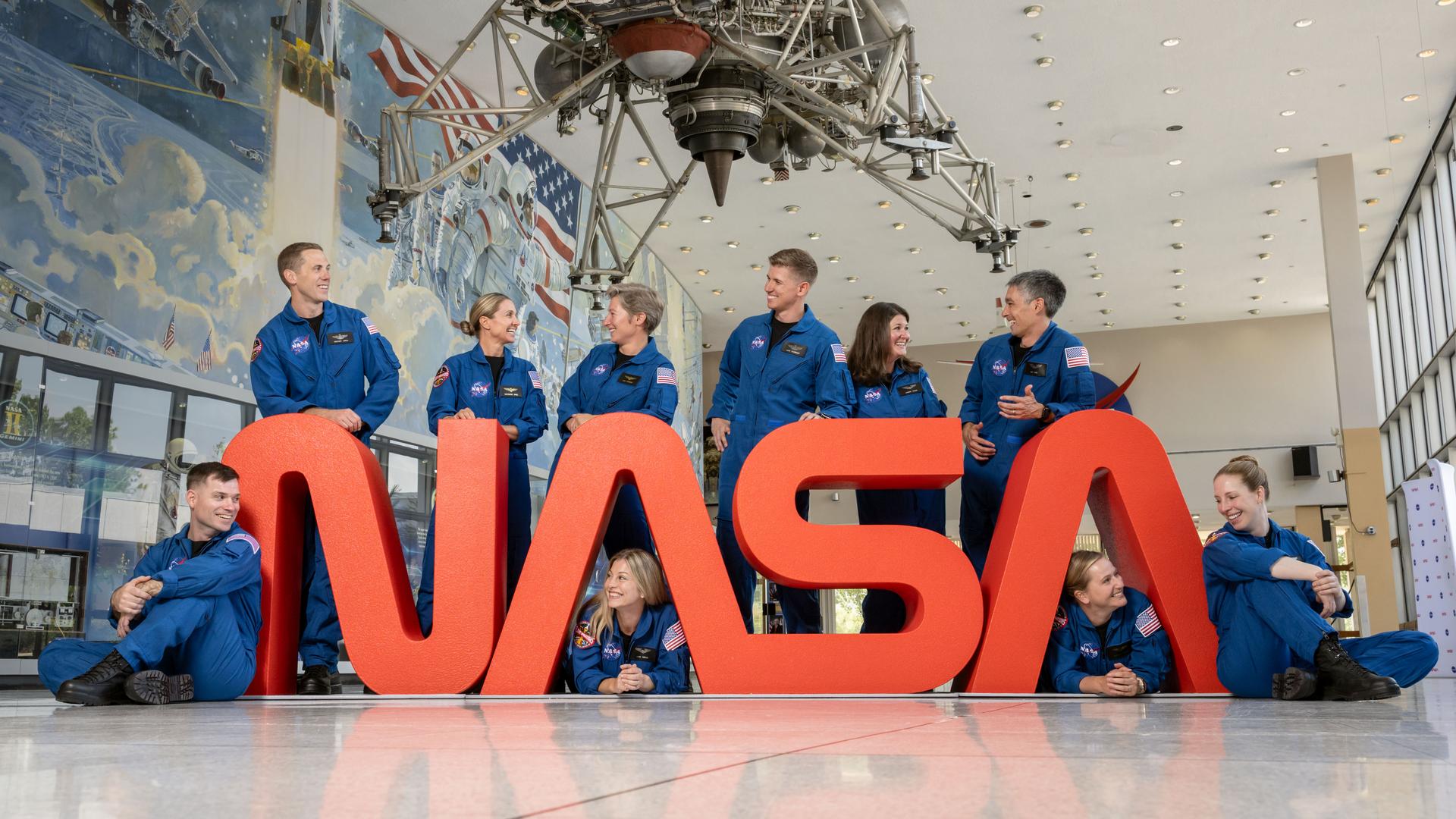
    NASA announced its 2025 Astronaut Candidate Class on Sept. 22, 2025. The 10 candidates, pictured here at NASA’s Johnson Space Center in Houston are: U.S. Army CW3 Ben Bailey, Anna Menon, Rebecca Lawler, Katherine Spies, U.S. Air Force Maj. Cameron Jones, Dr. Lauren Edgar, U.S. Navy Lt. Cmdr. Erin Overcash, Yuri Kubo, Dr. Imelda Muller, and U.S. Air Force Maj. Adam Fuhrmann.
    Credit: NASA/Josh Valcarcel

    Technological and scientific steps toward humanity’s next giant leap on the Red Planet include:

    • Launched a pair of spacecraft, known as ESCAPADE, on a mission to Mars, arriving in September 2027, to study how its magnetic environment is impacted by the Sun. This data will better inform our understanding of space weather, which is important to help minimize the effects of radiation for future missions with crew.
    • NASA announced Steve Sinacore, from the agency’s Glenn Research Center in Cleveland, to lead the nation’s fission surface power efforts.
    • Selected participants for a second yearlong ground-based simulation of a human mission to Mars, which began in October, as well as tested a new deep space inflatable habitat concept.
    • Completed the agency’s Deep Space Optical Communications experiment, which exceeded all of its technical goals after two years. This type of laser communications has the potential to support high-bandwidth connections for long duration crewed missions in deep space.
    • NASA completed its fourth Entry Descent and Landing technology test in three months, accelerating innovation to achieve precision landings on Mars’ thin atmosphere and rugged terrain. 
    • Other research to support long-duration missions in deep space include how fluids behave in space, farming space crops, and quantum research.

    Through the Artemis Accords, seven new nations have joined the United States, led by NASA and the U.S. Department of State, in a voluntary commitment to the safe, transparent, and responsible exploration of the Moon, Mars, and beyond. With nearly 60 signatories, more countries are expected to sign in the coming months and years. 

    Finally, NASA engaged the public to join its missions to the Moon and Mars through a variety of activities. The agency sought names from people around the world to fly their name on a SD card aboard Orion during the Artemis II mission. NASA also sponsored a global challenge to design the spacecraft’s zero gravity indicator, announcing 25 finalists this year for the mascot design. Artemis II crew members are expected to announce a winner soon.

    NASA’s gold standard science benefits humanity

    In addition to conducting science at the Moon and Mars to further human exploration in the solar system, the agency continues its quest in the search for life, and its scientific work defends the planet from asteroids, advances wildfire monitoring from its satellites, studies the Sun, and more.

    • Garnering significant interest this year, NASA has coordinated a solar system-wide observation campaign to follow comet 3I/ATLAS, the third known interstellar object to pass through our solar system. To date, 12 NASA spacecraft and space-based telescopes have captured and processed imagery of the comet since its discovery in the summer.

    Astrobiology

    • A Perseverance sample found on Mars potentially contain biosignatures, a substance or structure that might have a biological origin but requires additional data and studying before any conclusions can be reached about the absence or presence of life.
    • NASA’s Curiosity rover on Mars found the largest organic compounds on the Red Planet to date.
    • Teams also are working to develop technologies for the Habitable Worlds Observatory, and the agency now has tallied 6,000 exoplanets.
    • Samples from asteroid Bennu revealed sugars, amino acids, and other life-building molecules.

    Planetary Defense

    Heliophysics

    In addition to launching the NISAR mission, here are other key science moments:

    • Completion of NASA’s next flagship observatory, the Nancy Grace Roman Space Telescope, is done, with final testing underway. The telescope will help answer questions about dark energy and exoplanets and will be ready to launch as early as fall of 2026.
    • The agency’s newest operating flagship telescope, James Webb Space Telescope, now in its third year, continued to transform our understanding of the universe, and Hubble celebrated its 35th year with a 2.5-gigapixel Andromeda galaxy mosaic.
    • Juno found a massive, hyper-energetic volcano on Jupiter’s moon Io.
    • NASA’s Parker Solar Probe team shared new images of the Sun’s atmosphere, taken closer to the star than ever captured before.
    • Lucy completed a successful rehearsal flyby of the asteroid Donaldjohanson.
    • The agency’s SPHEREx space telescope is creating the first full-sky map in 102 infrared colors.
    • NASA space telescopes including Chandra X-ray Observatory, IXPE, Fermi, Swift, and NuSTAR continued to reveal secrets in the universe from record-setting black holes to the first observations of the cosmos’ most magnetic objects.
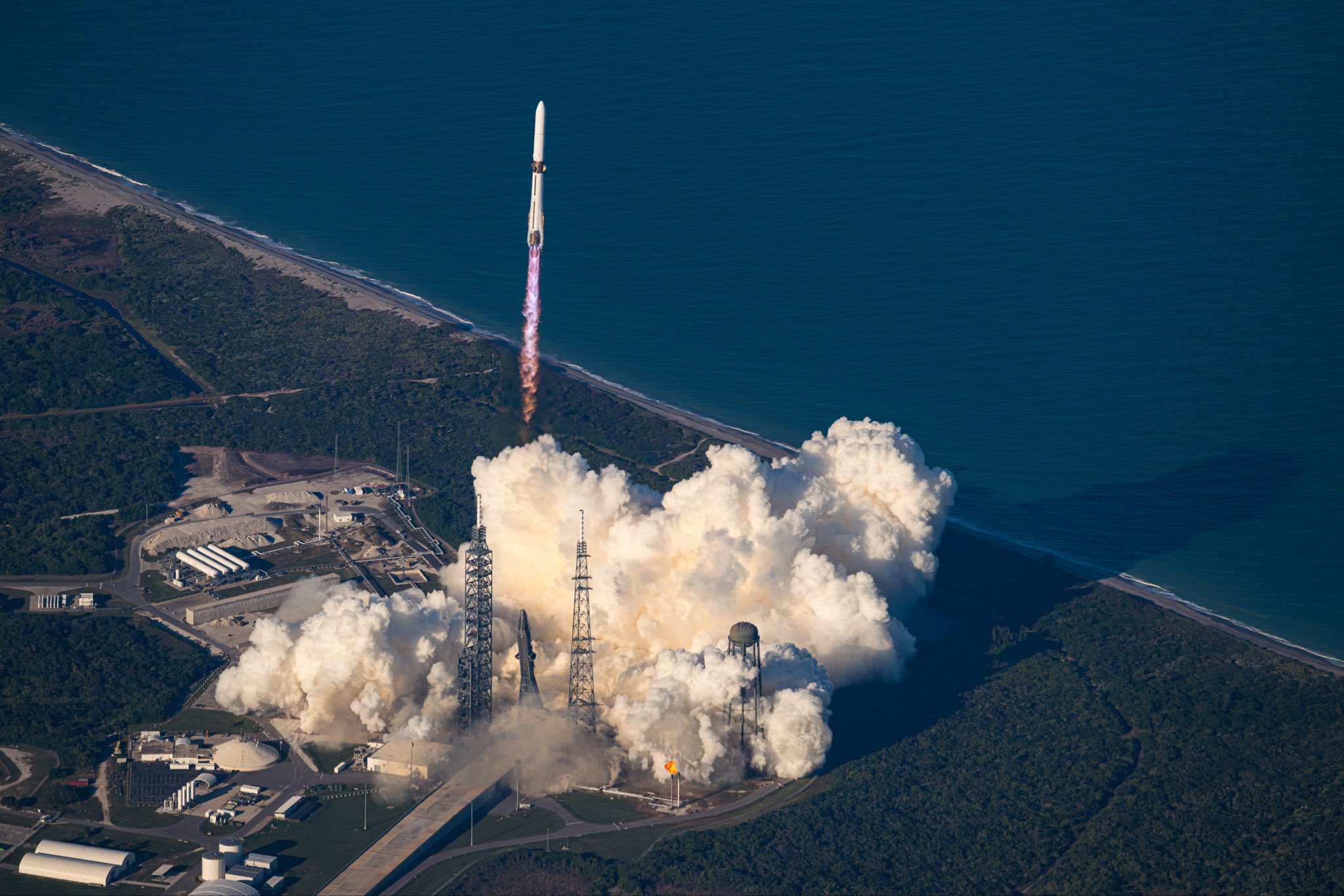
    NASA’s ESCAPADE (Escape and Plasma Acceleration and Dynamics Explorers) mission launched at 3:55 p.m. EST atop a Blue Origin New Glenn rocket at Launch Complex 36 at Cape Canaveral Space Force Station.
    NASA’s ESCAPADE (Escape and Plasma Acceleration and Dynamics Explorers) mission launched on Nov. 13, 2025, atop a Blue Origin New Glenn rocket at Launch Complex 36 at Cape Canaveral Space Force Station.
    Credit: Blue Origin

    25 years of continuous presence in low Earth orbit

    In 2025, the International Space Station celebrated 25 years of continuous human presence, a milestone achievement underscoring its role as a beacon of global cooperation in space. The orbital laboratory supported thousands of hours of groundbreaking research in microgravity in 2025, advancing commercial space development and preparing for future human exploration of the Moon and Mars.

    • For the first time, all eight docking ports were occupied by visiting spacecraft to close out the year, demonstrating the strength of NASA’s commercial and international partnerships. Twenty-five people from six countries lived and worked aboard the station this year. In all, 12 spacecraft visited the space station in 2025, including seven cargo missions delivering more than 50,000 pounds of science, tools, and critical supplies to the orbital complex.  

    Research aboard the International Space Station continues to benefit life on Earth and support deep space exploration.

    • Several studies with Crew-10 and Crew 11 aimed at understanding how the human body adapts to spaceflight, including a new study to assess astronauts’ performance, decision making, and piloting capabilities during simulated lunar landings. 
    • In September, the U.S. Food and Drug Administration approved an early-stage cancer treatment, supported by research aboard the space station, that could reduce costs and shorten treatment times for patients.
    • Scientists also published findings in peer-reviewed journals on topics such as astronaut piloting performance after long missions, the use of biologically derived materials to shield against space radiation, robotic telesurgery in space, and how spaceflight affects stem cells, all advancing our understanding of human physiology in space and on Earth.
    • Researchers 3D-printed medical implants with potential to support nerve repair; advanced work toward large-scale, in-space semiconductor manufacturing; and researched the production of medical components with increased stability and biocompatibility that could improve medication delivery.

    Additional notable space operations accomplishments included:

    • NASA’s SpaceX Crew-9 astronauts Nick Hague, Suni Williams, and Butch Wilmore returned in March after a long-duration mission, including more than eight months for Williams and Wilmore. The trio completed more than 150 scientific experiments and 900 hours of research during the stay aboard the orbiting laboratory. Williams also conducted two spacewalks, setting a new female spacewalking record with 62 hours, 6 minutes, and ranking her fourth all-time in spacewalk duration. 
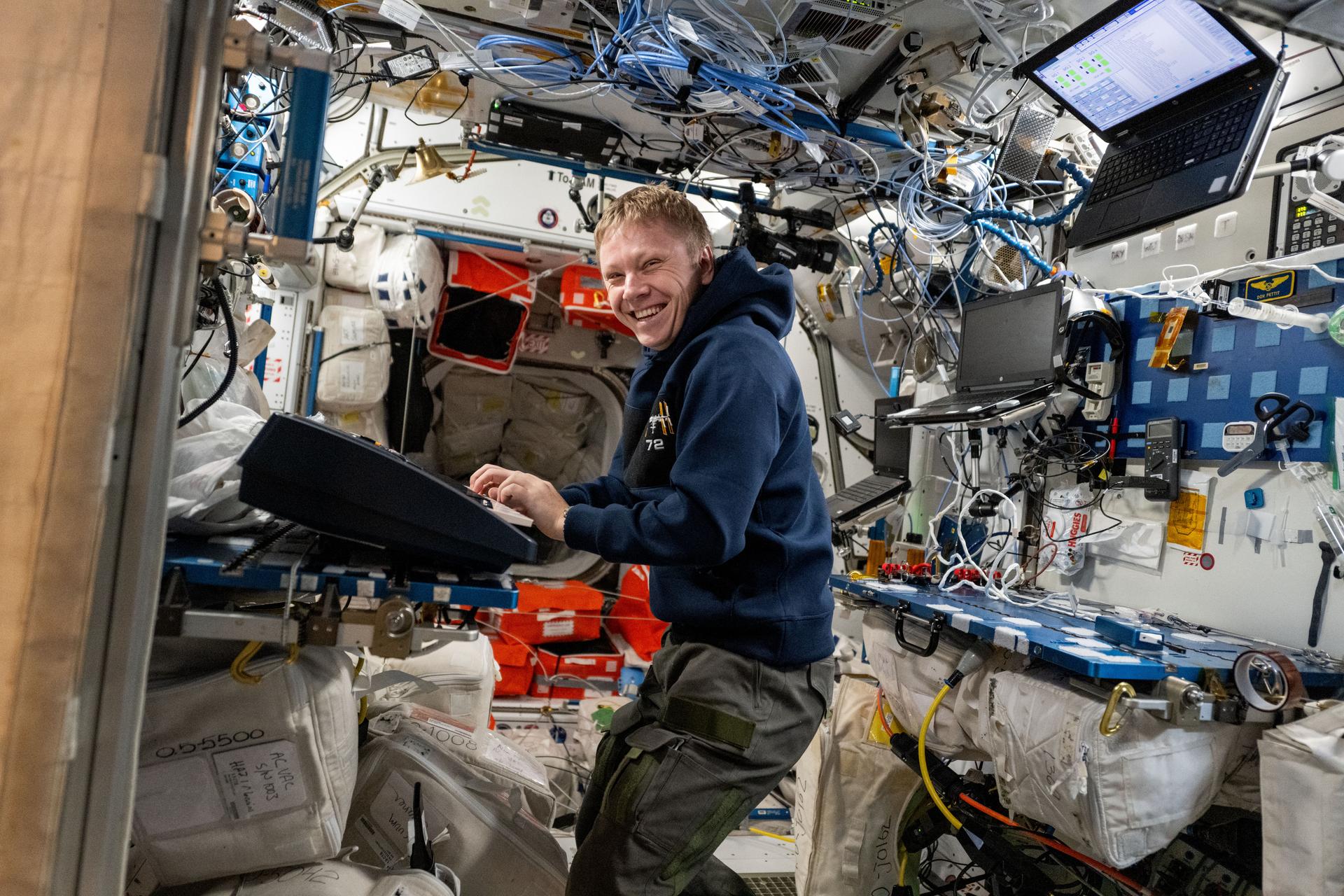
    • NASA astronaut Don Pettit returned in April with Roscosmos cosmonauts Alexey Ovchinin and Ivan Vagner, concluding a seven-month mission. Pettit, who turned 70 the day of his return, completed 400 hours of research during his flight, and has now logged 590 days in space across four missions. 
    • SpaceX Dragon cargo missions 32 and 33 launched in April and August, delivering more than 11,700 pounds of cargo, while SpaceX 33 tested a new capability to help maintain the altitude of station.  
    • Axiom Mission 4, the fourth private astronaut mission to the space station, concluded in July, furthering NASA’s efforts to support and advance commercial operations in low Earth orbit. 
    • NASA SpaceX Crew-11 mission launched in August with NASA astronauts Zena Cardman and Mike Fincke, JAXA (Japan Aerospace Exploration Agency) astronaut Kimiya Yui, and Roscosmos cosmonaut Oleg Platonov aboard. The crew remains aboard the space station where they are conducting long-duration research to support deep space exploration and benefit life on Earth. 
    • NASA’s SpaceX Crew-10 mission completed more than 600 hours of research before returning in August, when they became the first crewed SpaceX mission for NASA to splash down in the Pacific Ocean.  
    • In September, the first Northrop Grumman Cygnus XL spacecraft arrived, delivering more than 11,000 pounds of cargo, including research supporting Artemis and Mars exploration. 
    • NASA Glenn researchers tested handheld X-ray devices that could help astronauts quickly check for injuries or equipment problems during future space missions. 
    • For nearly six years, NASA’s BioNutrients project has studied how to produce essential nutrients to support astronaut health during deep space missions, where food and vitamins have limited shelf lives. With its third experiment now aboard the International Space Station, the research continues to advance preparations for long-duration spaceflight.
    • NASA astronaut Chris Williams arrived with Roscosmos cosmonauts Sergey Kud-Sverchkov and Sergei Mikaev for an eight-month science mission aboard the station. Following their arrival, NASA astronaut Jonny Kim returned home, concluding his own eight-month mission. 

    NASA has worked with commercial companies to advance development of privately owned and operated space stations in low Earth orbit from which the agency, along with other customers, can purchase services and stimulate the growth of commercial activities in microgravity. This work is done in advance of the International Space Station’s retirement in 2030.

    Among the many achievements made by our partners, recent advancements include:

    • Axiom Space has completed critical design review, machining activities, and the final welds, moving to testing for the primary structure of Axiom Station’s first module.
    • Starlab completed five development and design milestones focused on reviews of its preliminary design and safety, as well as spacecraft mockup and procurement plans.
    • Completed testing of the trace contaminant control system for Vast’s Haven-1 space station using facilities at NASA Marshall, confirming the system can maintain a safe and healthy atmosphere.
    • Blue Origin’s Orbital Reef completed a human-in-the-loop testing milestone using individual participants or small groups to perform day-in-the-life walkthroughs in life-sized mockups of major station components. 
    • The agency also continues to support the design and development of space stations and technologies through agreements with Northrop Grumman, Sierra Space, SpaceX, Special Aerospace Services, and ThinkOrbital.
    On Nov. 2, 2025, the International Space Station celebrated 25 years of continuous human presence. Here, clouds swirl over the Gulf of Alaska and underneath the aurora borealis blanketing Earth’s horizon in this photograph from the space station as it orbited 261 miles above on March 12, 2025.
    Credit: NASA

    Pioneering aviation research 

    This year saw a major triumph for NASA’s aviation researchers, as its X-59 one-of-a-kind quiet supersonic aircraft made its historic first flight Oct 28. NASA test pilot Nils Larson flew the X-59 for 67 minutes up to an altitude of about 12,000 feet and an approximate top speed of 230 mph, precisely as planned. The flight capped off a year of engine testing including afterburner testing, taxi testing, and simulated flights from the ground — all to make sure first flight went safely and smoothly. The X-59 team will now focus on preparing for a series of flight tests where the aircraft will operate at higher altitudes and supersonic speeds. This flight test phase will ensure the X-59 meets performance and safety expectations. NASA’s Quesst mission also began testing the technologies that they will use to measure the X-59’s unique shock waves and study its acoustics during future mission phases.  

    Researchers also made other major strides to further aviation technologies that will benefit the public and first responders, including live flight testing of a new portable airspace management system with the potential to greatly improve air traffic awareness during wildland fire operations.  

    During the past year, the agency’s aeronautics researchers also: 

    A white NASA experimental aircraft with a long, pointed nose flies through the air for the first time.
    NASA’s X-59 quiet supersonic research aircraft lifts off for its first flight on Oct. 28, 2025, from U.S. Air Force Plant 42 in Palmdale, California. The aircraft’s first flight marks the start of flight testing for NASA’s Quesst mission, the result of years of design, integration, and ground testing.
    Credit: NASA/Lori Losey

    Technologies that advance exploration, support growing space economies

    From spinoff technologies on Earth to accelerating development of technologies in low Earth orbit and at the Moon and Mars, NASA develops, demonstrates, and transfer new space technologies that benefit the agency, private companies, and other government agencies and missions.

    Accomplishments by NASA and our partners in 2025 included:

    • NASA and Teledyne Energy Systems Inc. demonstrated a next-generation fuel cell system aboard a Blue Origin New Shepard mission, proving it can deliver reliable power in the microgravity environment of space. 
    • Varda Space Industries licensed cutting-edge heatshield material from NASA, allowing it to be produced commercially for the company’s capsule containing a platform to process pharmaceuticals in microgravity. Through this commercial collaboration NASA is making entry system materials more readily available to the U.S. space economy and advancing the industries that depend on it. 
    • The maiden flight of UP Aerospace’s Spyder hypersonic launch system demonstrated the U.S. commercial space industry’s capacity to test large payloads (up to 400 pounds) at five times the speed of sound. NASA’s support of Spyder’s development helped ensure the availability of fast-turnaround, lower cost testing services for U.S. government projects focused on space exploration and national security.  
    • The NASA Integrated Rotating Detonation Engine System completed a test series for its first rotating detonation rocket engine technology thrust chamber assembly unit.
    • NASA successfully completed its automated space traffic coordination objectives between the agency’s four Starling spacecraft and SpaceX’s Starlink constellation. The Starling demonstration matured autonomous decision-making capabilities for spacecraft swarms using Distributed Spacecraft Autonomy software, developed by NASA’s Ames Research Center in California’s Silicon Valley.  
    • NASA announced an industry partnership to design the Fly Foundational Robots mission to demonstrate use of Motiv Space Systems’ robotic arm aboard a hosted orbital flight test with Astro Digital. 
    • The third spacecraft in the R5 (Realizing Rapid, Reduced-cost high-Risk Research) demonstration series launched aboard SpaceX’s Transporter-15 mission. This series of small satellites leverage terrestrial commercial off-the-shelf hardware to enable affordable, rapid orbital flight tests of rendezvous and proximity operations payloads. 
    • Pieces of webbing material, known as Zylon, which comprise the straps of NASA’s HIAD (Hypersonic Inflatable Aerodynamic Decelerator) aeroshell, launched to low Earth orbit aboard the Space Force’s X-37B Orbital Test Vehicle for a trip that will help researchers characterize how the material responds to long-duration exposure to the harsh vacuum of space. 
    • The DUPLEX CubeSat developed by CU Aerospace deployed from the International Space Station to demonstrate two commercial micro-propulsion technologies for affordable small spacecraft propulsion systems. 

    Harnessing NASA’s brand power in real life, online

    As one of the most recognized global brands and most followed on social media, NASA amplified its reach through force-multiplying engagement activities that generate excitement and support for the agency’s missions and help foster a Golden Age of innovators and explorers.

    From collaborations with sport organizations and players to partnerships with world-renowned brands, these activities provide low-cost, high-impact avenues to engage an ever-expanding audience and reinforce NASA’s position as the world’s premier space agency. Engagement highlights from 2025 include: 

    • Second Lady Usha Vance also kicked off her summer reading challenge at NASA’s Johnson Space Center in Houston, encouraging youth to seek adventure, imagination, and discovery in books, a sentiment close to NASA and everyone the agency inspires.
    • Reached nearly 5 million people through participation in hybrid and in-person events across the agency, including the White House’s Summer Reading Challenge, Open Sauce 2025, the Expedition 71 and 72 postflight visits, featuring NASA astronauts recently returned from missions aboard the space station, and more. 
    • Participated in a variety of space policy conferences to include Space Symposium and the International Aeronautical Congress highlighting America’s leadership in human exploration to the Moon and Mars, responsible exploration under the Artemis Accords, and support for the commercial space sector.

    In 2025, NASA also consolidated its social media accounts to improve clarity, compliance, and strategic alignment. After streamlining the number of active accounts, the agency grew its total following on these accounts by more than eight million, reaching nearly 367 million followers. 

     
    Other digital highlights included:

    • In 2025, NASA expanded access to its NASA+ streaming service by launching a free, ad-supported channel on Prime Video and announcing a new partnership with Netflix to stream live programming, including rocket launches and spacewalks, making its missions more accessible to global audiences and inspiring the next generation of explorers. As of November 2025, viewers have streamed more than 7.7 million minutes of NASA content on the Prime Video FAST channel.
    • NASA’s SpaceX Crew-9 return from the space station drew over 2.5 million live viewers, making it the agency’s most-watched event of 2025.
    • NASA aired live broadcasts for 17 launches in 2025, which have a combined 3.7 million views while live. NASA’s SpaceX Crew-10 and NISAR launches have the most views on YouTube, while crewed launches (Crew-10, Crew-11, and Axiom Mission 4) were the most-viewed while the broadcast was live. 
    • The agency’s YouTube livestreams in 2025 surpassed 18.8 million total live views. The agency’s YouTube channel has more than 50.4 million total views for the year. 
    • The agency’s podcasts were downloaded more than 2 million times in 2025 by more than 750,000 listeners.
    • Increased content production nearly tenfold for its science-focused website in Spanish, Ciencia de la NASA, and grew the website’s page views by 24% and visitor numbers by 25%. NASA’s Spanish language social media accounts experienced a 17% growth in followers in 2025.
    • The number of subscribers to NASA’s flagship and Spanish newsletters total more than 4.6 million. 
    • NASA earned a spot on The Webby 30, a curated list celebrating 30 companies and organizations that have shaped the digital landscape. 
    • More than 2.9 million viewers watched 38,400 hours of NASA’s on-demand streaming service NASA+ in 2025. November marked two years since NASA+ debuted. 
    • Premiered “Planetary Defenders,” a new documentary that follows the dedicated team behind asteroid detection and planetary defense. The film debuted at an event at the agency’s headquarters with digital creators, interagency and international partners, and now is streaming on NASA+, YouTube, and X. In its first 24 hours, it saw 25,000 views on YouTube – 75% above average – and reached 4 million impressions on X.  
    • “Cosmic Dawn,” a feature-length documentary following the creation of the James Webb Space Telescope, was released this year. The film has been viewed 1.6 million times on the agency’s YouTube channel.

    Among agency awards:

    • NASA’s broadcast of the April 8, 2024, total solar eclipse won multiple Emmy Awards.
    • Received six Webby Awards and six People’s Voice Awards across platforms — recognition of America’s excellence in digital engagement and public communication. 

    Learn more about NASA’s missions online at:

    https://www.nasa.gov

    -end-

    Bethany Stevens / Cheryl Warner
    Headquarters, Washington
    202-358-1600
    bethany.c.stevens@nasa.gov / cheryl.m.warner@nasa.gov

  • Through Astronaut Eyes: 25 Years of Life in Orbit  

    After 25 years of continuous human presence in space, the International Space Station remains a training and proving ground for deep space missions, enabling NASA to focus on Artemis missions to the Moon and Mars. The orbiting laboratory is also a living archive of human experience, culture, and connection.  

    Creating community

    Expedition 34 crew members pictured in the Unity node of the International Space Station in December 2012. Credit: NASA
    Expedition 34 crew members pictured in the Unity node of the International Space Station in December 2012.
    NASA

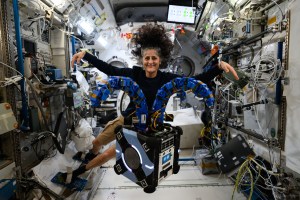
    With 290 visitors from 26 countries and five international partners, the space station has celebrated many different cultures during its 25 years of continuous human presence. Crew members share their holiday traditions, cuisine, music, and games with each other – creating their own community, similar to the ones they have back home, while maintaining a connection to Earth. 

    Crews living and working aboard the space station during the holiday season have found creative ways to mark the occasions from low Earth orbit. Festive socks, Halloween costumes, mini artificial Christmas trees, champagne, and candle-less menorahs are just a few of the items space station visitors have brought with them to spread holiday cheer.  

    Mealtimes are also the perfect opportunity to share a taste of home. The space station’s standard menu is inclusive of varied cuisines, but crew members also contribute their own special food items. French astronaut Thomas G. Pesquet once brought macarons to help celebrate his birthday, and several JAXA (Japan Aerospace Exploration Agency) astronauts have hosted sushi parties.  

    Sharing a piece of themselves and their cultures not only fosters crew camaraderie but also supports the international collaboration necessary to sustain the space station’s success. 

    Taking music to new heights 

    Five people hold musical instruments aboard the International Space Station.
    Expedition 55 crew members aboard the space station (from left) are NASA astronaut Drew Feustel, Roscosmos cosmonaut Oleg Artemyev, and NASA astronauts Ricky Arnold and Scott Tingle.
    JAXA (Japan Aerospace Exploration Agency)/Norishige Kanai

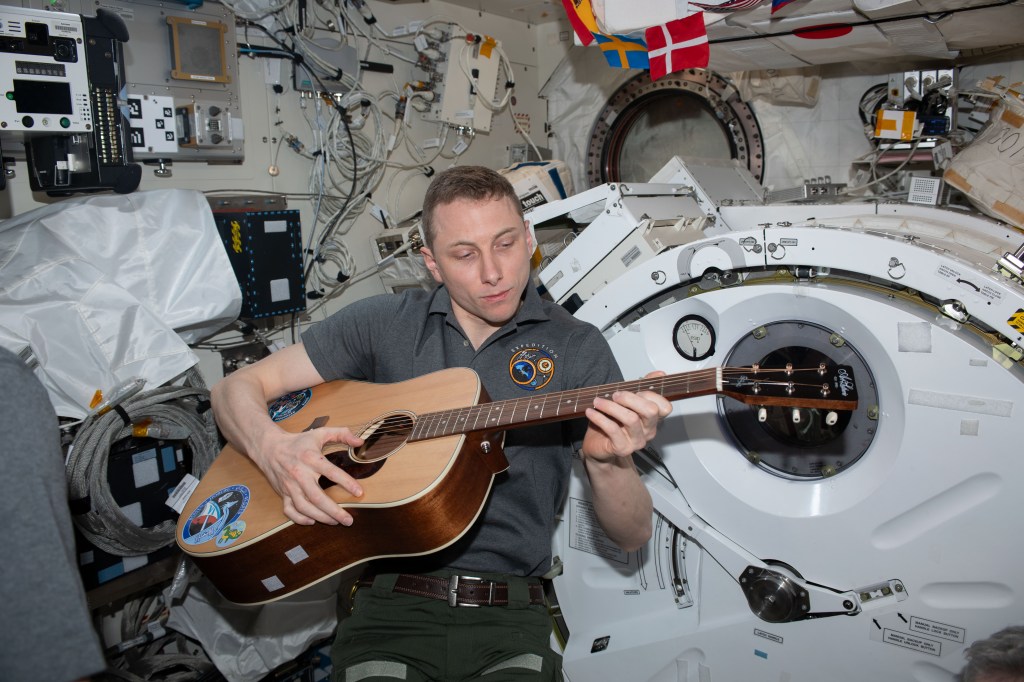
    The first musical instrument, an acoustic guitar, arrived at the orbiting laboratory in August 2001. Since then, playing music aboard the orbiting laboratory has supported astronaut well-being, fostered relationships among international crew members, and helped them connect with home. 

    The space station’s instrument collection started with an acoustic guitar and an electric keyboard, and also includes an alto saxophone. Some NASA astronauts bring their own instruments to suit their playing habits – bagpipes for Kjell Lindgren, flutes for Catherine Coleman, a piccolo for Jessica Meir. International partners have, too. In April 2010, JAXA astronauts Soichi Noguchi and Naoko Yamazaki performed a duet using a bamboo flute and a miniature version of a traditional Japanese stringed instrument.  

    Several crew members have played in concerts on Earth while still orbiting the planet. Coleman played a duet with the frontman of Jethro Tull, for example, and ESA (European Space Agency) Luca Parmitano used the station’s electric keyboard to participate in a concert at Moscow’s Luzhniki Stadium. He later became the first person to perform a DJ set from space. 

    The space station has even hosted at least one epic jam session, featuring the crew members of Expedition 55 on guitar, flutes, and a drum made from a repurposed waste container. 

    Read more musical memories here

    An astronaut’s perspective

    The sun shines above the Earth's horizon
    The sun shines above Earth’s horizon as the space station orbited 264 miles above the Canadian province of Quebec.
    NASA

    Across the decades and missions of U.S. human spaceflight, NASA astronauts have shared a unique and transcendent experience: looking down at Earth from the space station’s cupola windows. That experience has had a profound impact on many, creating a powerful shift in the way astronauts think about life and our home planet – a phenomenon known as the overview effect. 

    Crew members aboard the orbital outpost describe the beauty of our planet and how it stands in stark contrast to the darkness of space from the cupola module. Many comment on Earth’s fragility and the need to protect it after observing how thin the planet’s atmosphere appears to be from orbit. Others note the lack of borders or lines we see on a map, emphasizing that all of humanity is connected.  

    Regardless of how long they stay in orbit, astronauts return with a different worldview they are eager to share with others.  

    Read more about astronaut perspectives on the overview effect or watch “Down to Earth” on NASA+. 

    Capturing the beauty and science in orbit  

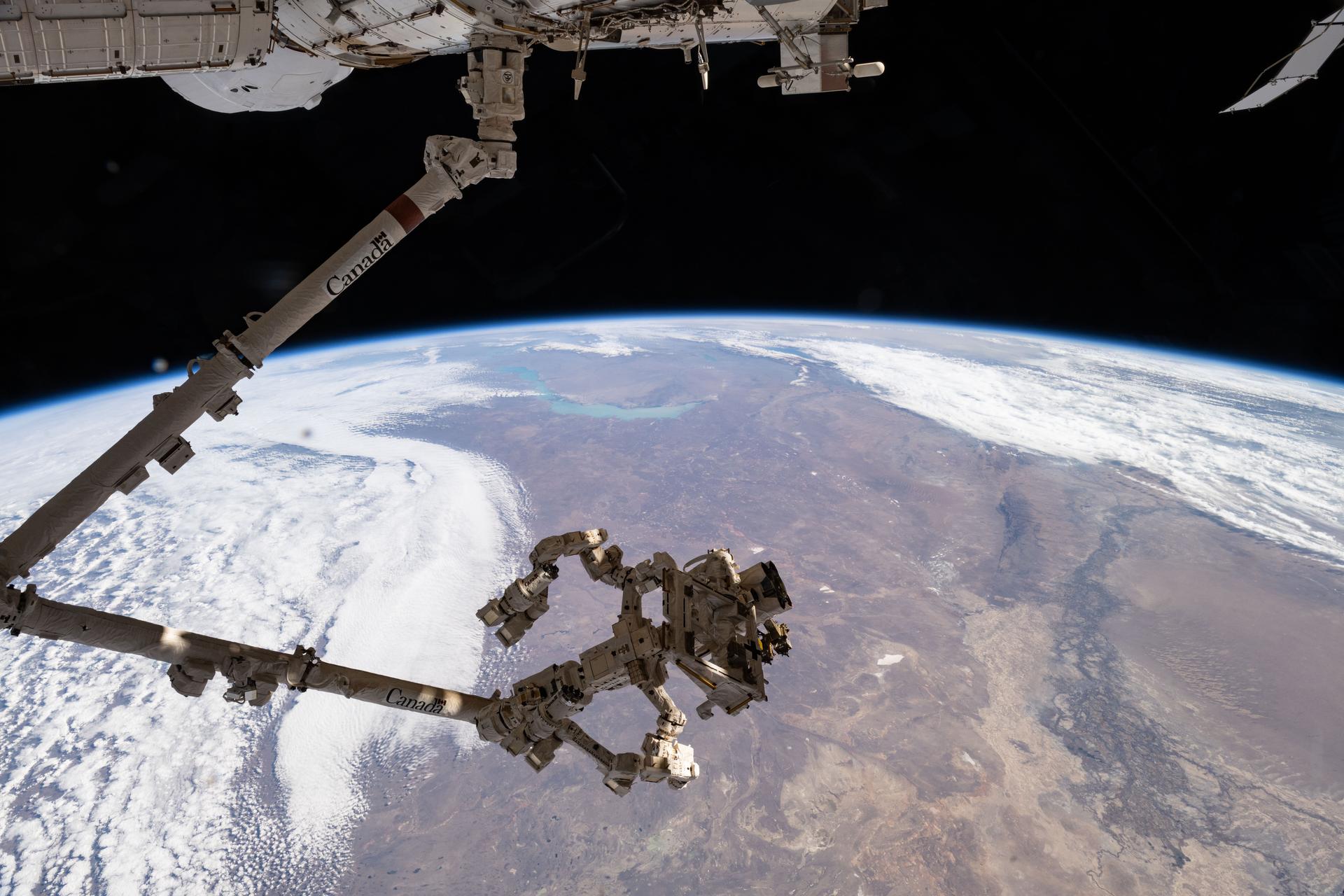
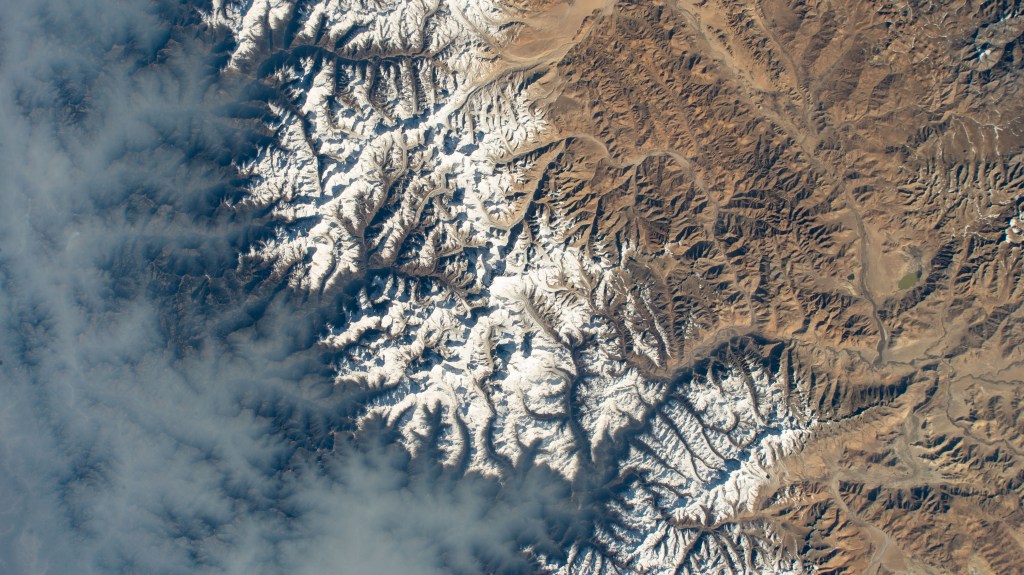
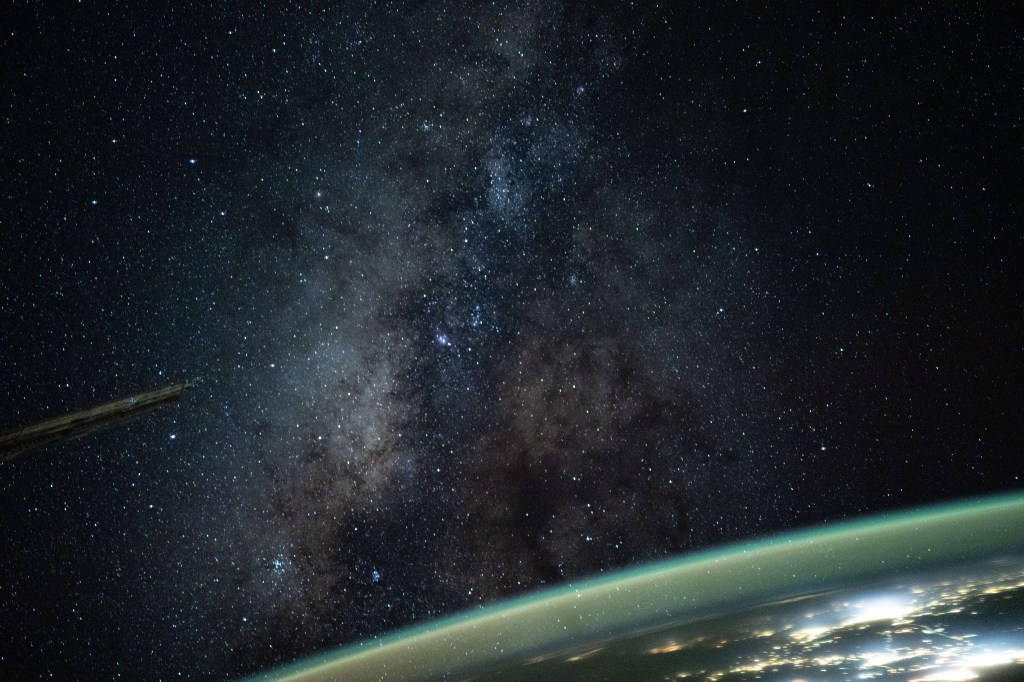
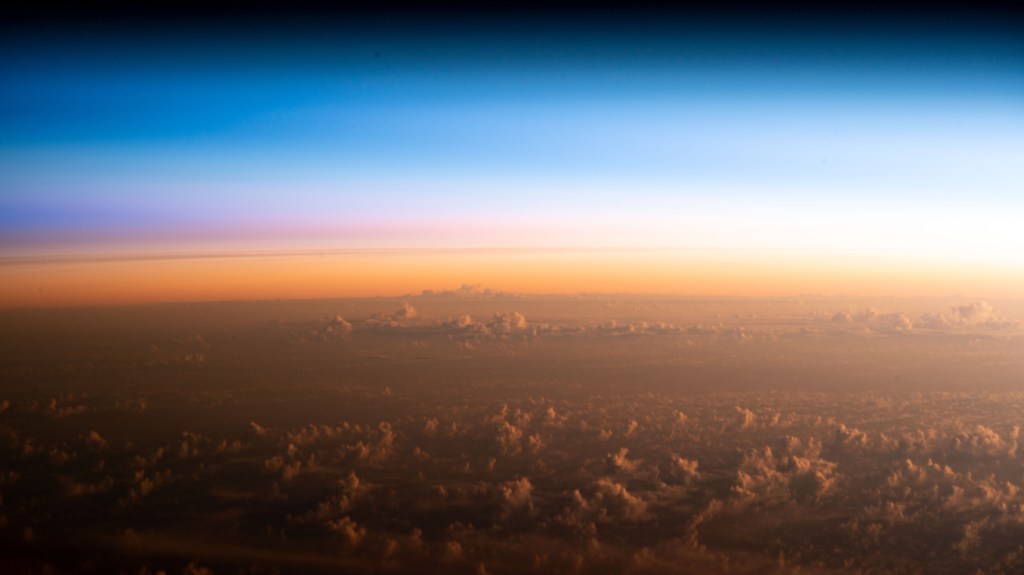
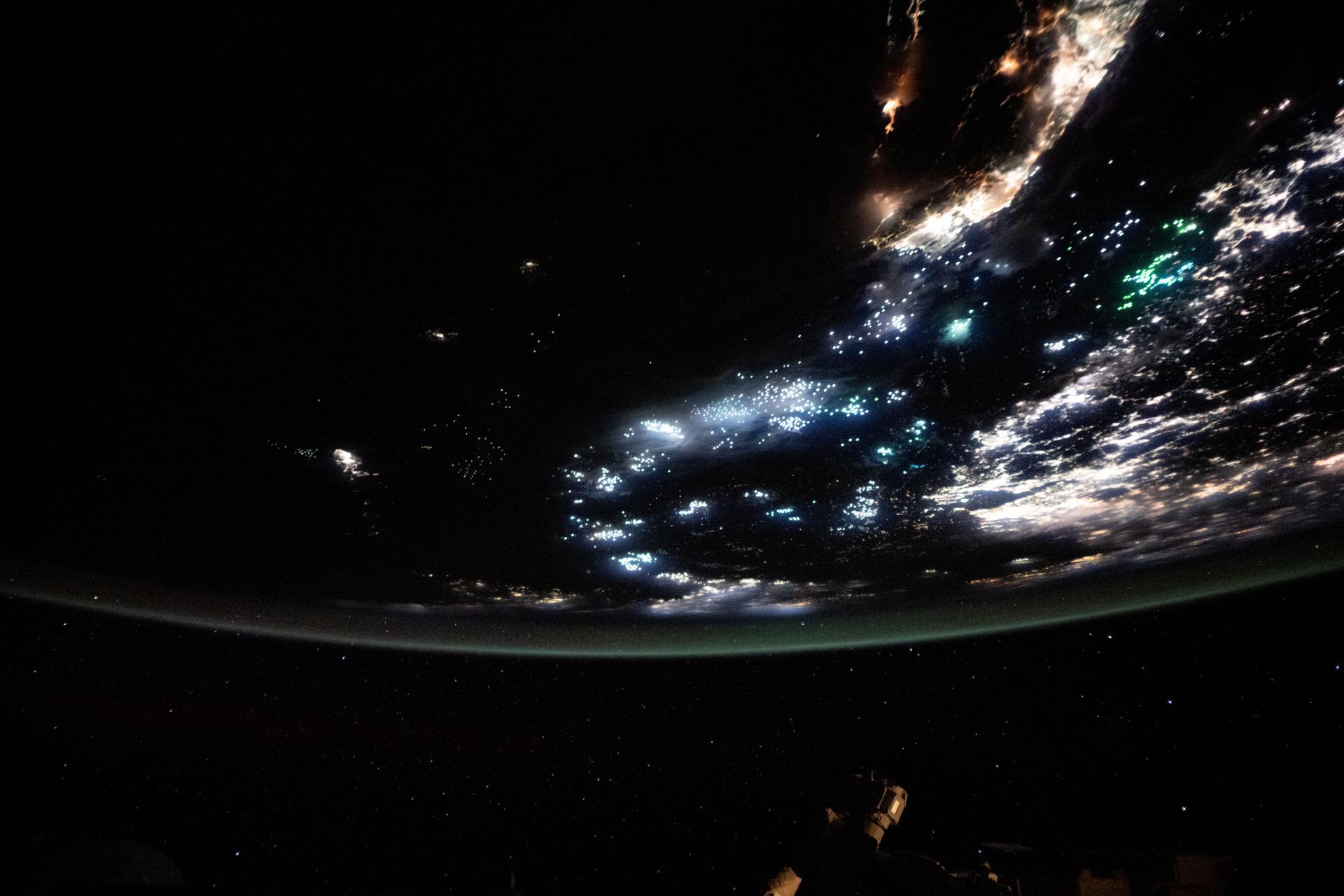
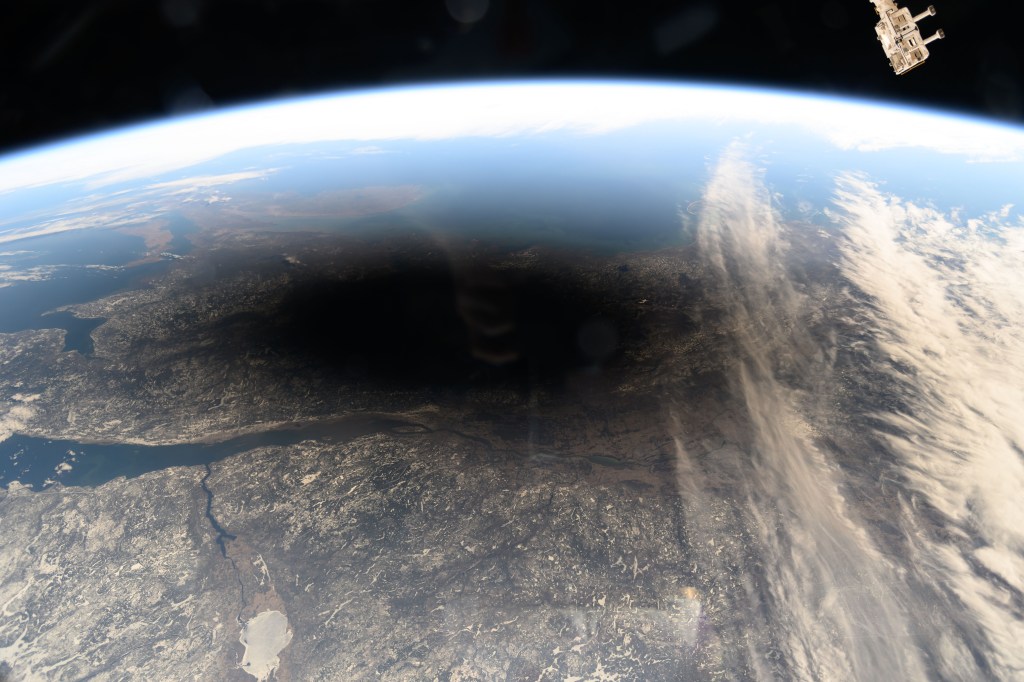
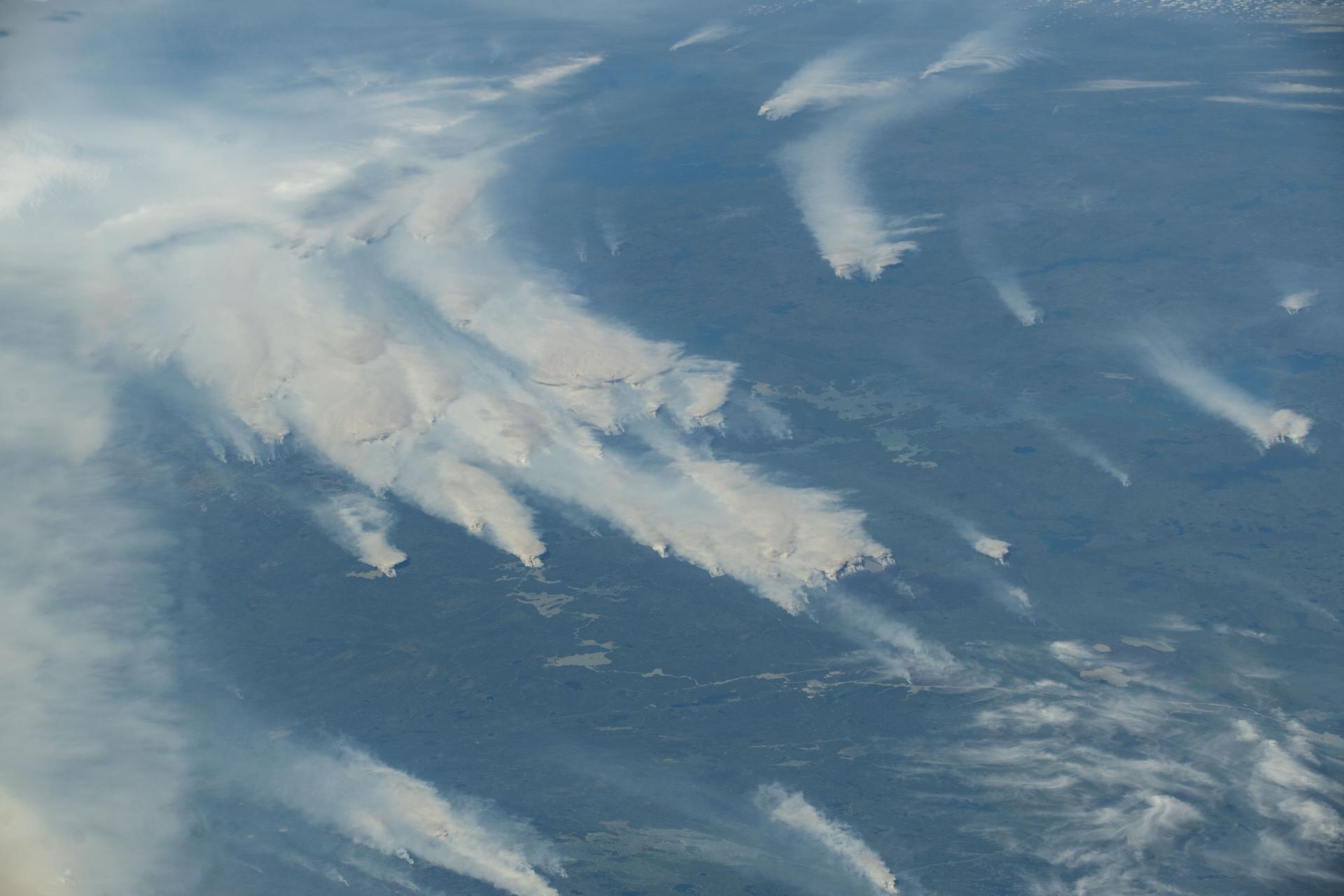
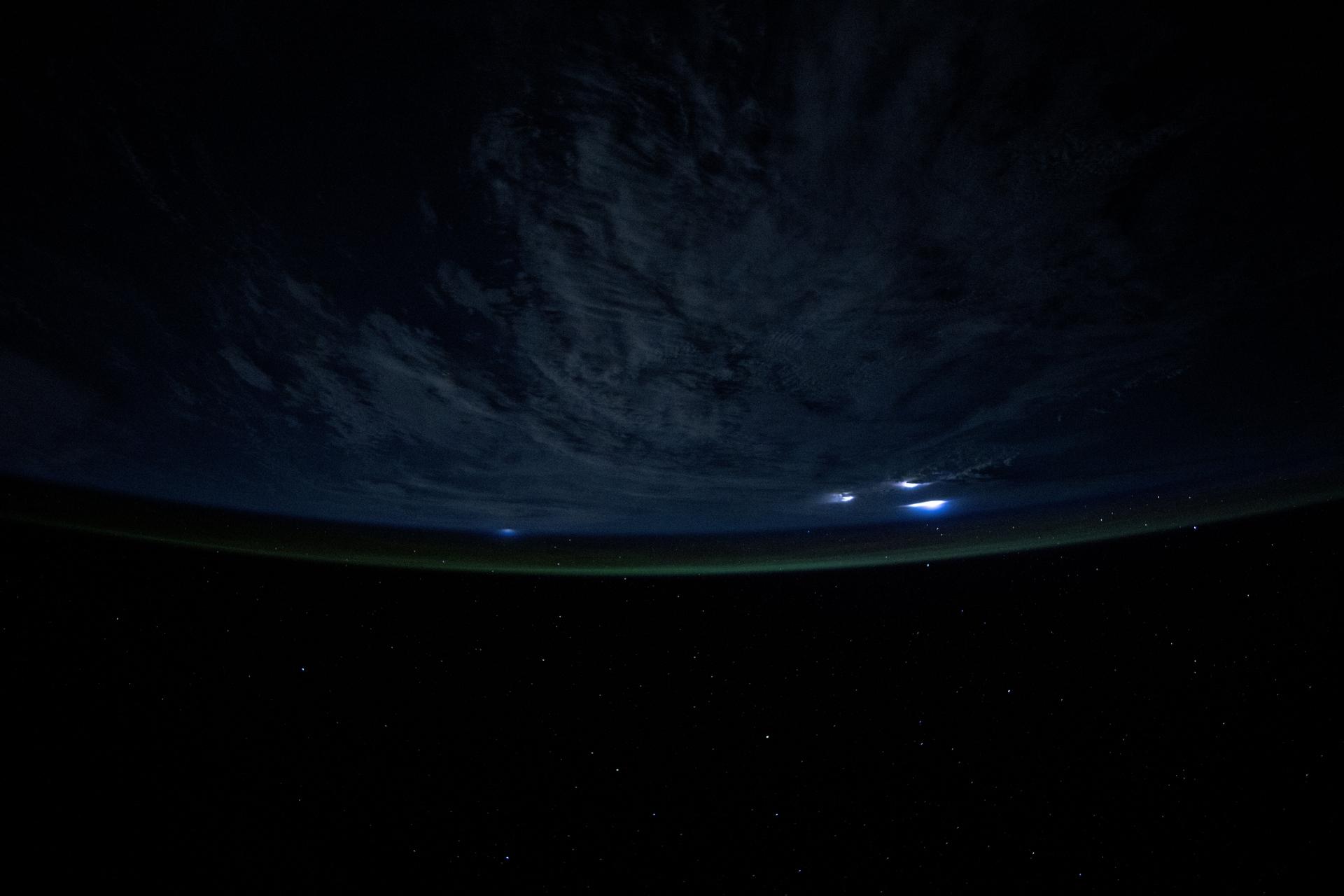
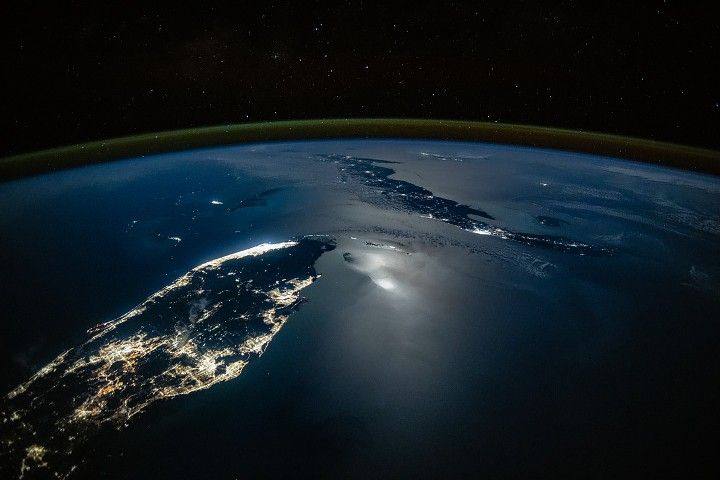
    The space station provides a vantage point like no other. The cupola observation module, with its seven windows, offers unparalleled panoramic views of Earth and space which are crucial for monitoring mission activities, conducting scientific observations, and supporting crew morale and habitability. Astronauts aboard the orbiting laboratory have captured millions of photographs of Earth, creating a visual archive that spans 25 years of continuous human presence in orbit.  

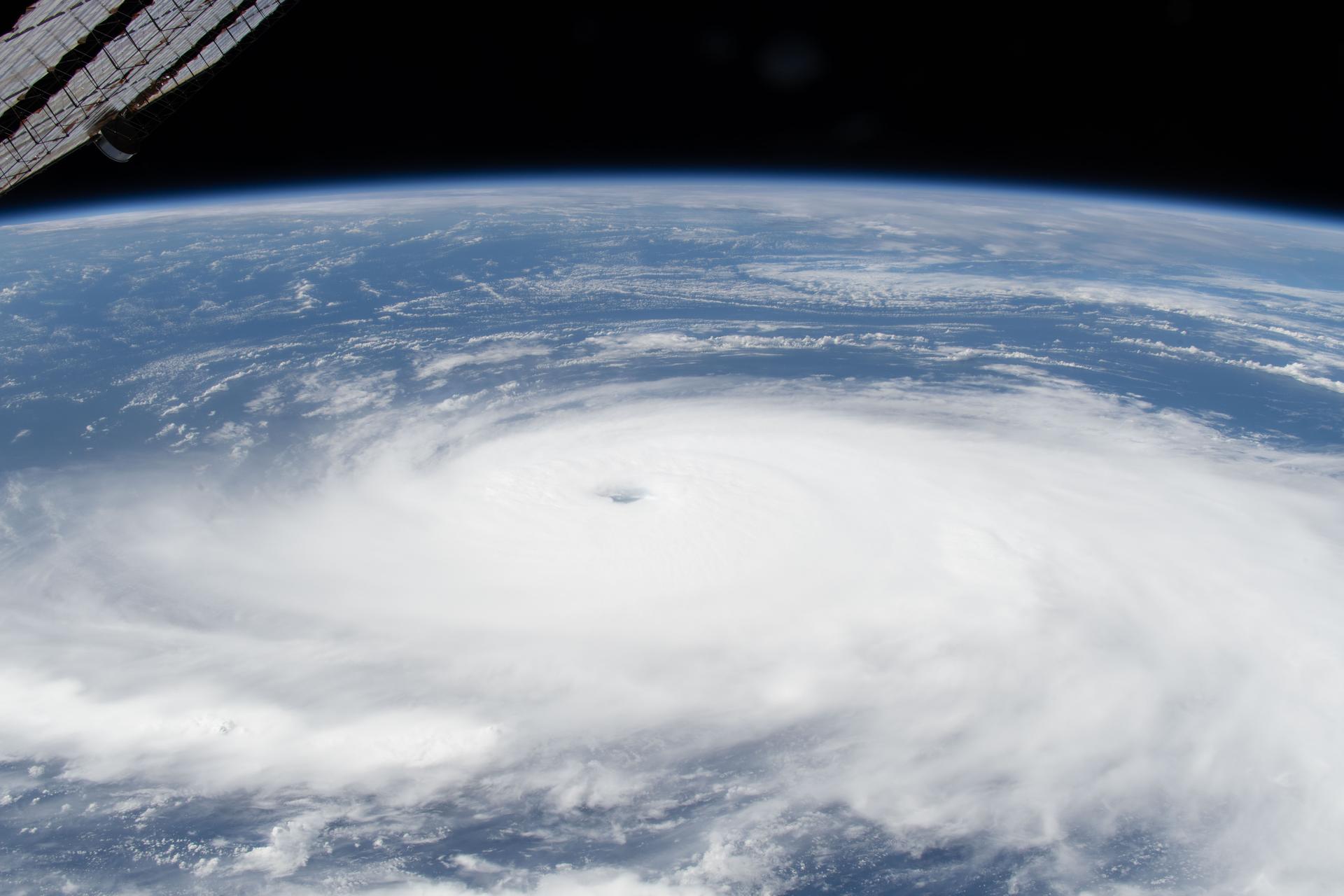
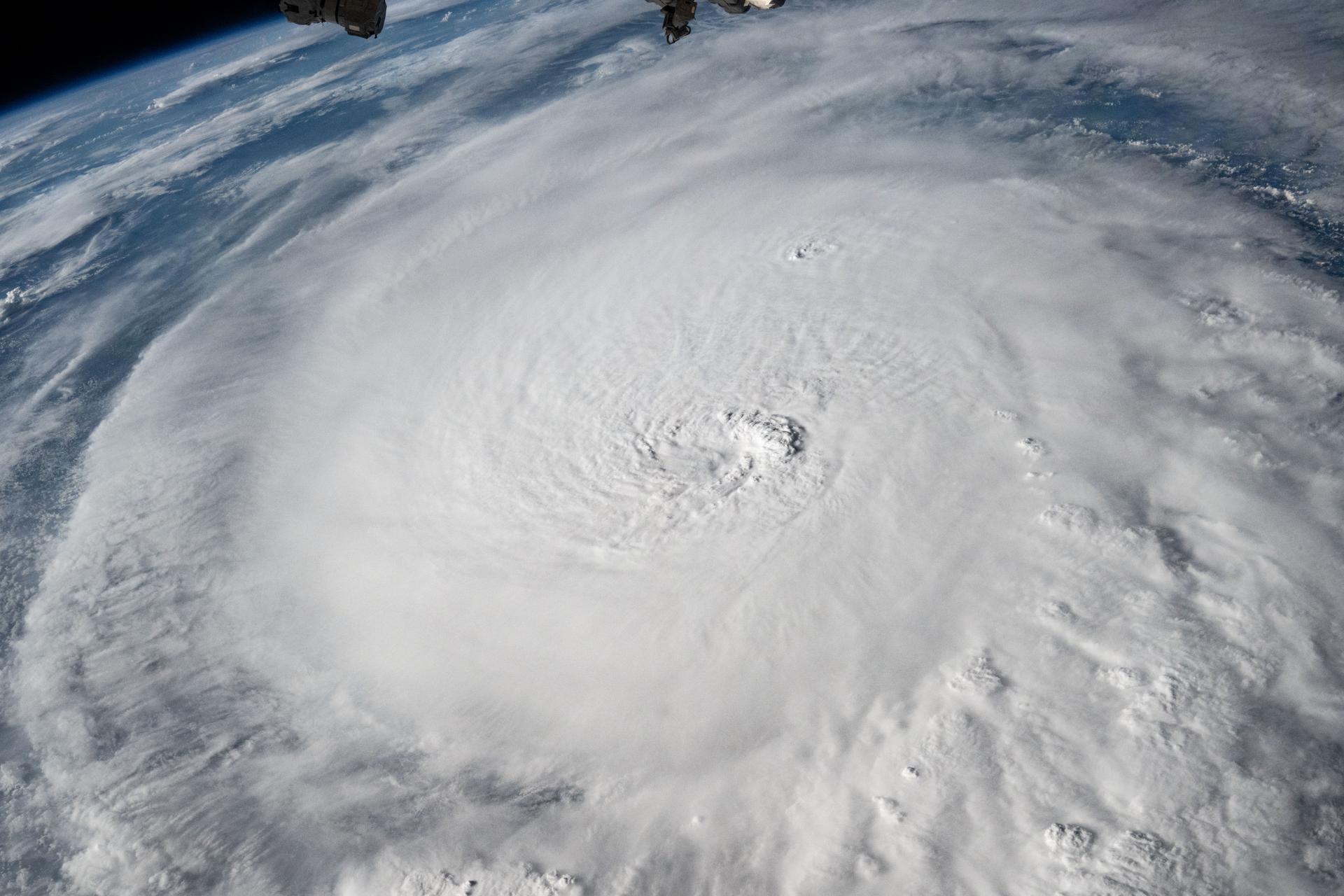
    These images serve as scientific data used to track hurricanes, monitor wildfires, measure glacial retreat, and study urban growth through NASA’s Crew Earth Observations. Astronaut photography also supports NASA Disaster Response, a program that works with various NASA centers to collect data before, during, and following a disaster to aid recovery efforts. 

    The cupola has become a favorite spot for astronauts to work and reflect. Their photos help connect people worldwide to the orbital outpost, reinforcing the importance of protecting our planet.  

    Earth views

    Station memories from the ground 

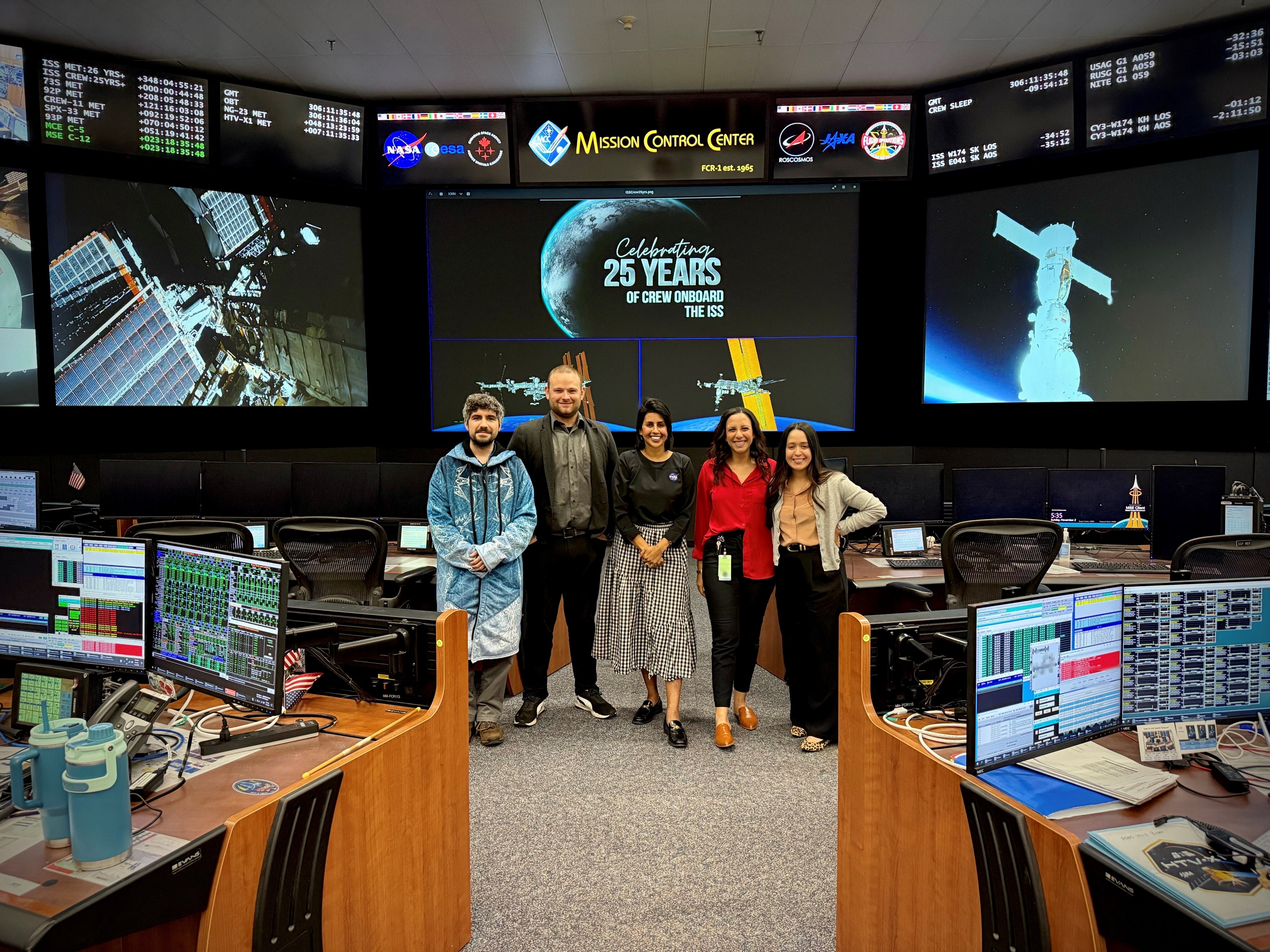
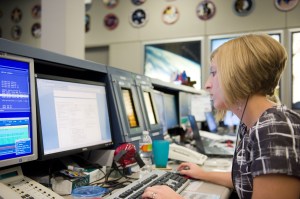
    Flight controllers at NASA’s Mission Control Center in Houston marked 25 years of continuous human presence in space with the Expedition 73 crew aboard the orbital outpost on Nov. 2, 2025.
    NASA/Pooja J. Jesrani

    Behind every moment aboard the orbiting laboratory is a dedicated team on the ground – engineers, scientists, flight directors, and communicators – who work around the clock to keep crews safe and missions running smoothly.  

    They mark milestones together, from spacecraft dockings and crew returns to mission anniversaries and plaque-hanging ceremonies. Teams on console in the mission control have even organized chess matches with astronauts in orbit to foster connection between Earth and space. 

    The flight control team celebrated the 25th anniversary of continuous human habitation in space with the Expedition 73 crew aboard the station on Nov. 2, 2025. The team congratulated the crew to mark the incredible milestone. They emphasized that humanity has held a heartbeat in orbit for a quarter century, a testament to human curiosity, cooperation, and courage that keeps the light of exploration shining above Earth and represents the very best of what humankind can achieve together. Every orbit, every experiment, and every challenge has taught teams how to adapt, grow, and build the skills needed for the next great leaps to the Moon, Mars, and beyond.

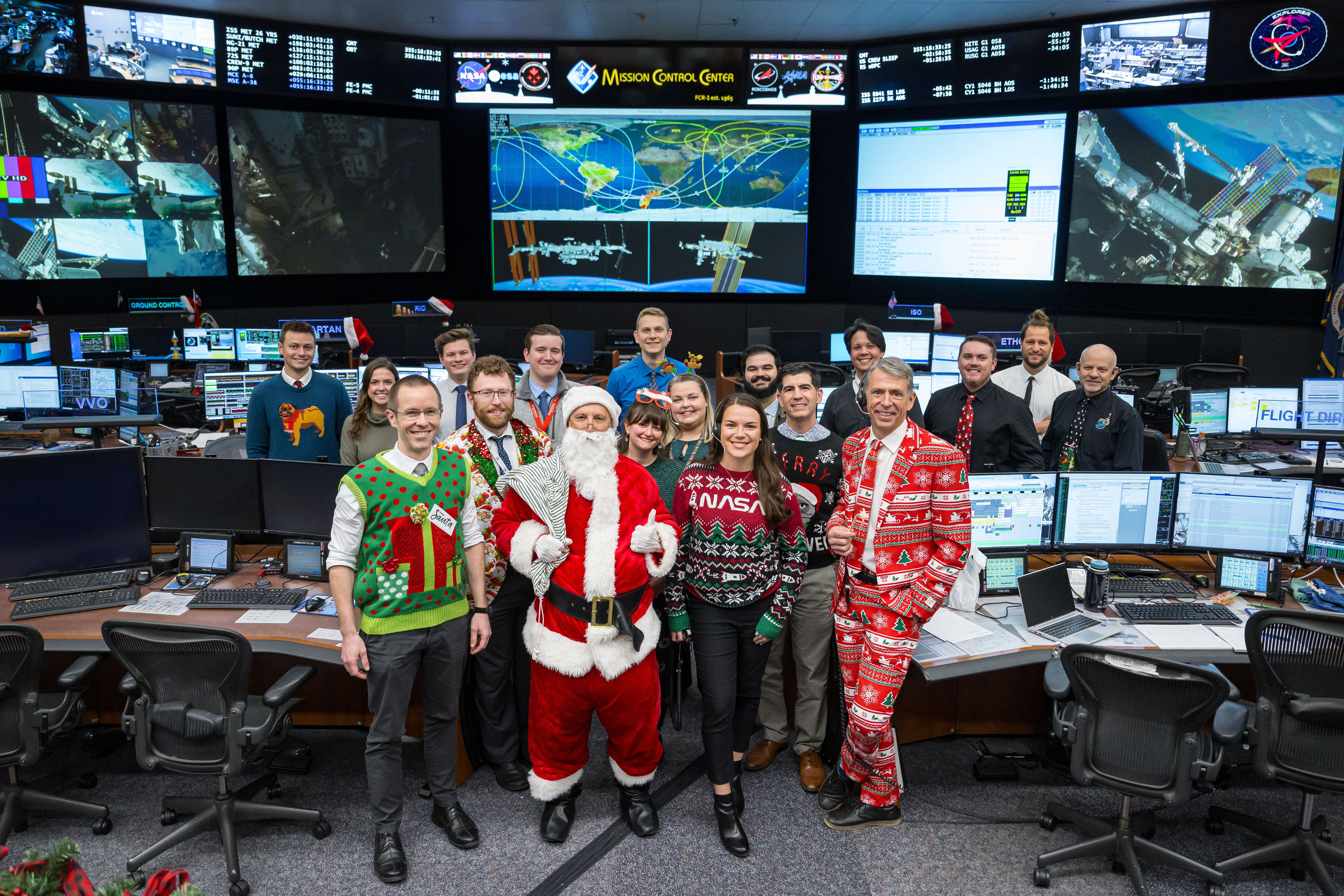
    Holidays are often spent in the control rooms, where teams decorate consoles, share potluck meals, and hold the occasional cookie-cutting contest. Engineers in the station’s Mission Evaluation Room (MER) host an annual “MERloween,” a tradition that began in 2006 to celebrate the year’s milestones and reflect on lessons learned. 

    These traditions highlight the spirit and teamwork that make every mission possible. The dedication honed through decades of mission support now guides the teamwork and expertise that will send Artemis astronauts to the Moon and beyond. 

    A group of people dressed in Christmas outfits pose for a photo in front of mission control.
    Flight controllers in mission control celebrate the holidays while supporting crews aboard the space station.
    NASA/Josh Valcarcel

    Painting hope beyond Earth 

    A woman holds up a blue watercolor painting aboard the space station.
    NASA astronaut Nicole Stott, the first person to watercolor in space, paints aboard the space station.
    NASA

    Former NASA astronaut Nicole Stott became the first person to watercolor in space during her time aboard the orbiting laboratory. Inspired by the beauty of Earth from orbit, she used her art to connect the science of human spaceflight with the creativity that defines it. 

    After returning to Earth, Stott helped launch the Space for Art Foundation, which unites children around the world through the healing power of art and space. One of its most meaningful initiatives, the Spacesuit Art Project, invites young patients undergoing cancer treatment to create colorful artwork that is transformed into custom-made spacesuits. Each suit – Hope, Courage, Unity, Victory, Dreamer, Exploration, Beyond, and Infinity – celebrates the imagination and resilience of its creators. 

    Four of these suits have journeyed to and from the orbiting laboratory, where astronauts wore them during special downlinks to speak with the patients and raise awareness for childhood cancer research. The project shows that space exploration is not only about discovery, but about compassion, creativity, and the human spirit that connects us all. 

  • NASA Launches Research Program for Students to Explore Big Ideas

    2 Min Read

    NASA Launches Research Program for Students to Explore Big Ideas

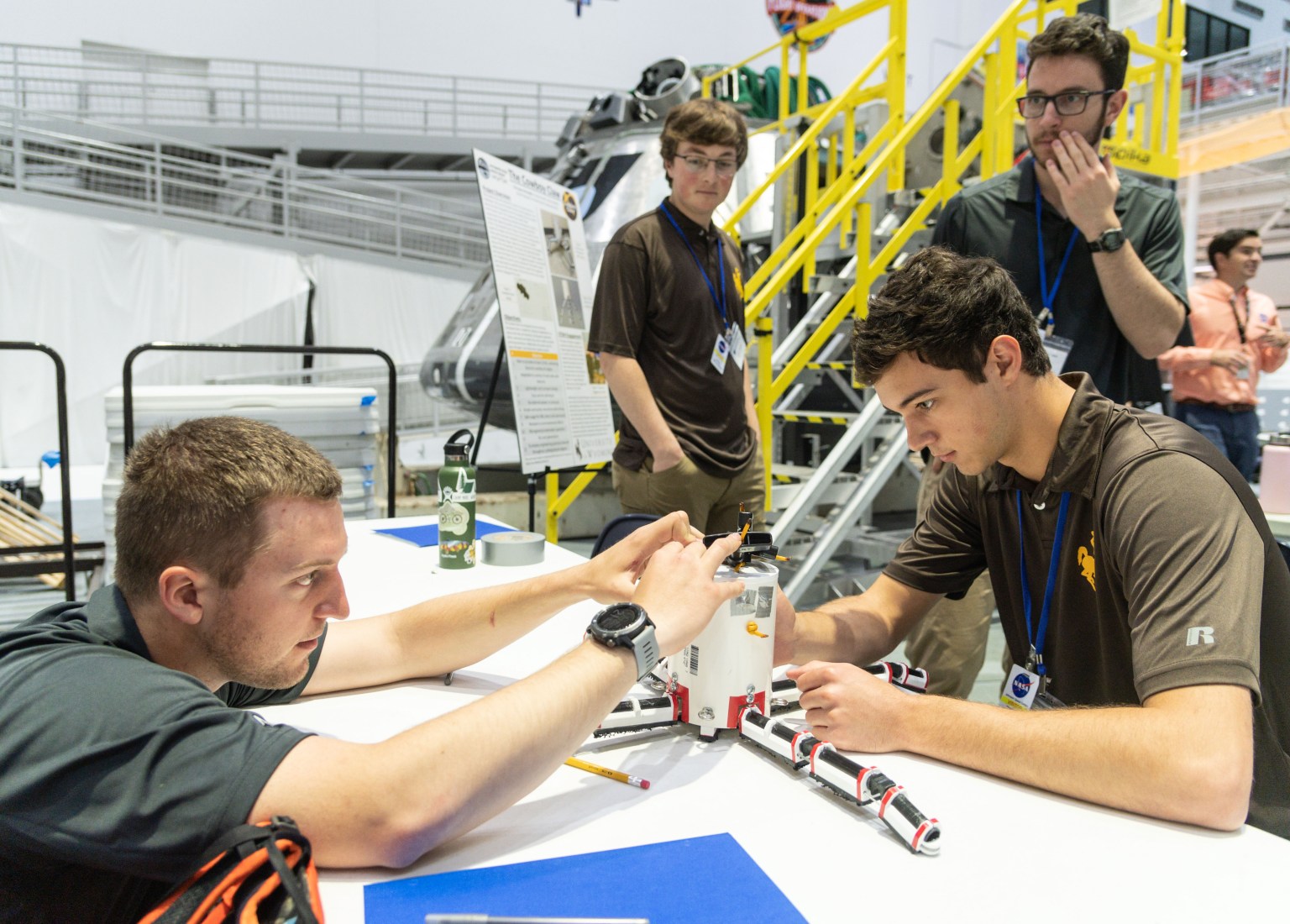
    NASA is now accepting concepts for a new research challenge. The Opportunities in Research, Business, Innovation, and Technology (ORBIT) challenge is a multi-phase innovation competition designed to empower university and college students to develop next-generation solutions that benefit life on Earth and deep-space exploration.

    With up to $380,000 in total prize funding, NASA’s ORBIT challenges student teams to bring their most forward-thinking concepts to the table, either utilizing NASA intellectual property or conceptualizing their own. Teams are tasked with conducting targeted research, designing early mockups or models, and performing feasibility analyses to refine their ideas. Finalists then advance to a live showcase where they present their work to a panel of expert judges, who evaluate the proposals and select winners based on the teams’ final pitches and responses to questions.

    The ORBIT has two challenge tracks for teams to choose from. The ORBIT Earth track requires teams to select a NASA-owned patent and develop novel commercial or nonprofit applications addressing real-world problems. From adapting aerospace materials for disaster response and preparedness, to repurposing space-based sensors for healthcare, students must demonstrate clear pathways to public benefit.

    The ORBIT Space track asks teams to design new system concepts aligned with NASA’s current and future missions, particularly supporting the Artemis program’s goal of establishing a sustainable human presence on the Moon and preparing for eventual missions to Mars and beyond. Students will create technically feasible designs for everything from lunar habitats that could house future Artemis astronauts to deep space robotics that open more pathways to in-situ resource utilization. Teams that successfully integrate objectives from both tracks may qualify for an optional integration bonus.

    This challenge accelerates innovation in areas critical to NASA’s future goals while cultivating a pipeline of interdisciplinary talent. By engaging the next generation in NASA’s dual mission to explore space and improve life on Earth, ORBIT inspires students to join the agency’s talent network while delivering tangible benefits to American communities and industries.

    Beyond monetary awards, participants stand to gain mentorship from NASA experts, access to agency facilities, and hands-on experience in systems design, entrepreneurship, and commercialization.

    For complete competition details, eligibility requirements, and official rules, visit:  https://go.nasa.gov/4q2TS9u

    Registration is open until Feb. 9, 2026, through the NASA STEM Gateway.

  • NASA IXPE’s Longest Observation Solves Black Hole Jets Mystery

    4 min read

    Preparations for Next Moonwalk Simulations Underway (and Underwater)

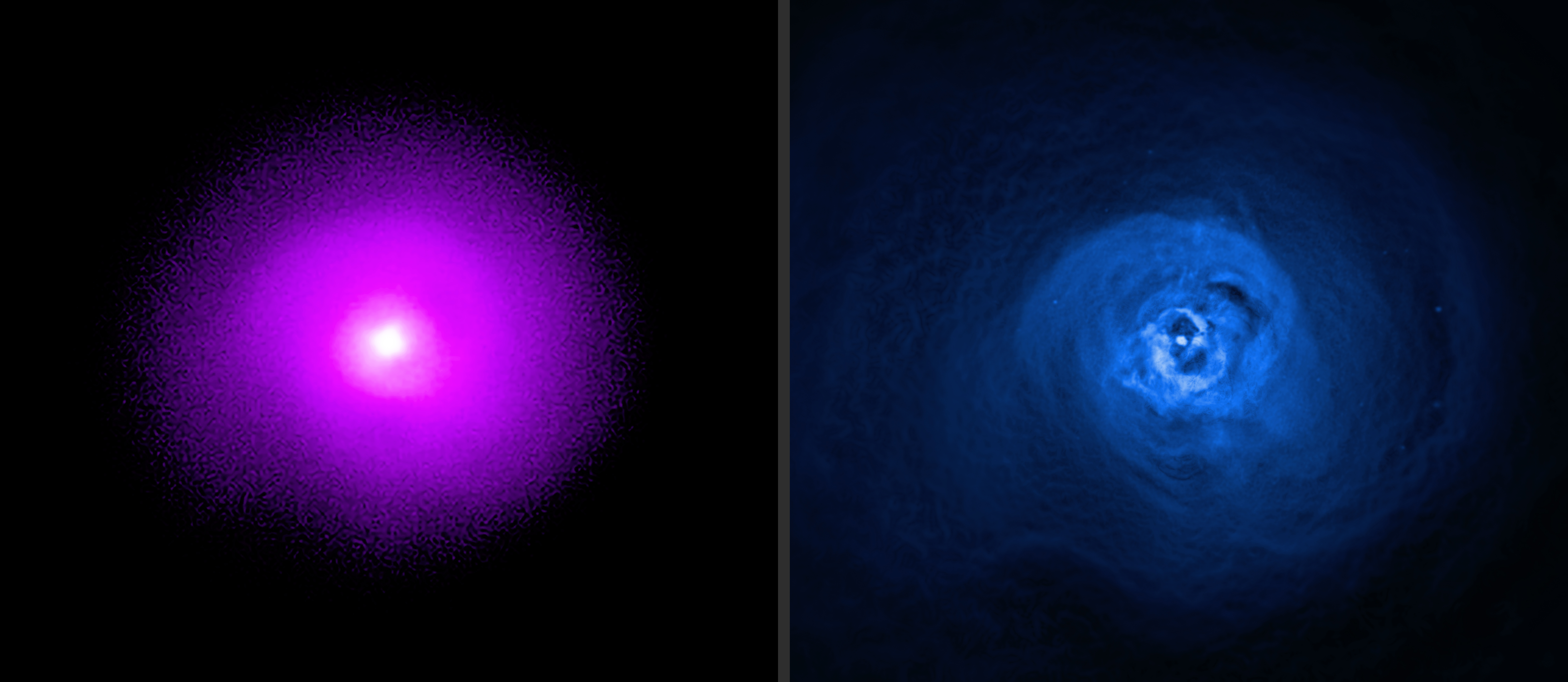
    The Perseus Cluster. Left: Imaging X-ray Polarimetry Explorer (IXPE); Right: Chandra X-ray Observatory.
    Two composite images show side-by-side observations of the Perseus Cluster from NASA’s IXPE (Imaging X-Ray Polarimetry Explorer) and Chandra X-ray Observatory. Scientists used data from both observatories, along with data from Nuclear Spectroscopic Telescope Array (NuSTAR), and Neil Gehrels Swift Observatory, to confirm measurements of the galaxy cluster.
    X-ray: (Chandra) NASA/CXC/SAO, (IXPE) NASA/MSFC; Image Processing: NASA/CXC/SAO/N. Wolk and K. Arcand

    Written by Michael Allen

    An international team of astronomers using NASA’s IXPE (Imaging X-ray Polarimetry Explorer) has identified the origin of X-rays in a supermassive black hole’s jet, answering a question that has been unresolved since the earliest days of X-ray astronomy. Their findings are described in a paper published in The Astrophysical Journal Letters, by the American Astronomical Society, Nov. 11.

    The IXPE mission observed the Perseus Cluster, the brightest galaxy cluster i observable in X-rays, for more than 600 hours over a 60-day period between January and March. Not only is this IXPE’s longest observation of a single target to date, it also marks IXPE’s first time observing a galaxy cluster.

    Specifically, the team of scientists studied the polarization properties of 3C 84, the massive active galaxy located at the very center of the Perseus Cluster. This active galaxy is a well-known X-ray source and a common target for X-ray astronomers because of its proximity and brightness.

    Because the Perseus Cluster is so massive, it hosts an enormous reservoir of X-ray emitting gas as hot as the core of the Sun. The use of multiple X-ray telescopes, particularly the high-resolution imaging power of NASA’s Chandra X-ray Observatory was essential to disentangle the signals in the IXPE data. Scientists combined these X-ray measurements with data from the agency’s Nuclear Spectroscopic Telescope Array (NuSTAR) mission and Neil Gehrels Swift Observatory.

    Fast facts

    • Polarization measurements from IXPE carry information about the orientation and alignment of emitted X-ray light waves. The more X-ray waves traveling in sync, the higher the degree of polarization.
    • X-rays from an active galaxy like 3C 84 are thought to originate from a process known as inverse Compton scattering, where light bounces off particles and gains energy. The polarization measurements from IXPE allow us to identify the presence of either inverse Compton scattering or other scenarios.
    • “Seed photons” is the term for the lower-energy radiation undergoing the energizing process of inverse Compton scattering.
    • You may remember the Perseus Cluster from this sonification replicating what a Black Hole sounds like from May 2022.

    “While measuring the polarization of 3C 84 was one of the key science goals, we are still searching for additional polarization signals in this galaxy cluster that could be signatures of more exotic physics,” said Steven Ehlert, project scientist for IXPE and astronomer at NASA’s Marshall Space Flight Center in Huntsville.

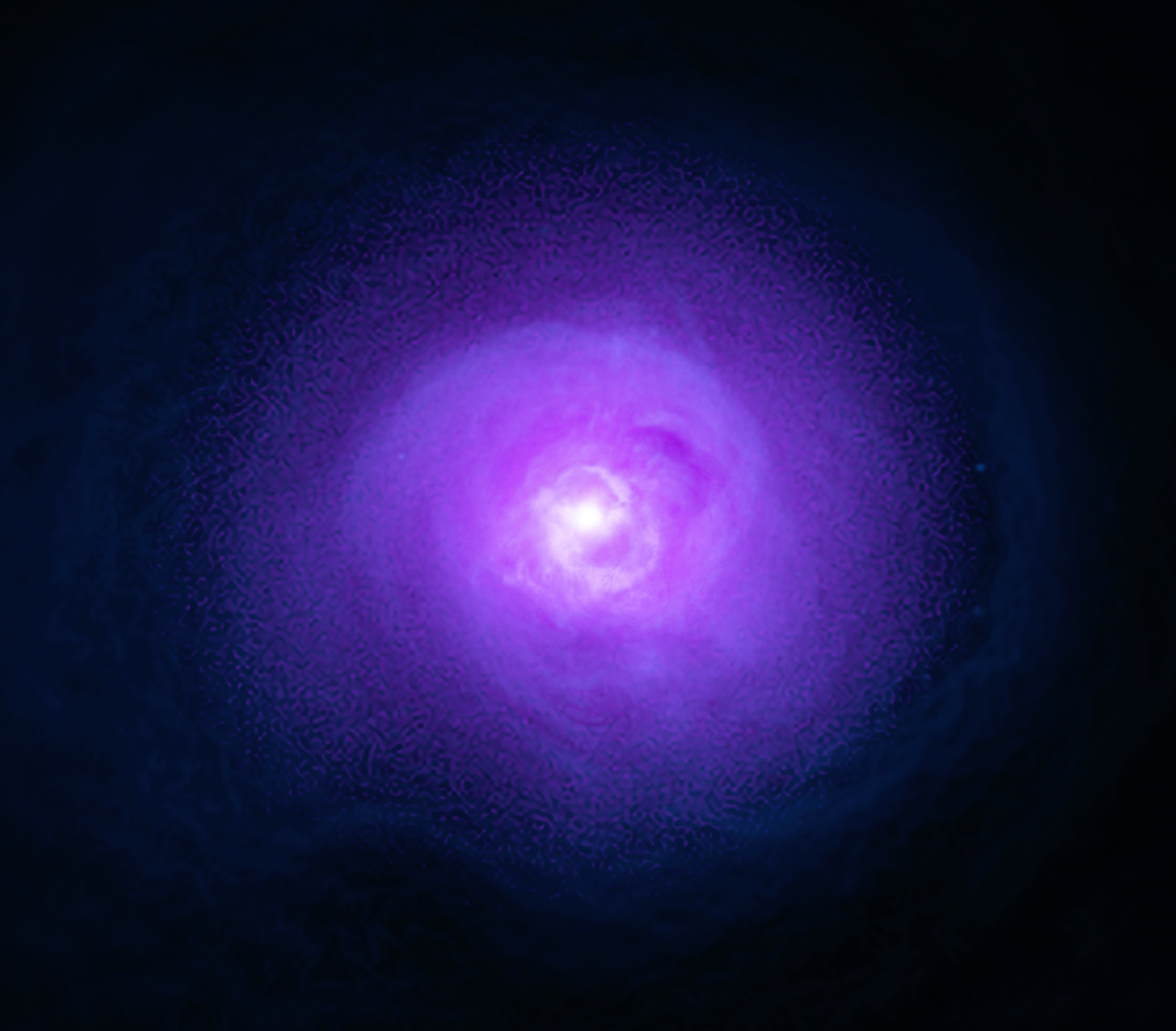
    Chandra & IXPE composite image of the Perseus Cluster.
    Chandra & IXPE composite image of the Perseus Cluster.
    X-ray: (Chandra) NASA/CXC/SAO, (IXPE) NASA/MSFC; Image Processing: NASA/CXC/SAO/N. Wolk and K. Arcand

    “We’ve already determined that for sources like 3C 84, the X-rays originated from inverse Compton scattering,” said Ioannis Liodakis, a researcher at the Institute of Astrophysics – FORTH in Heraklion, Greece, and lead author on the paper. “With IXPE observations of 3C 84 we had a unique chance to determine the properties of the seed photons.”

    The first possible origin scenario for the seed photons is known as synchrotron self-Compton, where lower-energy radiation originates from the same jet that produces the highly energetic particles.

    In the alternative scenario known as external Compton, seed photons originate from background radiation sources unrelated to the jet.

    “The synchrotron self-Compton and external Compton scenarios have very different predictions for their X-ray polarization,” said Frederic Marin, an astrophysicist at the Strasbourg Astronomical Observatory in France and co-author of the study. “Any detection of X-ray polarization from 3C 84 almost decisively rules out the possibility of external Compton as the emission mechanism.”

    Throughout the 60-day observation campaign, optical and radio telescopes around the world turned their attention to 3C 84 to further test between the two scenarios.

    NASA’s IXPE measured a net polarization of 4% in the X-rays spectrum, with comparable values measured in the optical and radio data. These results strongly favor the synchrotron self-Compton model for the seed photons, where they come from the same jet as the higher-energy particles.

    “Separating these two components was essential to this measurement and could not be done by any single X-ray telescope, but by combining the IXPE polarization data with Chandra, NuSTAR, and Swift, we were able to confirm this polarization measurement was associated specifically with 3C 84,” said Sudip Chakraborty, a researcher at the Science and Technology Institute of the Universities Space Research Association in Huntsville, Alabama, and co-author on the paper.

    Scientists will continue to analyze IXPE’s data from different locations in the Perseus Cluster for different signals.

    More about IXPE

    NASA’s IXPE, which continues to provide unprecedented data enabling groundbreaking discoveries about celestial objects across the universe, is a joint NASA and Italian Space Agency mission with partners and science collaborators in 12 countries. The IXPE mission is led by NASA’s Marshall Space Flight Center in Huntsville, Alabama. BAE Systems, Inc., headquartered in Falls Church, Virginia, manages spacecraft operations together with the University of Colorado’s Laboratory for Atmospheric and Space Physics in Boulder.

    Learn more about IXPE’s ongoing mission here:

    https://www.nasa.gov/ixpe

  • How Small Is Too Small? Volunteers Help NASA Test Lake Monitoring From Space

    2 min read

    How Small Is Too Small? Volunteers Help NASA Test Lake Monitoring From Space

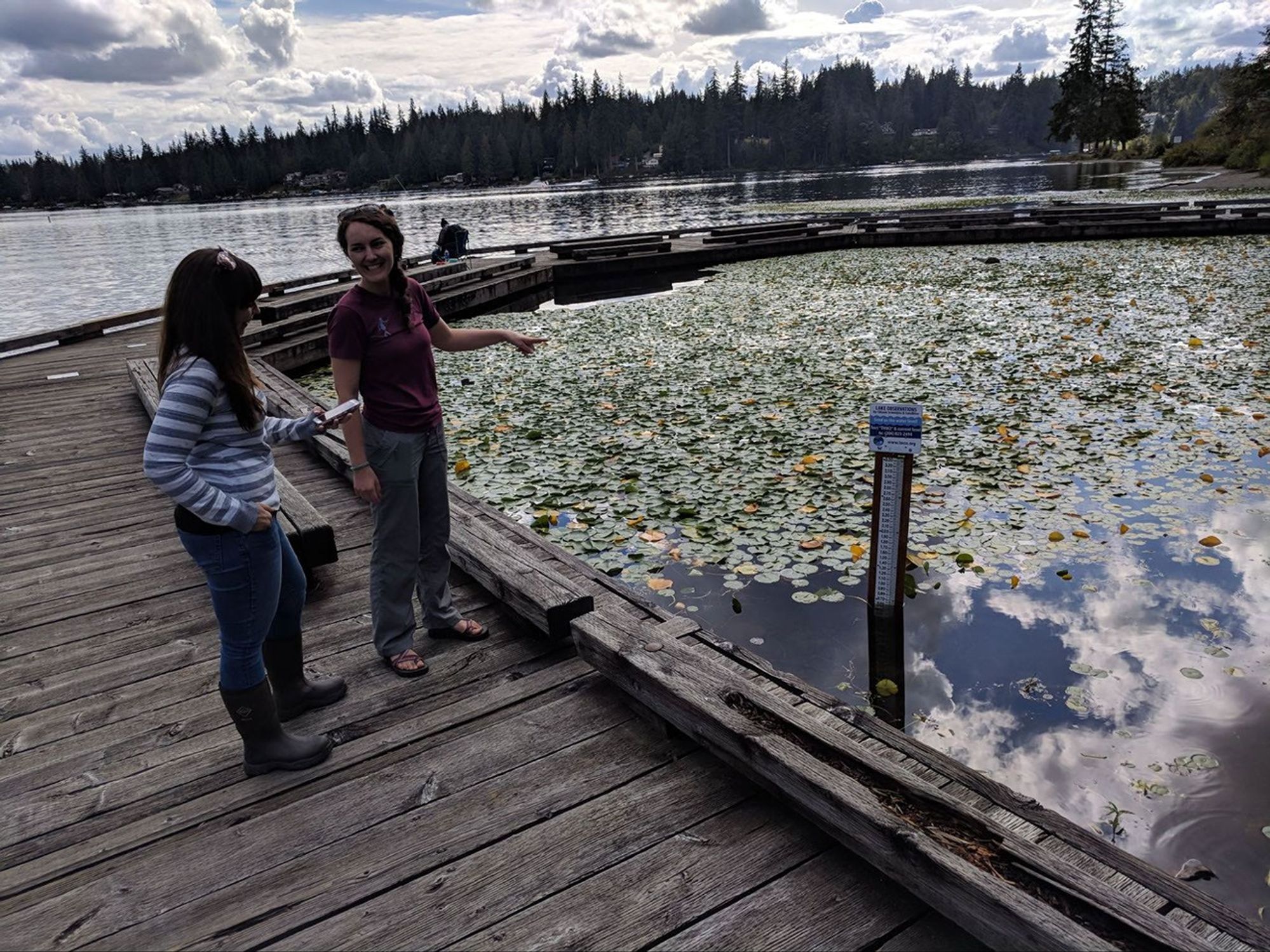
    Jen Oden, Snohomish County Water Quality Specialist, and Megan Lane, LOCSS team member, report a lake height measurement at Flowing Lake, Snohomish County, Washington
    Jen Oden, Snohomish County Water Quality Specialist, and Megan Lane, LOCSS team member, report a lake height measurement at Flowing Lake, Snohomish County, Washington. Visit locss.org to contact the team or to get involved!
    Grant Parkins, 2018

    Volunteers participating in the Lake Observations by Citizen Scientists and Satellites (LOCSS) project have been collecting water level data in lakes since 2017. Now, the LOCSS team has used these data to examine the accuracy of water level measurements made from space. The results, published in GIScience & Remote Sensing, showed that modern satellites with special instruments called nadir altimeters can capture water level variation with relatively high accuracy even for lakes smaller than one square kilometer.  These measurements are crucial for scientific research and resource management.

    “We can look at the wetland now with different eyes,” said Nelsi Durán, a volunteer from Ciénaga La Musanda, Colombia. (Translated from Spanish).

    The work done by LOCSS volunteers also helped reveal where satellite-based lake water level measurements can go wrong. Water level variability turns out to be an important factor. Relatively small lakes with a high lake level variability can be measured from space, but lakes where the water level seldom changes yielded measurements with lower accuracy. 

    The LOCSS project has included 274 lakes in 10 countries (USA, Canada, Colombia, Chile, Kenya, Spain, France, India, Pakistan, and Bangladesh), so far. Since the project started, more than 10,000 citizen scientists have reported water level measurements to the project. 

    “We chose to work with the LOCSS team, because it is important for us to try to widen our understanding of how our environments change over time,” said Dan Grigas, an ecologist at Forest Preserve District, DuPage County, Illinois. “This includes how changes in climate patterns in both the near-term and long-term can affect freshwater ecology. This program also allows for and relies on citizen scientists to participate, which strengthens the relationships among government agencies, the people they serve, and the environments that we all treasure.” 
    Are you passionate about understanding our planet and its precious water resources? Visit locss.org and look for a participating lake near you!

    Details

    Last Updated

    Dec 16, 2025

    Related Terms