Blog

  • Get In, We’re Going Moonbound: Meet NASA’s Artemis Closeout Crew
    3 Min Read

    Get In, We’re Going Moonbound: Meet NASA’s Artemis Closeout Crew

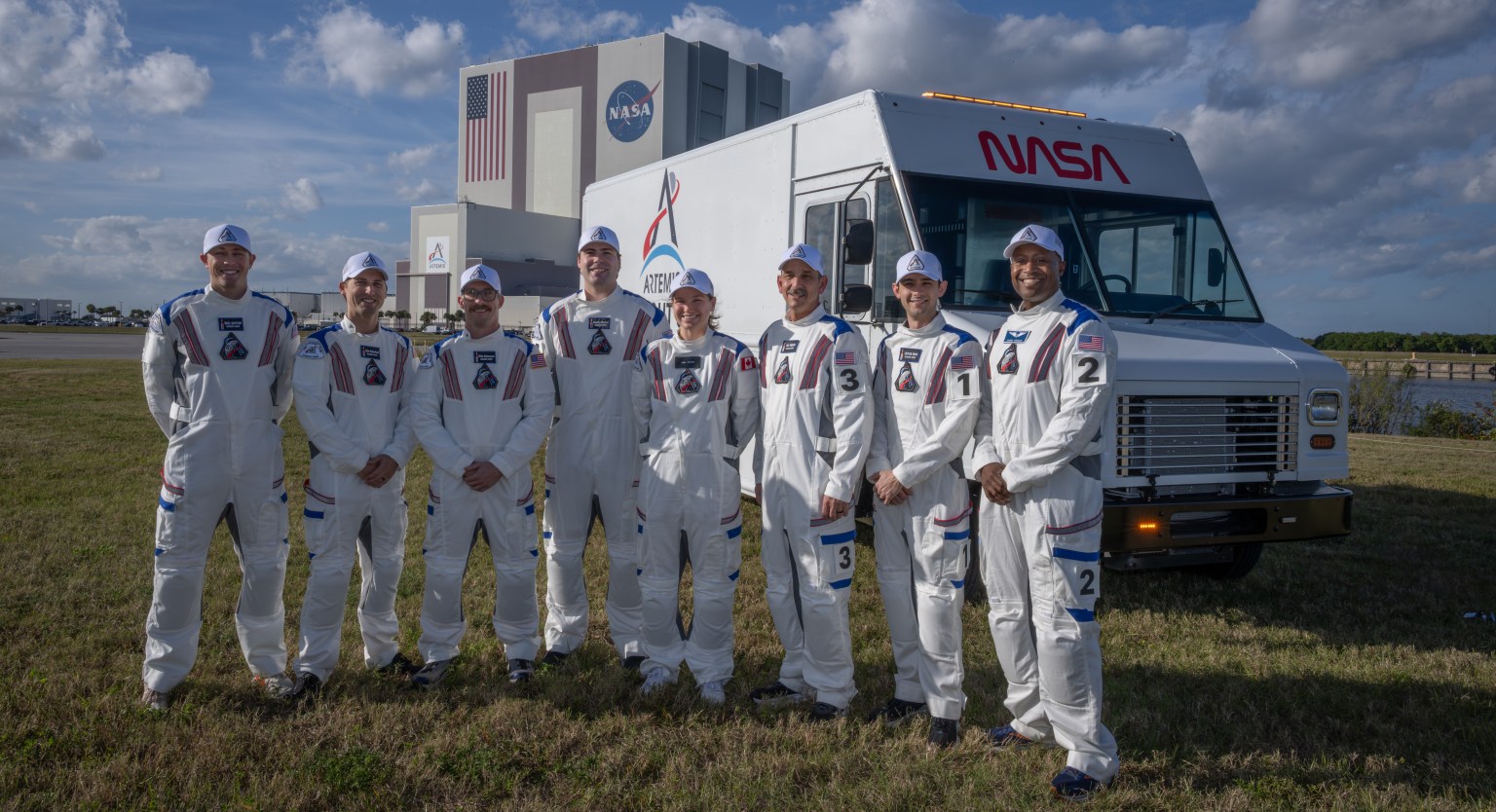
    Members of the Artemis II closeout crew, from left, William Sattler; Tyler Sutherland; Michael Heinemann; Christian Warriner; Jenni Gibbons, Artemis II backup crew member; Bill Owens; Taylor Hose; and Andre Douglas, Artemis II backup crew member, pose for a photo with NASA’s Vehicle Assembly Building behind them at the agency’s Kennedy Space Center in Florida on Thursday, Dec. 19, 2025.

    Credits:
    NASA/Jim Ross

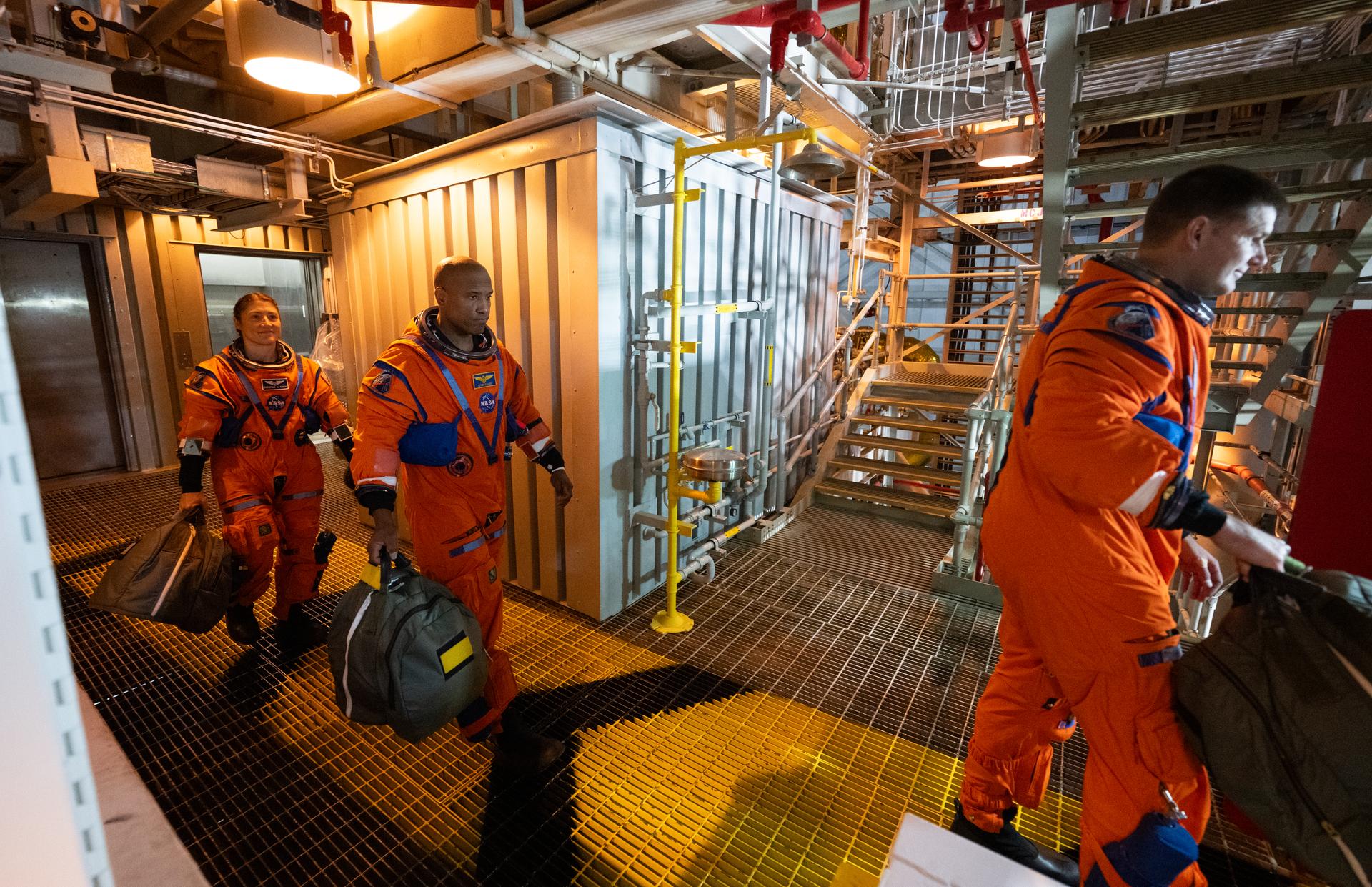
    For most, getting into a car is a task that can be done without assistance. Yet for those whose destination is the Moon, the process of getting inside and secured – in this case, in NASA’s Orion spacecraft – requires help. That’s the role of the Artemis closeout crew.

    Trained to support Artemis II and future Moon missions, the five closeout crew members will be the last people to see NASA astronauts Reid Wiseman, Victor Glover, and Christina Koch, and CSA (Canadian Space Agency) astronaut Jeremy Hansen before their lunar journey.

    The Artemis II closeout team consists of a lead, Taylor Hose; an astronaut support person, astronaut Andre Douglas; one technician specially trained on Orion crew survival system spacesuits, Bill Owens; and two Orion technicians, Christian Warriner and Ricky Ebaugh.

    We are responsible for getting the astronauts strapped in their spacecraft, getting all their connections attached to their spacesuits, and then we close the hatch and close out Orion for launch.
    Taylor Hose

    Taylor Hose

    Artemis II Closeout Team Lead

    Think of them like a pit crew for car races.

    When the astronauts arrive on launch day at Launch Complex 39B at NASA’s Kennedy Space Center in Florida, the closeout crew will already be in place. First, the team will help the astronauts don their helmets and gloves before entering the Orion spacecraft.
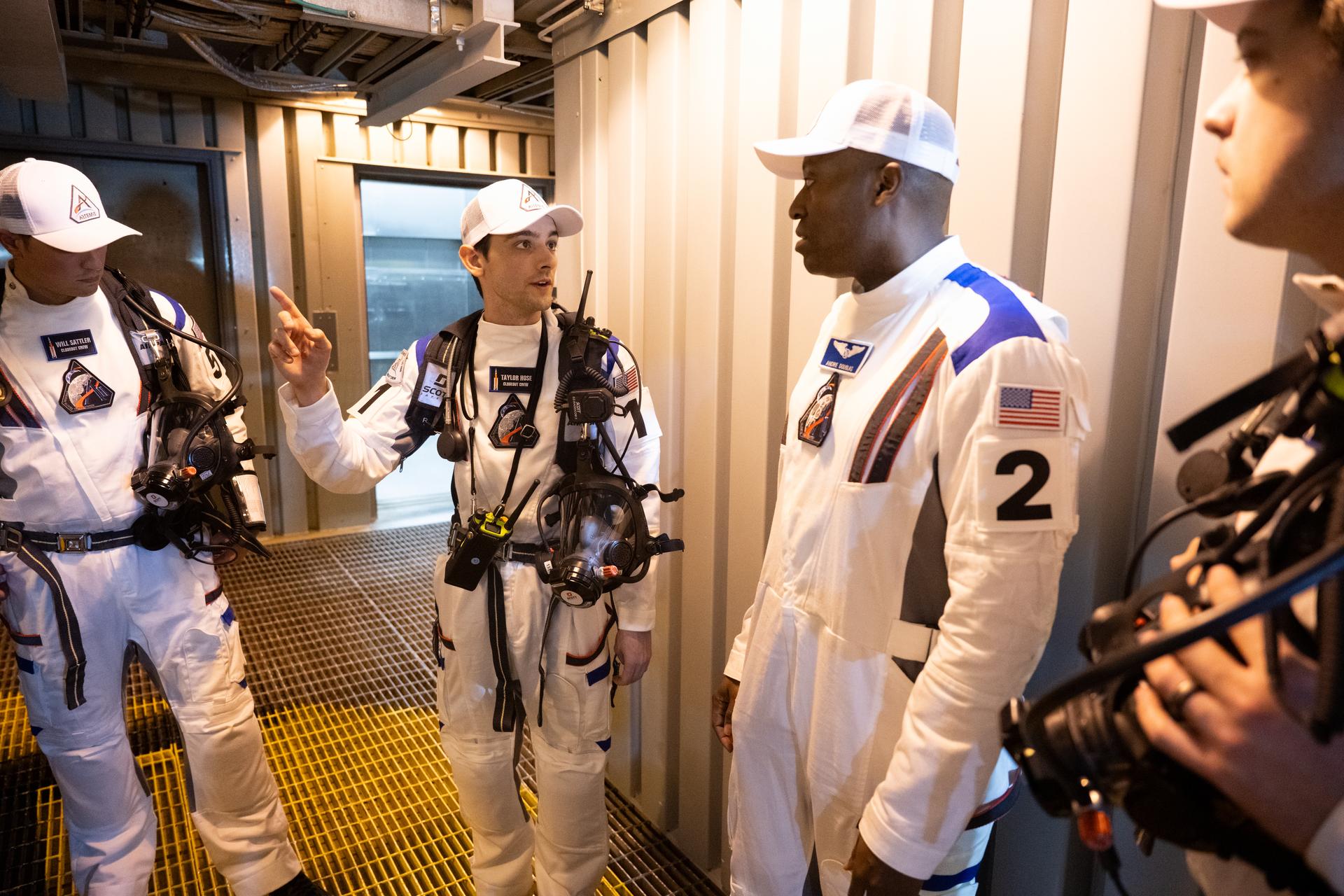
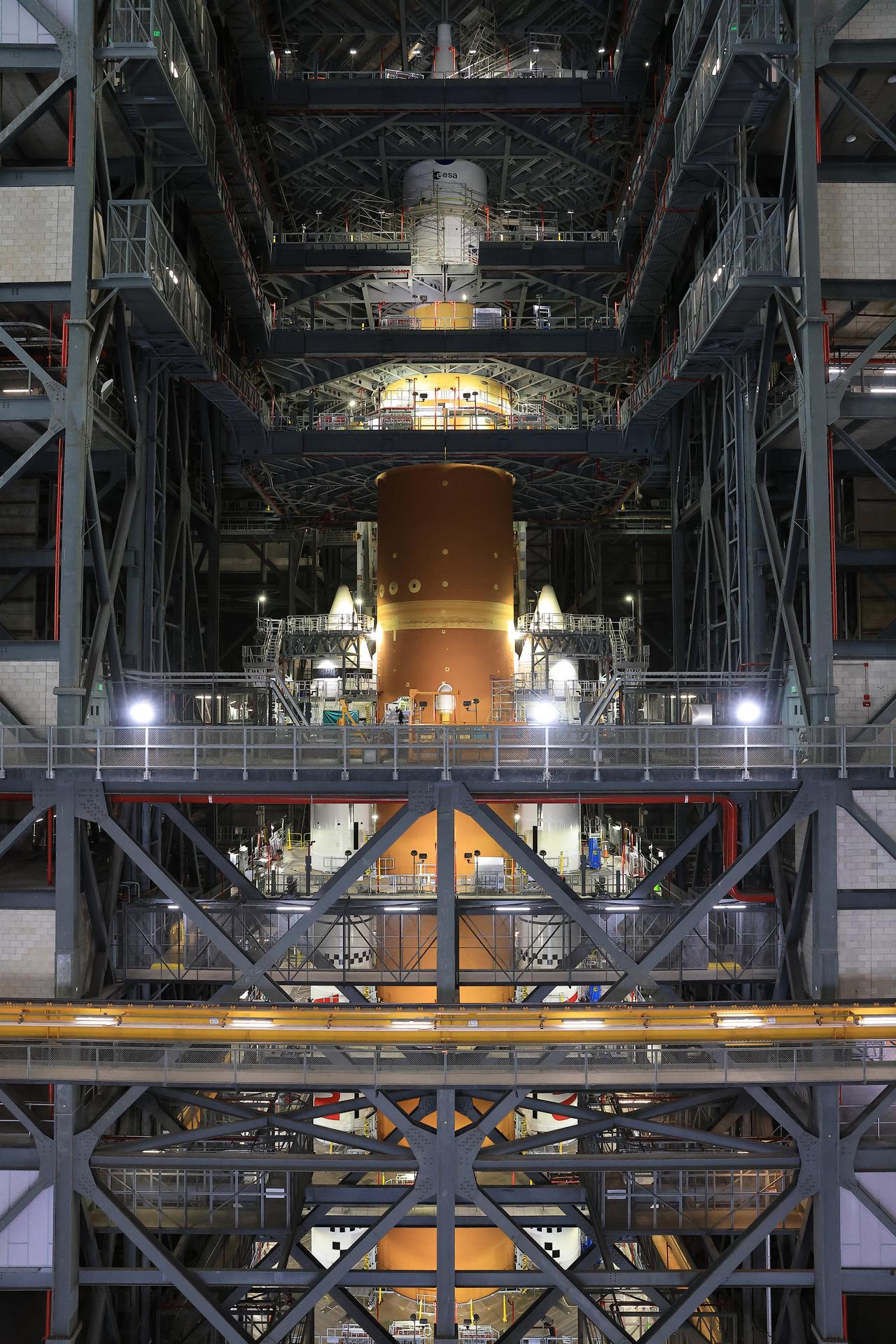
    Closeout Crew lead Taylor Hose, second from left, talks with NASA astronaut Andre Douglas, second from right as he and closeout crewmembers Will Sattler, left, and Christian Warriner prepare for the arrival of Artemis II crewmembers NASA astronauts Reid Wiseman, commander; Victor Glover, pilot; Christina Koch, mission specialist; and CSA (Canadian Space Agency) astronaut Jeremy Hansen, mission specialist; at the 275-foot level of the mobile launcher as they prepare to board their Orion spacecraft atop NASA’s Space Launch System rocket during the Artemis II countdown demonstration test, Saturday, Dec. 20, 2025, inside the Vehicle Assembly Building at NASA Kennedy.
    NASA/Joel Kowsky

    Once inside, Owens and Douglas will assist each crew member with buckling up – except instead of using just one seatbelt like in a car, the crew needs several more intricate connections. Each seat includes five straps to secure the astronauts inside the crew module and several additional connections to the environmental control and life support systems and communications system aboard.

    After the astronauts are secured, the hatch technicians will begin closing the spacecraft hatch. Unlike a car door that easily opens and closes with the pull of a handle, Orion’s hatch requires more effort to securely close.

    “The hatch is pneumatically driven so we have to have air lines hooked up to it, and we need the help of the ground support system to close it,” said Hose.
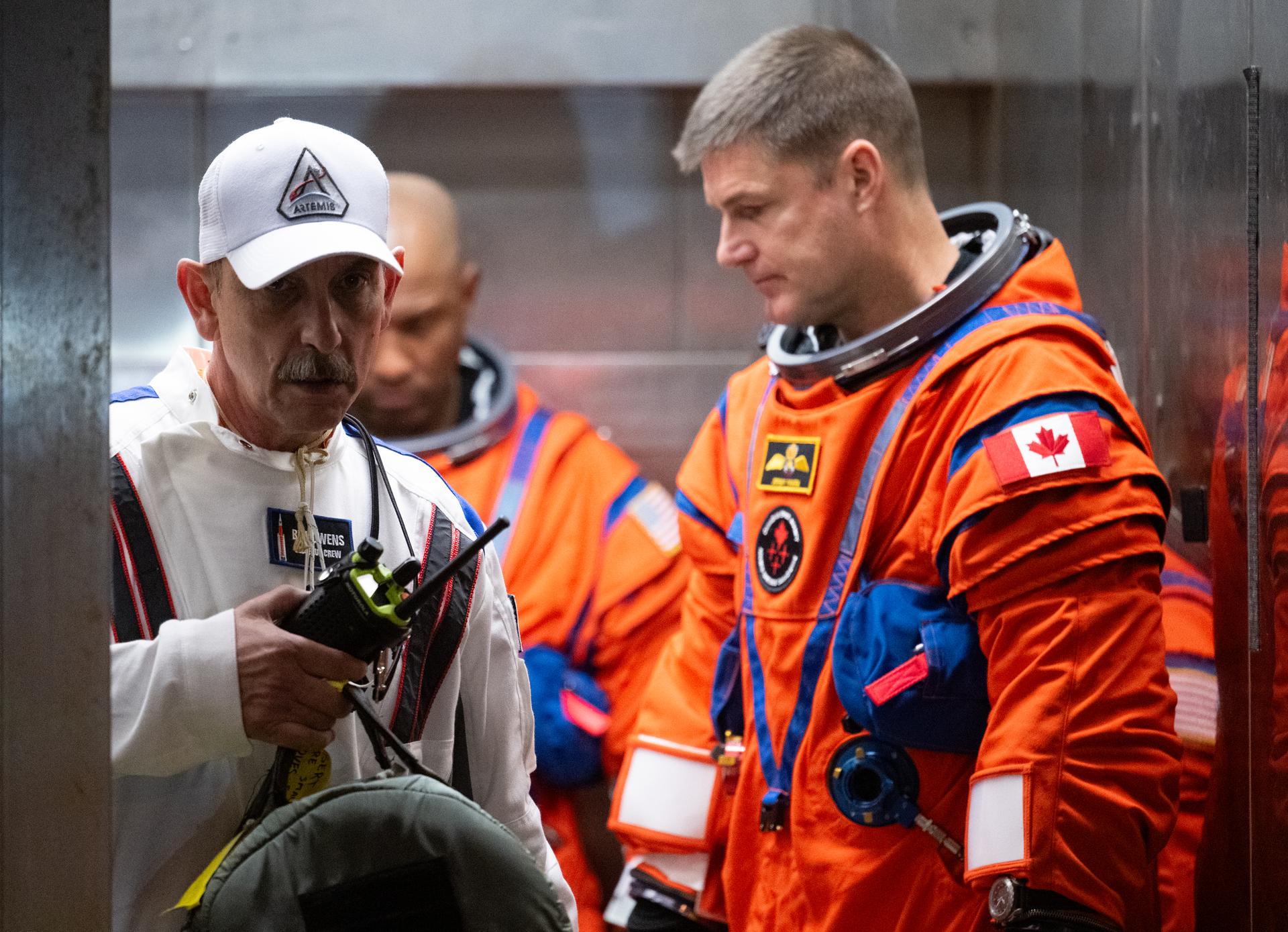
    Bill Owens of the Closeout Crew is seen as he leads Artemis II crewmembers CSA (Canadian Space Agency) astronaut Jeremy Hansen, mission specialist; and NASA astronauts Reid Wiseman, commander; Victor Glover, pilot; and Christina Koch, mission specialist; out of at the elevator towards the crew access arm at the 275-foot level of the mobile launcher as they prepare to board their Orion spacecraft atop NASA’s Space Launch System rocket during the Artemis II countdown demonstration test, Saturday, Dec. 20, 2025, inside the Vehicle Assembly Building at NASA Kennedy.
    NASA/Joel Kowsky

    On launch day, it will take about four hours for the crew to get situated inside Orion and for the closeout process, including buttoning up both the crew module hatch and an exterior launch abort system hatch, to be complete. Even a single strand of hair inside the hatch doors could potentially pose issues with closing either hatch, so the process is carefully done.

    “We have a lot of work to do with the seals alone – greasing, cleaning, taking the hatch cover off – and then we get into crew module hatch closure,” Hose said. “So after latching the hatch, we take window covers off, install thermal protection panels, and remove the purge barrier in between the vehicle and the ogive panels, which help protect the crew module during launch and ascent.”

    The team then closes the launch abort system hatch and finishes final preparations before launch. Following the abort system hatch closure, the closeout crew departs the launch pad but stays nearby in case they need to return for any reason.
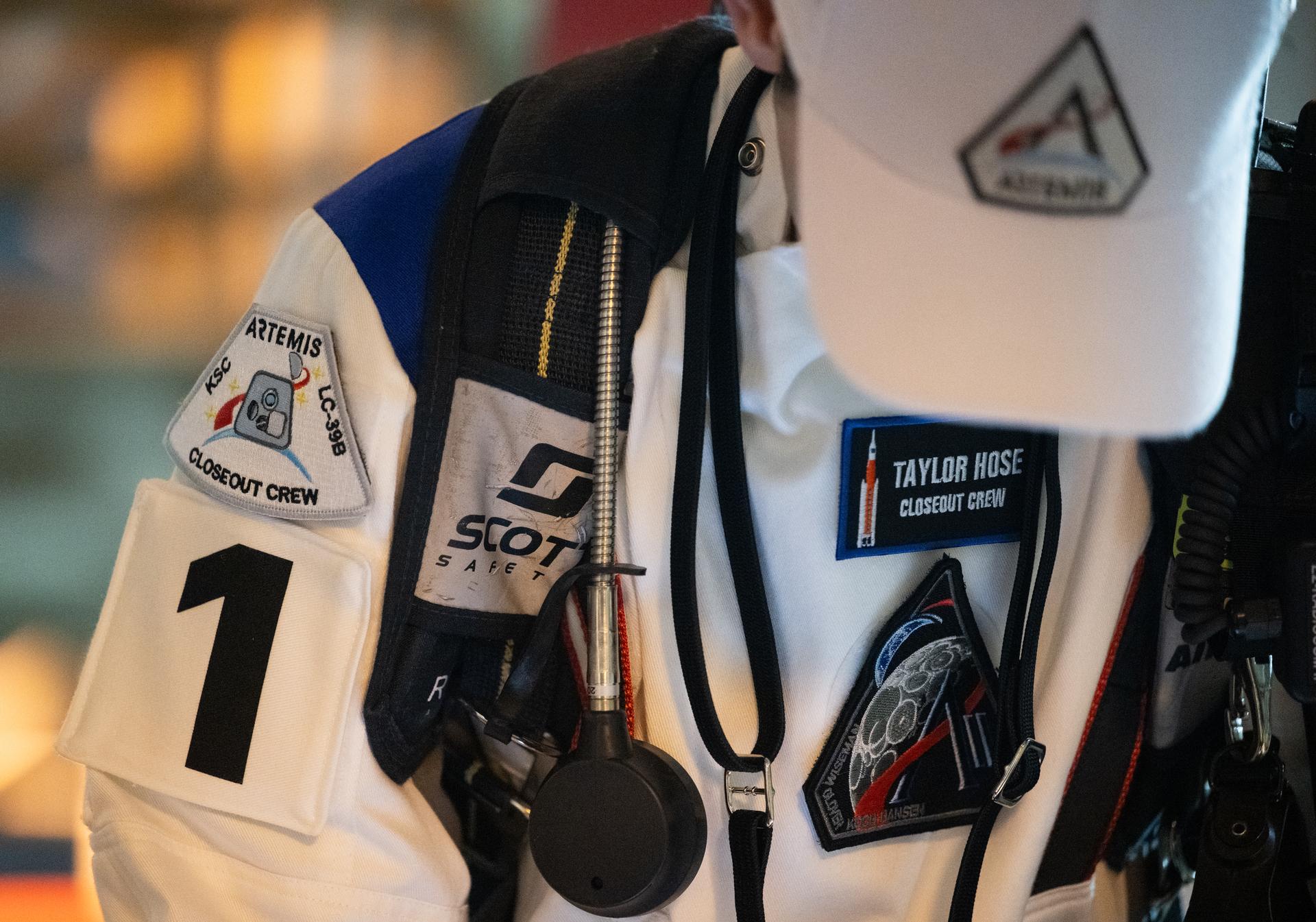
    Taylor Hose prepares for the arrival of Artemis II crewmembers NASA astronauts Reid Wiseman, commander; Victor Glover, pilot; Christina Koch, mission specialist; and CSA (Canadian Space Agency) astronaut Jeremy Hansen, mission specialist; at the 275-foot level of the mobile launcher to board their Orion spacecraft atop NASA’s Space Launch System rocket during the Artemis II countdown demonstration test, Saturday, Dec. 20, 2025, inside the Vehicle Assembly Building at NASA Kennedy.
    NASA/Joel Kowsky

    My life goal was to be an astronaut. To help send people to the Moon for the first time since 1972 to not just go and visit, but this time to stay, I think that’s everything. That’s our first steppingstone of going to Mars and expanding into the solar system.

    Taylor Hose

    Taylor Hose

    Artemis II Closeout Team Lead

    After launch, several team members will head to San Diego, to help with post-splashdown efforts once the mission concludes.

    As part of a Golden Age of innovation and exploration, the Artemis II test flight is the first crewed flight under NASA’s Artemis campaign. It is another step toward new U.S.-crewed missions on the Moon’s surface that will help the agency prepare to send the first astronauts – Americans – to Mars.

    About the Author

    Antonia Jaramillo
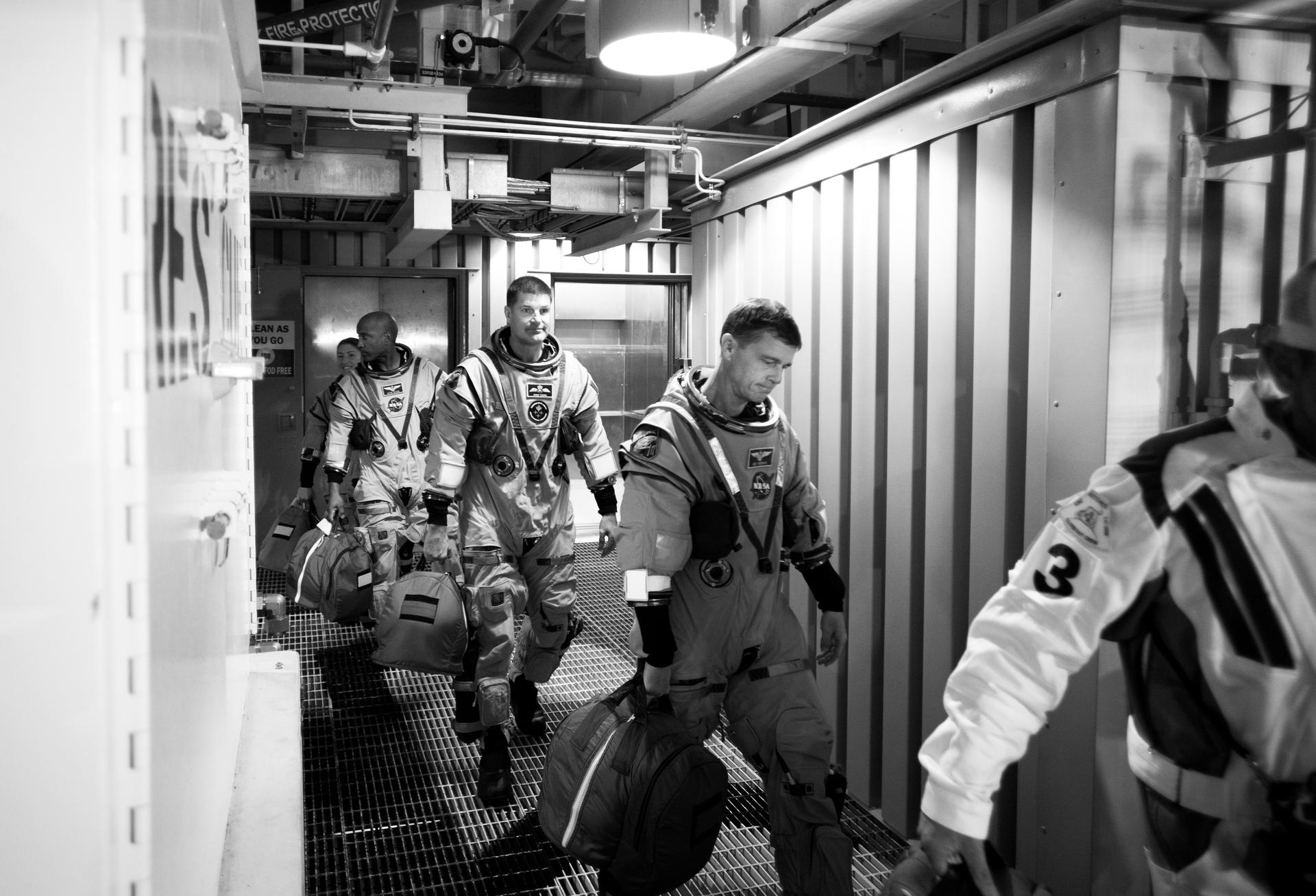
    Antonia Jaramillo

  • Artemis II Crew Launch Day Rehearsal

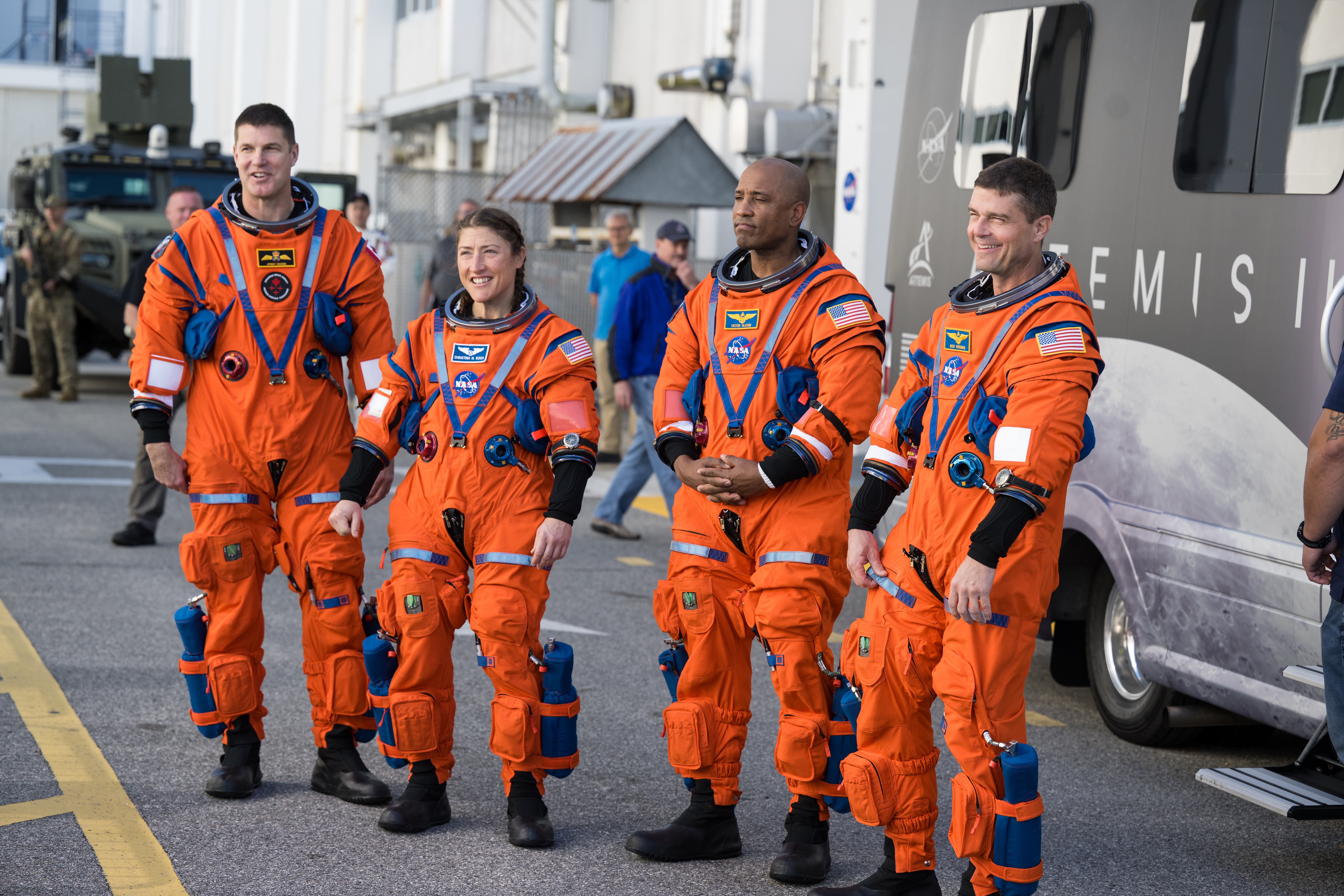
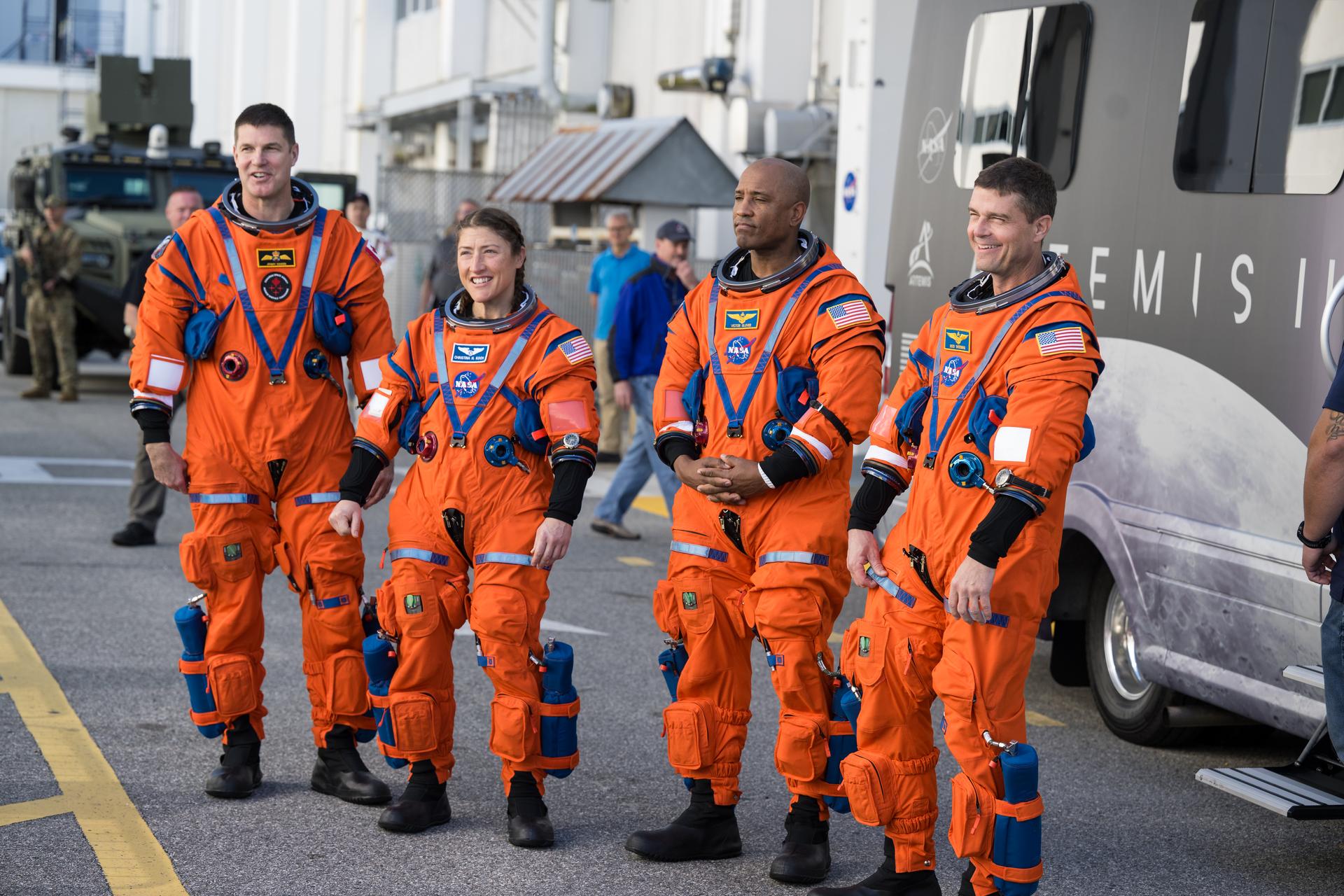
    Four astronauts - three men and one woman - wearing orange spacesuits stand on the street. Behind them, people are standing or walking by. There is a partially visible van behind the crew; the van has a picture of the Moon and the words "Artemis II" on it.
    NASA/Aubrey Gemignani

    From left to right, CSA (Canadian Space Agency) astronaut Jeremy Hansen and NASA astronauts Christina Koch, Victor Glover, and Reid Wiseman stand outside before boarding their Orion spacecraft inside the Vehicle Assembly Building at NASA’s Kennedy Space Center in Florida as part of the Artemis II countdown demonstration test, Saturday, Dec. 20, 2025. Because the SLS (Space Launch System) rocket upon which they will launch is not yet at the launch pad, the crew boarded Orion inside NASA Kennedy’s Vehicle Assembly Building, where engineers are conducting final preparations on the spacecraft, rocket, and ground systems. During the rehearsal, teams went through all the steps that will be taken on launch day, winding the clock down to just a few seconds before liftoff.

    Through the Artemis campaign, NASA will send astronauts to explore the Moon for scientific discovery, economic benefits, and to build the foundation for the first crewed missions to Mars, for the benefit of all.

    See more photos from the countdown demonstration test.

    Image credit: NASA/Aubrey Gemignani

  • Artemis II Flight Crew, Teams Conduct Demonstration Ahead of Launch

    4 Min Read

    Artemis II Flight Crew, Teams Conduct Demonstration Ahead of Launch

    NASA’s launch and mission teams, along with the Artemis II crew, completed a key test Dec. 20, a countdown demonstration test, ahead of the Artemis II flight around the Moon early next year. The astronauts, supported by launch and flight control teams, dressed in their launch and entry suits, boarded their spacecraft on top of its towering rocket at the agency’s Kennedy Space Center in Florida to validate their launch date timeline.

    Winding the clock down to a point just before liftoff, the rehearsal enabled NASA teams to practice the exact steps teams will take as they move toward launch of the test flight.

    This test marks the passage of a key milestone on America’s journey to the launchpad. We have many more to go, but I’m encouraged by the expertise and precision demonstrated by our teams as we continue NASA’s ambitious lunar exploration legacy.

    Jared Isaacman

    Jared Isaacman

    NASA Administrator

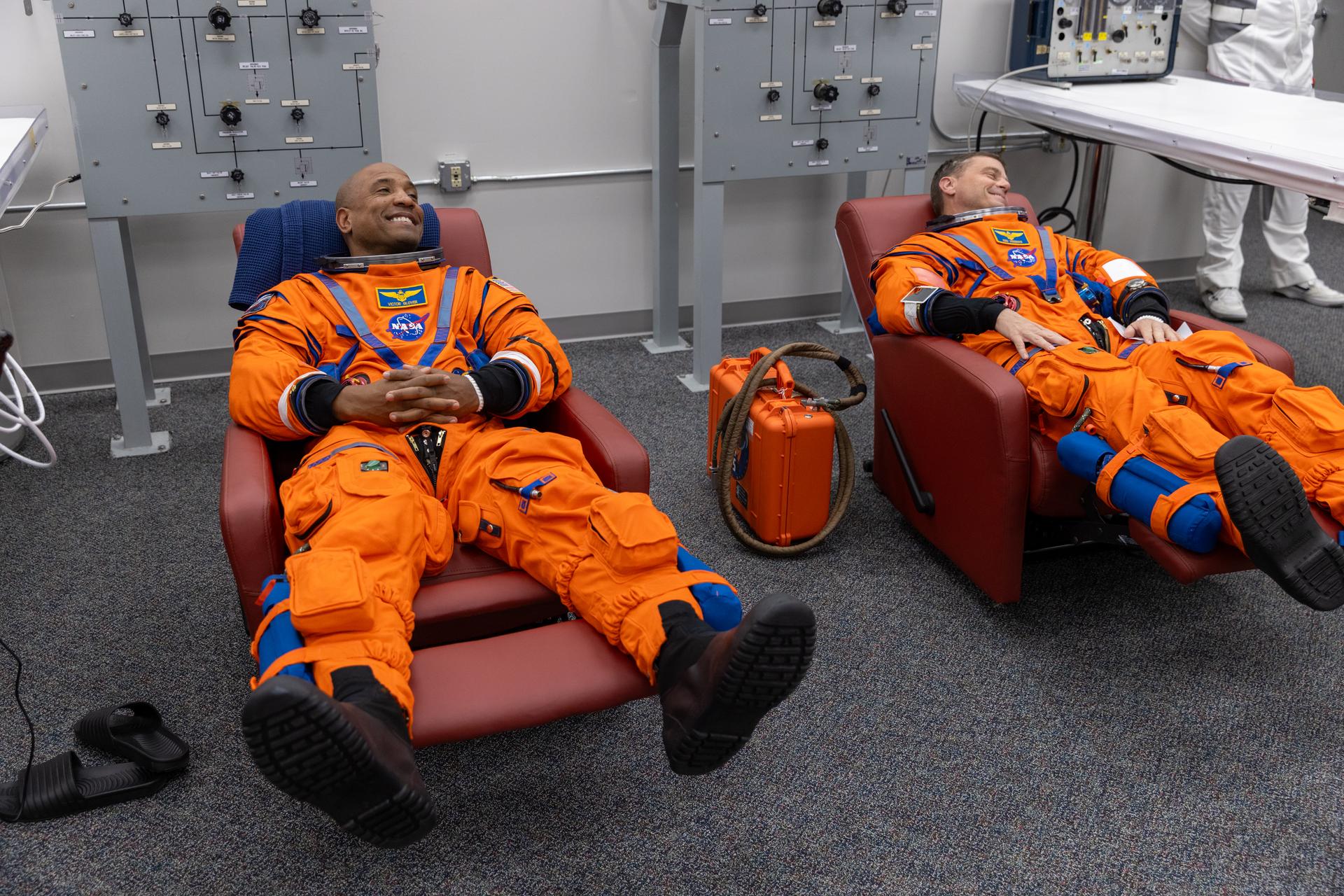
    While launch teams in the firing rooms of Kennedy’s Launch Control Center ran through procedures just as they would on launch day, the Artemis II crew members – NASA astronauts Reid Wiseman, Victor Glover, and Christina Koch, and CSA (Canadian Space Agency) astronaut Jeremy Hansen – donned their Orion crew survival system spacesuits in the Astronaut Crew Quarters inside Kennedy’s Neil A. Armstrong Operations and Checkout Building.

    From left, NASA astronauts Victor Glover, Artemis II pilot, and Reid Wiseman, Artemis II commander, undergo spacesuit checks inside the crew quarters suit-up room in the Neil A. Armstrong Operations and Checkout Building part of the countdown demonstration test at NASA Kennedy on Saturday, Dec. 20, 2025.
    NASA/Glenn Benson

    Once suited, the crew made the same walk taken by Gemini, Apollo, space shuttle, and Commercial Crew Program astronauts launching from Florida’s Space Coast during the last six decades. Through the suit-up room, down the hallway, and after a quick ride on an elevator, the Artemis II crew exited the building through the double doors featuring dozens of human spaceflight mission patch stickers.

    The Artemis astronaut van waited outside to take the crew members to their SLS (Space Launch System) rocket. On the actual launch day, the four astronauts will complete a 20-minute ride to Kennedy’s Launch Complex 39B ahead of liftoff. But, for the countdown test the destination was High Bay 3 of Kennedy’s Vehicle Assembly Building, where the Artemis II Moon rocket is undergoing final processing and checkouts before rolling out to the launch pad. A convoy of support vehicles, as well as Artemis II backup crew members, NASA astronaut Andre Douglas and CSA astronaut Jenni Gibbons, escorted the crew to its destination.

    From right to left, NASA astronauts Reid Wiseman, commander; Victor Glover, pilot; Christina Koch, mission specialist; and CSA (Canadian Space Agency) astronaut Jeremy Hansen, mission specialist are seen as they depart the Neil A. Armstrong Operations and Checkout Building to board their Orion spacecraft atop NASA’s Space Launch System rocket inside the Vehicle Assembly Building as part of the Artemis II countdown demonstration test, Saturday, Dec. 20, 2025, at NASA Kennedy.
    NASA/Aubrey Gemignani

    After a short trip to the building, the flight crew rode the mobile launcher’s elevator up nearly 300 feet to the crew access arm and the White Room, the enclosed area where the crew enters the spacecraft. The closeout crew, whose job it is to ensure the flight crew enters the spacecraft without issue, helped the astronauts enter Orion, which they have named Integrity. The closeout team assisted the astronauts by strapping them into their seats and closed the hatch once all closeout operations were completed. With the crew secured in Orion, teams conducted suit leak and communications checks, just as they will on launch day.

    Artemis II crewmembers CSA astronaut Jeremy Hansen, mission specialist, right, and NASA astronauts Victor Glover, pilot; Christina Koch, mission specialist; after exiting the elevator at the 275-foot level of the mobile launcher as they walk towards the crew access arm prepare to board their Orion spacecraft atop NASA’s Moon rocket during the Artemis II countdown demonstration test, Saturday, Dec. 20, 2025, inside the Vehicle Assembly Building at NASA Kennedy.
    NASA/Joel Kowsky

    Throughout the testing, teams ran through the final 5.5 hours of launch day procedures, completing the countdown test about 30 seconds before what will be the time of liftoff on launch day. As they may encounter on launch day, teams navigated through several real-time issues, including audio communications and environmental control and life support systems closeout activities during the test. All objectives were met, and the countdown demonstration provided a valuable opportunity to conduct operations in a day-of-launch configuration to minimize first-time learnings on launch day.

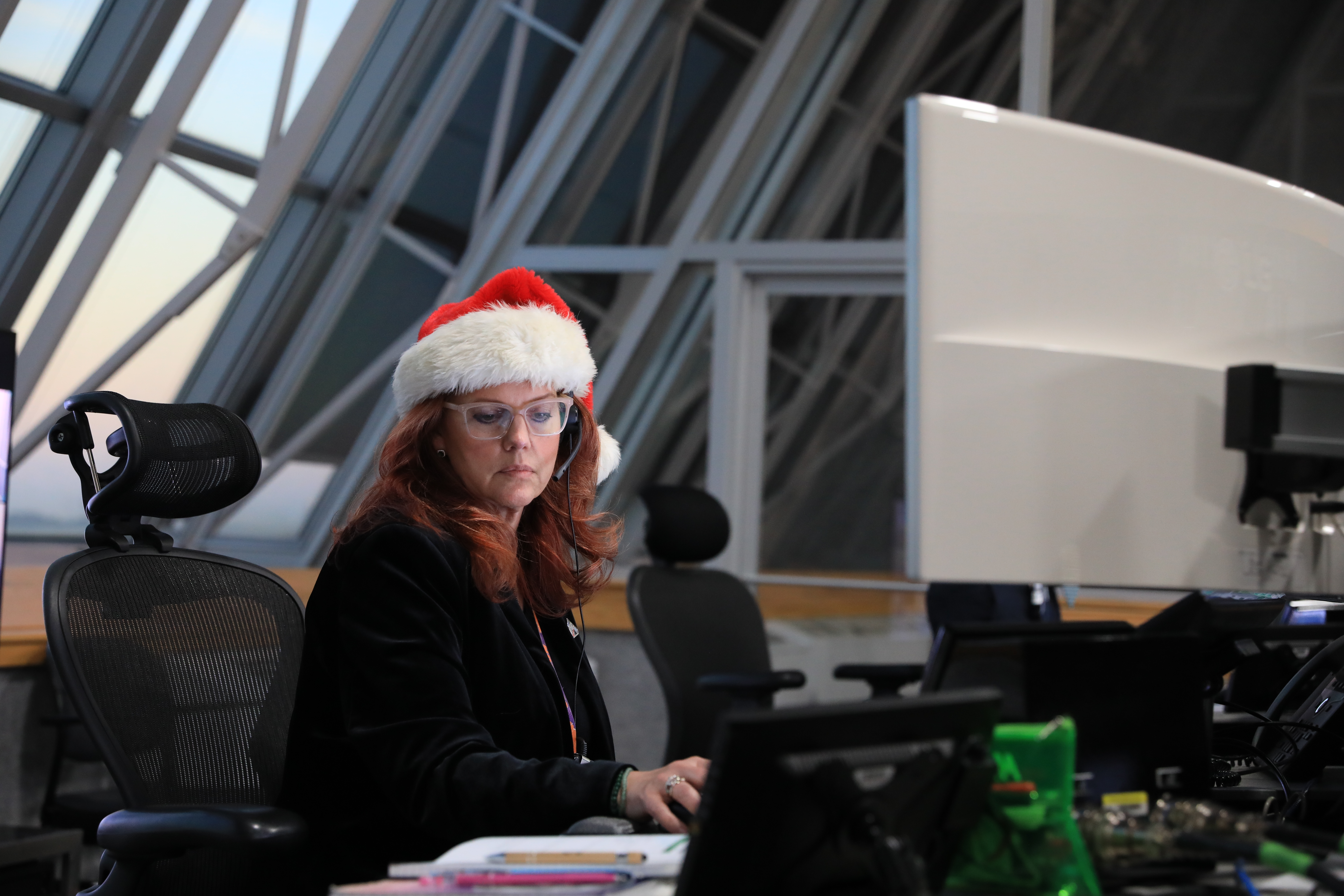
    Charlie Blackwell-Thompson, NASA’s Artemis launch director, monitors the progress of Artemis II countdown demonstration test with Artemis II crew members onboard their Orion spacecraft from Firing Room 1 of the Rocco A. Petrone Launch Control Center at NASA Kennedy on Saturday, Dec. 20.
    NASA/Glenn Benson

    Although Artemis II teams have performed parts of the launch countdown testing previously, this test was the first full end-to-end rundown with the crew and Orion in the launch configuration. The crew will participate in additional countdown testing after the rocket arrives to the launchpad, focusing on emergency operations.

    As part of a Golden Age of innovation and exploration, the Artemis II test flight is the first crewed mission under NASA’s Artemis campaign. It is another step toward new U.S.-crewed missions on the Moon’s surface that will help the agency prepare to land American astronauts on Mars.

    About the Author

    Jason Costa

    Jason Costa

  • NASA Astronaut Nick Hague Retires

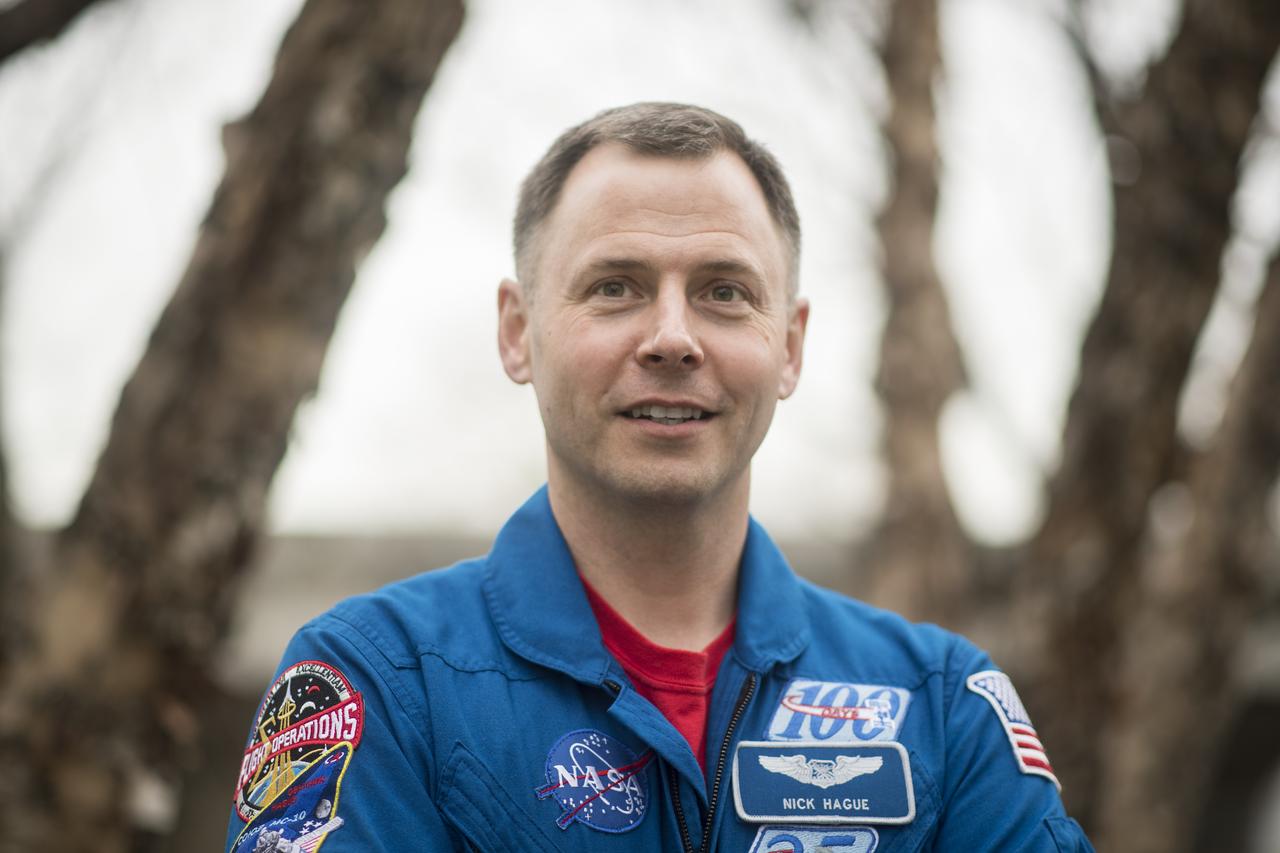
    NASA Astronaut with trees
    NASA Astronaut Nick Hague

    NASA astronaut Brig. Gen. Nick Hague has retired from the agency, concluding a distinguished career that included two spaceflight missions, 374 days in space, and multiple spacewalks in support of the International Space Station. Hague continues service in the U.S. Space Force.

    Hague launched aboard the Soyuz MS-12 spacecraft in March 2019 from the Baikonur Cosmodrome in Kazakhstan for his first long-duration mission, serving as a flight engineer during Expeditions 59/60. During this 203-day mission, he conducted three spacewalks to upgrade the station’s power systems and support ongoing maintenance of the orbiting laboratory. Hague also contributed to a wide range of scientific investigations, spanning biology, human physiology, materials science, and technology demonstrations.
     
    Hague originally was assigned to fly in 2018 as part of the Soyuz MS-10 crew. The mission experienced a launch anomaly shortly after liftoff, and Hague and his crewmate executed a high-G ballistic abort. The two landed safely and Hague returned to flight status within months, ultimately completing his 2019 mission.
     
    He flew again during NASA’s SpaceX Crew-9 mission, launching in September 2024 alongside Roscosmos cosmonaut Aleksandr Gorbunov. It was the first human spaceflight mission launched from Space Launch Complex 40 at Cape Canaveral Space Force Station in Florida, and it also marked the first time a Space Force Guardian launched to space. Hague then joined the Expedition 72 crew, spending 171 days aboard the station before returning in March 2025 along with NASA astronauts Butch Wilmore and Suni Williams. During the mission, he conducted another spacewalk, bringing his career total to 25 hours and 56 minutes across four spacewalks.
     
    “Nick’s determination and dedication to human space exploration are truly phenomenal,” said Vanessa Wyche, director of NASA’s Johnson Space Center in Houston. “His leadership and commitment to mission excellence have supported progress aboard the International Space Station and prepared us for future missions as we continue to explore farther into the solar system.”
     
    Beyond his flight experience, Hague served in several technical and leadership roles within NASA. He supported the development of future spacecraft operations, contributed to astronaut training, and played a key role in human spaceflight safety initiatives, drawing on his firsthand experience during the MS-10 launch abort.
     
    “Nick brought calm, clarity, and a spirit of teamwork to every situation,” said Scott Tingle, chief of the Astronaut Office at NASA Johnson. “From his work in orbit to his support of crew operations here on Earth, he exemplified what it means to be an astronaut. His impact will continue to shape the missions and the astronauts who follow.”
     
    A native of Hoxie, Kansas, Hague is a brigadier general in the U.S. Space Force where he is responsible for the development and implementation of policy for all U. S. Space Force global operations, sustainment, training and readiness. He earned a bachelor’s degree in astronautical engineering from the U.S. Air Force Academy in Colorado and a master’s degree in astronautical engineering from the Massachusetts Institute of Technology. Before joining NASA in 2013, he served in developmental and test engineer roles supporting advanced Air Force technologies and operations at home and abroad.
     
    “It has been an honor to serve as a NASA astronaut,” said Hague. “Working alongside incredible teams, on the ground and in space, has been the privilege of a lifetime. The International Space Station represents the very best of what humanity can accomplish when we work together. I am grateful to have contributed to that mission, and I look forward to watching NASA, our partners, and the next generation of explorers push even farther as we return to the Moon and journey on to Mars.”
     
    To learn more about NASA’s astronauts and their contributions to space exploration, visit:

    https://www.nasa.gov/astronauts

    -end-

    Shaneequa Vereen
    Johnson Space Center, Houston
    281-483-5111
    shaneequa.y.vereen@nasa.gov

  • NASA’s Hubble Reveals Largest Found Chaotic Birthplace of Planets

    4 Min Read

    NASA’s Hubble Reveals Largest Found Chaotic Birthplace of Planets

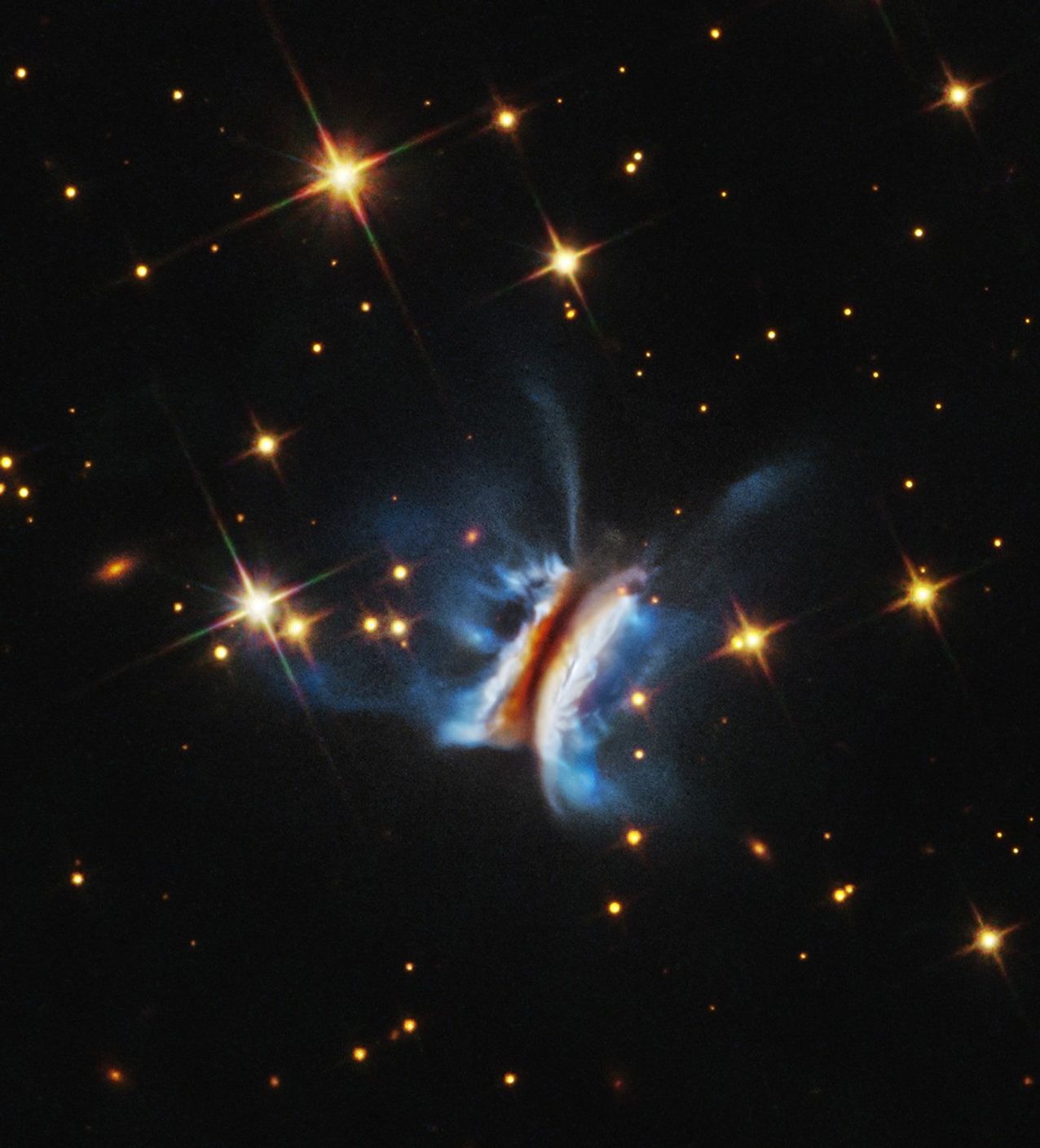
    Near the center is an object that resembles an edge-on view of a hamburger. There is a diagonal dark strip (the meat patty) of dust, running from 1 o'clock to 7 o'clock, that obscures a central star. Curving away from either side of the dark strip are glowing white clouds (the buns) where dust is reflecting starlight. Bright blue finger-like wisps of material extend far above and below the dark center plane. A few dozen stars, some with four diffraction spikes, are scattered on the black background of space.

    Astronomers using NASA’s Hubble Space Telescope have imaged the largest protoplanetary disk ever observed circling a young star. For the first time in visible light, Hubble has revealed the disk is unexpectedly chaotic and turbulent, with wisps of material stretching much farther above and below the disk than astronomers have seen in any similar system. Strangely, more extended filaments are only visible on one side of the disk. The findings, which published Tuesday in The Astrophysical Journal, mark a new milestone for Hubble and shed light on how planets may form in extreme environments, as NASA’s missions lead humanity’s exploration of the universe and our place in it.

    Located roughly 1,000 light-years from Earth, IRAS 23077+6707, nicknamed “Dracula’s Chivito,” spans nearly 400 billion miles — 40 times the diameter of our solar system to the outer edge of the Kuiper Belt of cometary bodies. The disk obscures the young star within it, which scientists believe may be either a hot, massive star, or a pair of stars. And the enormous disk is not only the largest known planet-forming disk; it’s also shaping up to be one of the most unusual.

    “The level of detail we’re seeing is rare in protoplanetary disk imaging, and these new Hubble images show that planet nurseries can be much more active and chaotic than we expected,” said lead author Kristina Monsch of the Center for Astrophysics | Harvard & Smithsonian (CfA). “We’re seeing this disk nearly edge-on and its wispy upper layers and asymmetric features are especially striking. Both Hubble and NASA’s James Webb Space Telescope have glimpsed similar structures in other disks, but IRAS 23077+6707 provides us with an exceptional perspective — allowing us to trace its substructures in visible light at an unprecedented level of detail. This makes the system a unique, new laboratory for studying planet formation and the environments where it happens.”

    The nickname “Dracula’s Chivito” playfully reflects the heritage of its researchers—one from Transylvania and another from Uruguay, where the national dish is a sandwich called a chivito. The edge-on disk resembles a hamburger, with a dark central lane flanked by glowing top and bottom layers of dust and gas.

    Near the center is an object that resembles an edge-on view of a hamburger. There is a diagonal dark strip (the meat patty) of dust, running from 1 o'clock to 7 o'clock, that obscures a central star. Curving away from either side of the dark strip are glowing white clouds (the buns) where dust is reflecting starlight. Bright blue finger-like wisps of material extend far above and below the dark center plane. A few dozen stars, some with four diffraction spikes, are scattered on the black background of space.
    This Hubble Space Telescope image shows the largest planet-forming disk ever observed around a young star. It spans nearly 400 billion miles — 40 times the diameter of our solar system.
    Image: NASA, ESA, STScI, Kristina Monsch (CfA); Image Processing: Joseph DePasquale (STScI)

    Puzzling asymmetry

    The impressive height of these features wasn’t the only thing that captured the attention of scientists. The new images revealed that vertically imposing filament-like features appear on just one side of the disk, while the other side appears to have a sharp edge and no visible filaments. This peculiar, lopsided structure suggests that dynamic processes, like the recent infall of dust and gas, or interactions with its surroundings, are shaping the disk.

    “We were stunned to see how asymmetric this disk is,” said co-investigator Joshua Bennett Lovell, also an astronomer at the CfA. “Hubble has given us a front row seat to the chaotic processes that are shaping disks as they build new planets — processes that we don’t yet fully understand but can now study in a whole new way.”

    All planetary systems form from disks of gas and dust encircling young stars. Over time, the gas accretes onto the star, and planets emerge from the remaining material. IRAS 23077+6707 may represent a scaled-up version of our early solar system, with a disk mass estimated at 10 to 30 times that of Jupiter — ample material for forming multiple gas giants. This, plus the new findings, makes it an exceptional case for studying the birth of planetary systems.

    “In theory, IRAS 23077+6707 could host a vast planetary system,” said Monsch. “While planet formation may differ in such massive environments, the underlying processes are likely similar. Right now, we have more questions than answers, but these new images are a starting point for understanding how planets form over time and in different environments.”

    Credit: NASA’s Goddard Space Flight Center; Lead Producer: Paul Morris

    The Hubble Space Telescope has been operating for over three decades and continues to make ground-breaking discoveries that shape our fundamental understanding of the universe. Hubble is a project of international cooperation between NASA and ESA (European Space Agency). NASA’s Goddard Space Flight Center in Greenbelt, Maryland, manages the telescope and mission operations. Lockheed Martin Space, based in Denver, also supports mission operations at Goddard. The Space Telescope Science Institute in Baltimore, which is operated by the Association of Universities for Research in Astronomy, conducts Hubble science operations for NASA.

    Details

    Last Updated
    Dec 23, 2025
    Editor
    Andrea Gianopoulos
    Contact
    Media

    Claire Andreoli
    NASA’s Goddard Space Flight Center
    Greenbelt, Maryland
    claire.andreoli@nasa.gov

    Christine Pulliam
    Space Telescope Science Institute
    Baltimore, Maryland

    Amy Oliver
    Center for Astrophysics | Harvard & Smithsonian
    Cambridge, Massachusetts

  • I Am Artemis: Grace Lauderdale

    3 Min Read

    I Am Artemis: Grace Lauderdale

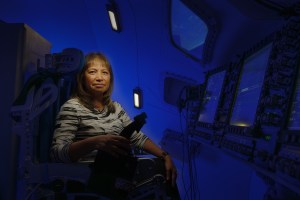
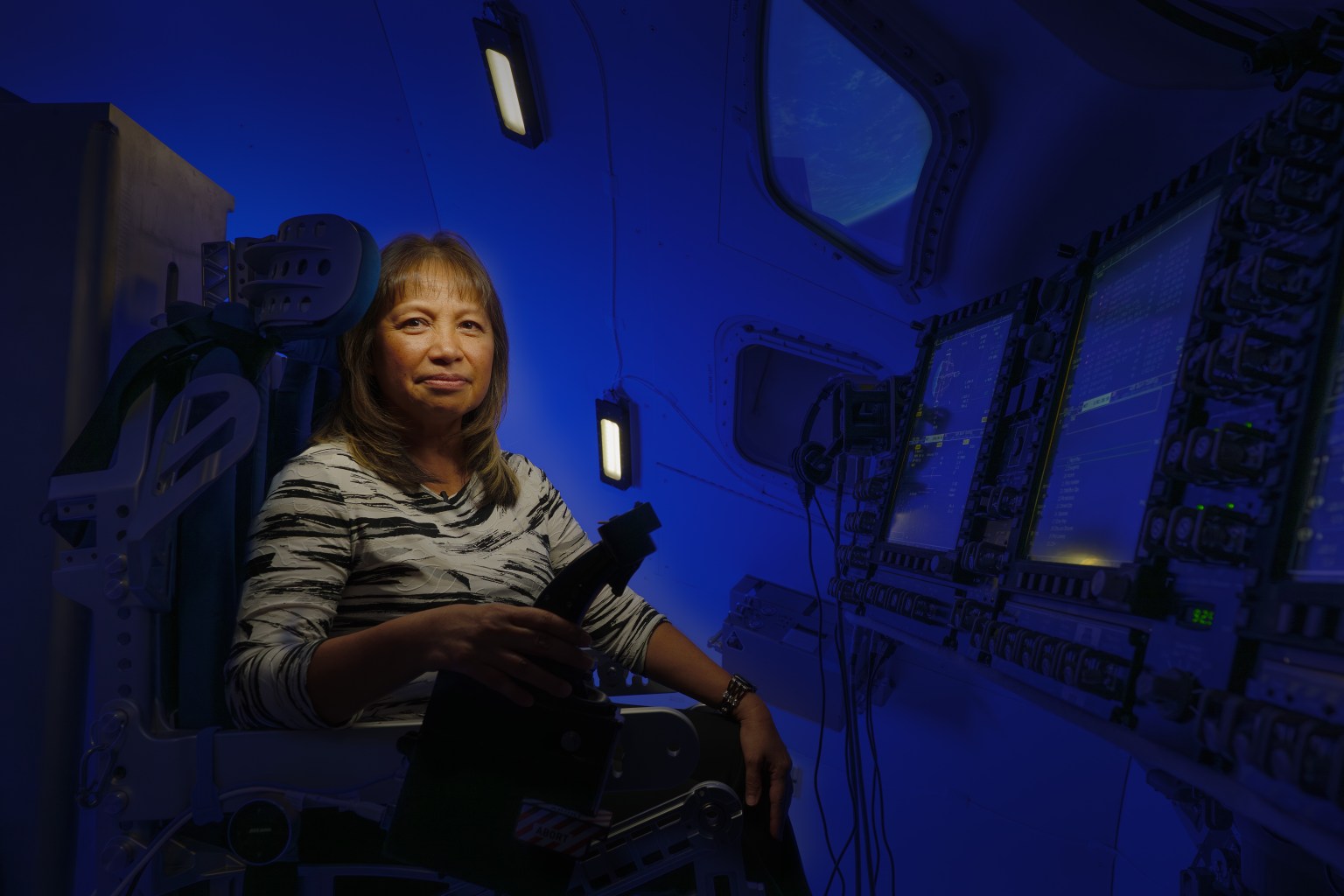
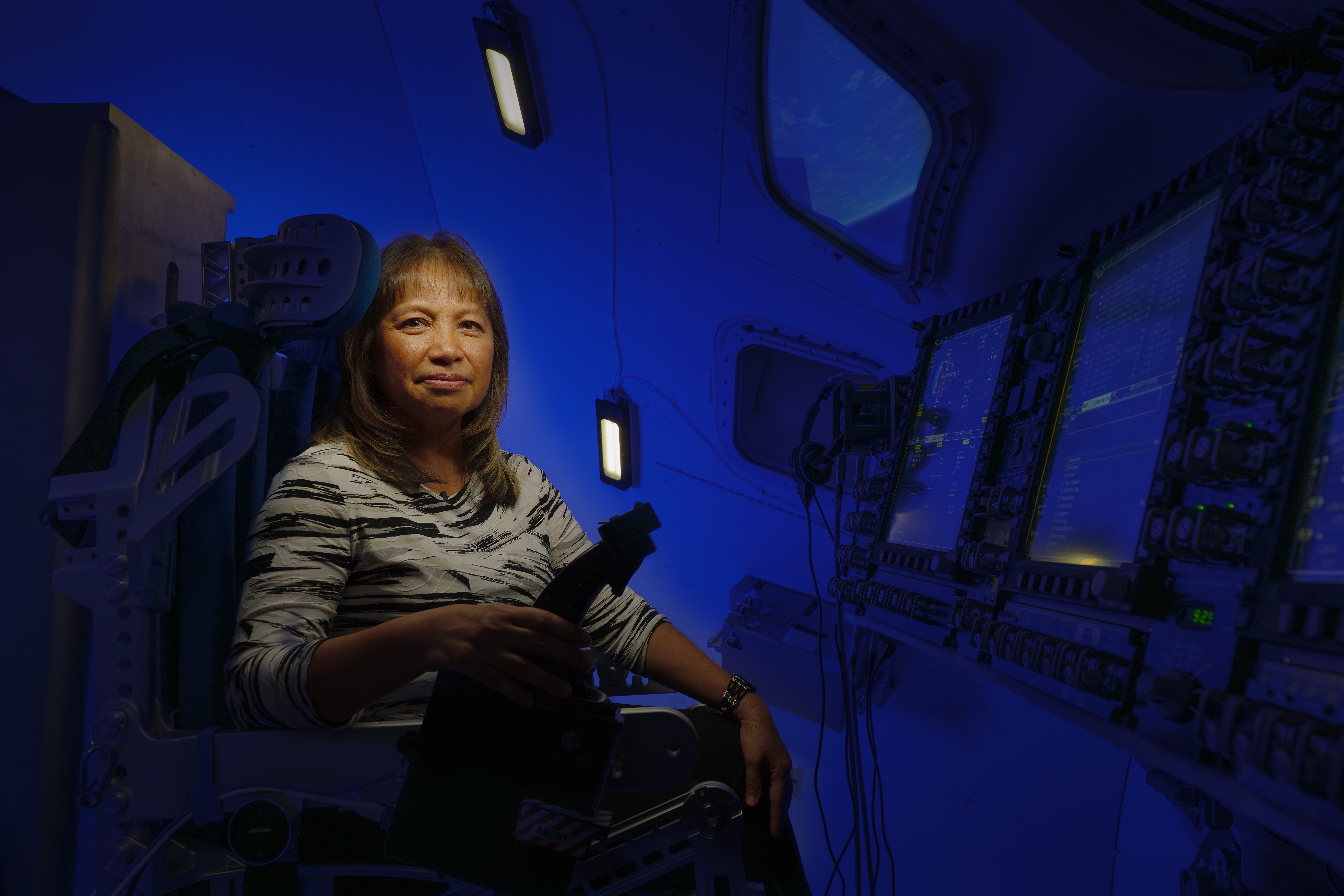
    Grace Lauderdale, exploration project manager for the Training Systems Office at NASA’s Johnson Space Center in Houston, sits inside the Orion Mission Simulator used for training the Artemis II crew and flight control team.

    Credits:
    NASA/Rad Sinyak

    Listen to this audio excerpt from Grace Lauderdale, exploration project manager for the Training Systems Office at NASA Johnson:

    0:00 / 0:00

    In preparation for their mission around the Moon inside NASA’s Orion spacecraft, the Artemis II crew will spend countless hours training inside the Orion Mission Simulator. The simulator replicates what the crew will experience inside the spacecraft and allows the astronauts and flight controllers to rehearse every phase of the mission.

    As the exploration project manager for the Training Systems Office at Johnson, Grace Lauderdale leads the team that develops and operates the Orion Mission Simulator at NASA’s Johnson Space Center in Houston, playing a key role in making sure astronauts and flight control teams are ready for the first crewed mission of the Artemis campaign.

    “This simulator trains the flight control team and the crew all the way from launch to splashdown. Every button, every display, every view out the window is as lifelike as possible.”

    Grace Lauderdale

    Grace Lauderdale

    Exploration Project Manager for the Training Systems Office at NASA Johnson

    The simulator is more than a mock-up. It connects directly to Johnson’s Mission Control Center, sending real-time data, audio, and video — just like the spacecraft will during flight. That means the flight control team trains in parallel, seeing and hearing exactly what they would throughout the mission.

    “One of our major goals is to make the data they see on their displays look like the real vehicle,” Lauderdale said. “We also simulate the near space and deep space networks, including all the communication delays. It’s all about realism.”

    That realism is powered by a complex software system developed in collaboration with partners like Lockheed Martin. Lauderdale’s team works behind the scenes to ensure the simulator runs smoothly — writing code, troubleshooting issues, and even creating custom malfunctions to challenge the crew during training.

    Grace Lauderdale, exploration project manager for the Training Systems Office at NASA’s Johnson Space Center in Houston, sits inside the Orion Mission Simulator used for training the Artemis II crew and flight control team.
    Credits: NASA/Rad Sinyak

    To prepare astronauts for the unexpected, instructors work with Lauderdale’s team to simulate problems that could occur during the mission, some of which require creative solutions.

    “There are times when the instructors will ask for malfunctions or capabilities that the sim doesn’t automatically do,” she said. “Part of our role is to come up with ways to make that happen.”

    Her team plans, develops, and executes training scenarios in the Orion Mission Simulator across multiple Artemis missions, often simultaneously. “Currently, we’re planning for future crewed missions, developing Artemis III, and executing Artemis II,” she said.

    The work is demanding, but deeply personal, according to Lauderdale.

    “I’ve known I wanted to work at NASA since the seventh grade. Every class I took, the degree I earned — it was all to get here.”

    Grace Lauderdale

    Grace Lauderdale

    Exploration Project Manager for the Training Systems Office at NASA Johnson

    That passion shows in her leadership. Her team often works nights, weekends, and holidays to ensure the simulator is ready. During a recent 30-hour simulation, they spent days preparing, fixing memory issues, and ensuring the system wouldn’t crash. It didn’t.

    “I’m very proud of my team,” she said. “They’ve put in countless hours of work to make sure this simulator reacts exactly as it would in the real mission.”

    For Lauderdale, helping send astronauts around the Moon isn’t just a job—it’s a dream realized.

    “Being part of getting us back to the Moon is very personal to me,” she said. “And I’m proud to be part of the team that will help get our astronauts there.”

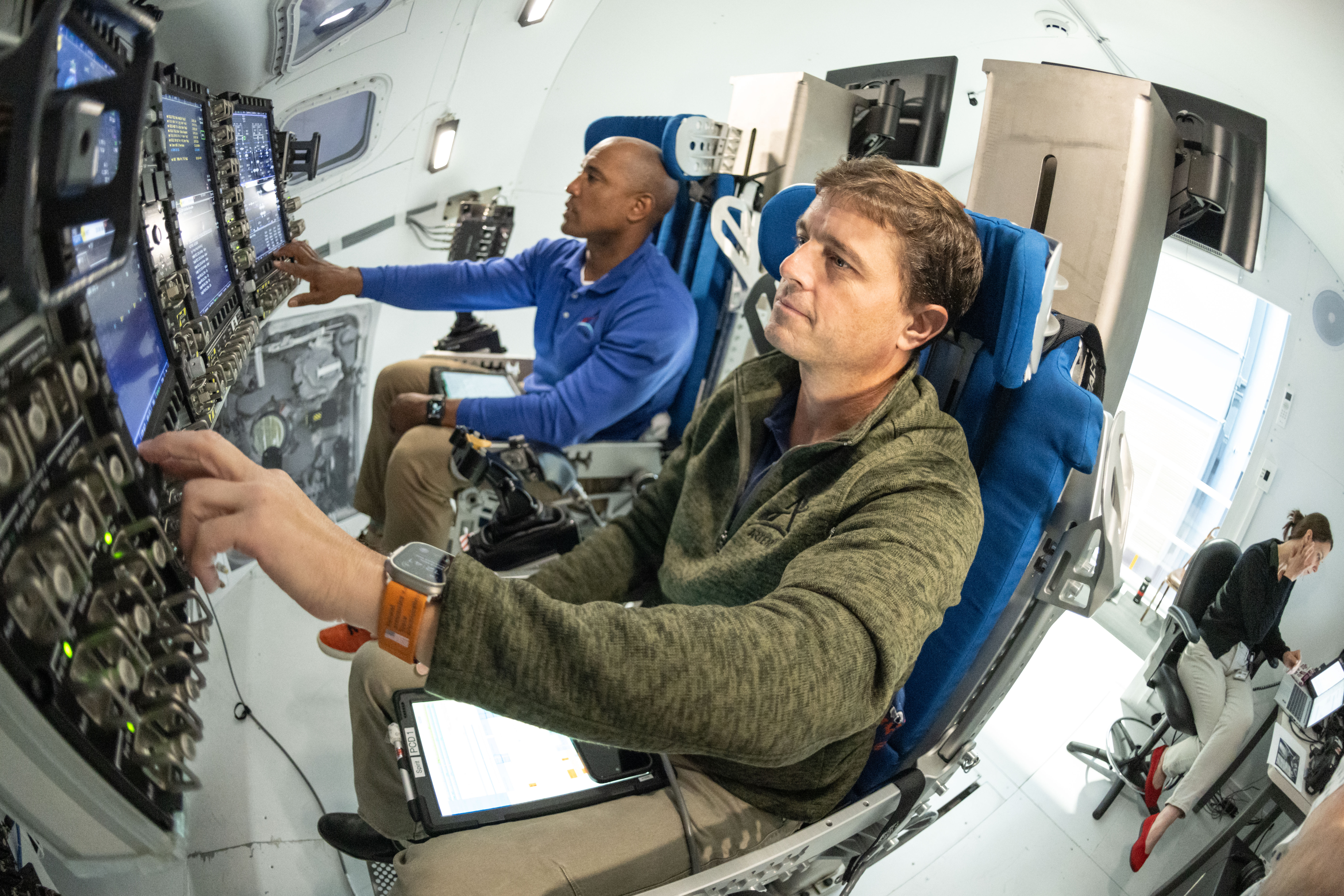
    Reid Wiseman and Victor Glover train for the Artemis II mission inside the Orion Mission Simulator at NASA’s Johnson Space Center in Houston.
    NASA/Bill Stafford

    About the Author

    Erika Peters

    Erika Peters

    Share

    Details

    Last Updated

    Dec 22, 2025

  • Curiosity Blog, Sols 4750-4762: See You on the Other Side of the Sun

    3 min read

    Curiosity Blog, Sols 4750-4762: See You on the Other Side of the Sun

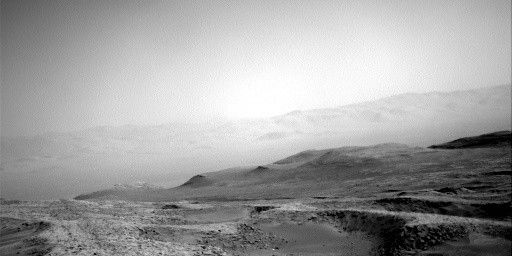
    A grayscale photo of Martian landscape shows a wide expanse in the foreground, with dark gray, uneven terrain that slopes slightly from the middle right of the frame down toward the lower left corner. Beyond that in the far distance is a horizon line that follows the same descent; it’s hazy, pale gray, and looks like a long edge with walls sloping downward. The empty sky above appears as a whitish pale gray.
    NASA’s Mars rover Curiosity acquired this image, with the boxwork terrain in the foreground and Gale crater rim in the far background, using its Right Navigation Camera. Curiosity captured the image on Dec. 21, 2025 — Sol 4755, or Martian day 4,755 of the Mars Science Laboratory mission — at 15:57:21 UTC.
    NASA/JPL-Caltech

    Written by Lucy Thompson, Planetary Scientist and APXS team member, University of New Brunswick, Canada

    Earth planning date: Monday, Dec. 22, 2025

    As we all prepare for the holiday season here on Earth, we have been planning a few last activities before Curiosity and the team of scientists and engineers take a well-deserved, extended break. This holiday season coincides with conjunction — every two years, because of their different orbits, Earth and Mars are obstructed from one another by the Sun; this one will last from Dec. 27 to Jan. 20. We do not like to send commands through the Sun in case they get scrambled, so we have been finishing up a few last scientific observations before preparing Curiosity for its quiet conjunction break.

    As part of a pre-planned transect between our two recent drill holes, “Valle de la Luna” (hollow) and “Nevado Sajama” (ridge), we successfully completed chemical analyses and imaging of a ridge wall. These observations were acquired to document changes in texture, structure, and composition between the two drill holes and to elucidate why we see such contrasting physical features of resistant ridges and eroded hollows in this region. Mastcam and ChemCam also imaged a little further afield. ChemCam continued observations of the “Mishe Mokwa” butte and captured textures in the north facing wall of the next, adjacent hollow. Mastcam imaged the central fracture along the “Altiplano” ridge above the wall we were parked at, as well as polygonal features in our previous workspace.

    The rover engineers then successfully orchestrated Curiosity’s drive back up onto the nearby ridge to ensure a safe parking spot over conjunction. We documented the drive with a MARDI sidewalk video, tracking how the terrain beneath the rover changes as we drive. Although we could not use APXS and MAHLI on the robotic arm from Friday on, owing to constraints that need to be in place prior to conjunction, we were able to use the rover’s Mastcam to image areas of interest in the near field, which will help us with our planned activities when we return from conjunction. These will hopefully include getting chemistry (with APXS and ChemCam) and imaging (with MAHLI) of some freshly broken rock surfaces that we drove over.

    The environmental scientists were also very busy. Navcam observations included: Navcam suprahorizon and zenith movies to monitor clouds; Navcam line-of-sight observations; and Navcam dust-devil movies and surveys as we enter the dust storm season on Mars. Mastcam tau observations were acquired to monitor the optical depth of the atmosphere, and APXS analyses of the atmosphere were also planned to monitor seasonal variations in argon.

    Today we are uplinking the last plan before Mars disappears behind the Sun and we all take a break (the actual conjunction plan to take us through sols 4763-4787 was uplinked a couple of weeks ago). Because of constraints put in place to make sure Curiosity stays safe and healthy, we were limited to very few activities in today’s plan. These include more APXS atmospheric argon measurements and Hazcam and Navcam imaging including monitoring for dust-devil activity.

    As usual, our plans also included background DAN, RAD, and REMS observations, which continue through conjunction.

    It has been a pleasure to be a part of this amazing team for another year. We are all looking forward to coming back in January, when Mars reappears from behind the Sun, to another exciting year of roving in Gale crater.

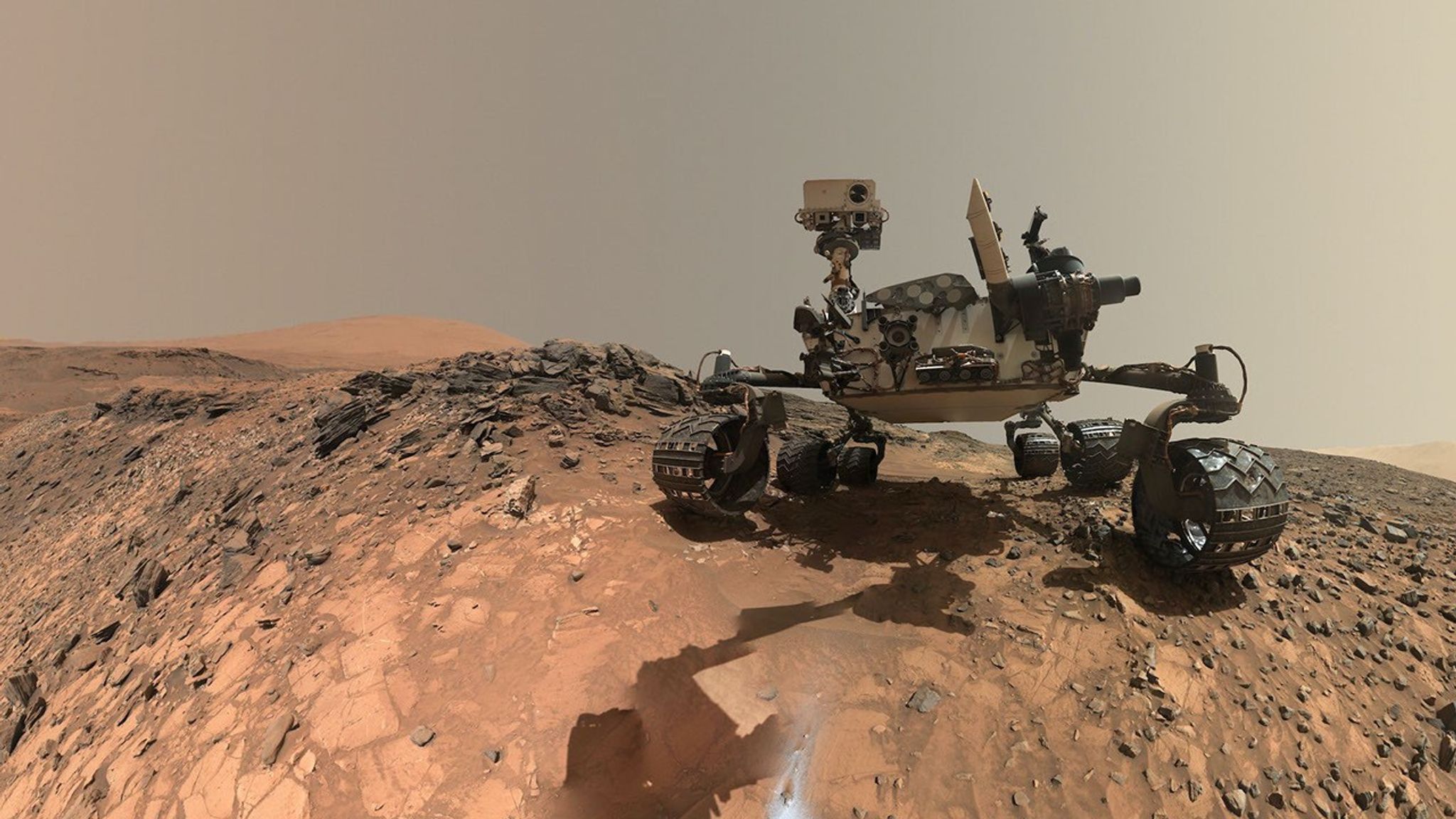
    A rover sits on the hilly, orange Martian surface beneath a flat grey sky, surrounded by chunks of rock.
    NASA’s Mars rover Curiosity at the base of Mount Sharp
    NASA/JPL-Caltech/MSSS

    Share

    Details

    Last Updated
    Dec 22, 2025

    Related Terms

  • Descubre el Sistema Solar: Una Guía Completa para Entender Nuestro Vecindario Cósmico

    ¿Alguna vez has mirado al cielo nocturno y te has preguntado qué secretos esconde el universo? El sistema solar es nuestro hogar cósmico, un fascinante conjunto de cuerpos celestes que orbitan alrededor del Sol. Desde los planetas rocosos hasta los gigantes gaseosos, cada elemento de nuestro vecindario espacial tiene una historia increíble que contar.

    ¿Qué es el Sistema Solar y Cómo se Formó?

    El sistema solar se formó hace aproximadamente 4.600 millones de años a partir de una enorme nube de gas y polvo conocida como nebulosa solar. Cuando esta nube colapsó bajo su propia gravedad, comenzó a girar y aplanarse, formando un disco donde nacerían todos los planetas.

    En el centro de este disco se concentró la mayor cantidad de materia, dando origen a nuestra estrella, el Sol. Los materiales restantes se fueron agrupando gradualmente para formar los planetas, lunas, asteroides y cometas que conocemos hoy.

    Este proceso de formación planetaria es fundamental para entender por qué los planetas interiores son rocosos mientras que los exteriores son gaseosos. La temperatura y la distancia al Sol jugaron un papel crucial en esta diferenciación.

    Los Ocho Planetas del Sistema Planetario

    Nuestro sistema planetario está compuesto por ocho planetas principales, cada uno con características únicas que los hacen fascinantes para el estudio astronómico.

    Planetas Interiores o Terrestres

    Mercurio es el planeta más cercano al Sol y el más pequeño del sistema. Su superficie está cubierta de cráteres y experimenta temperaturas extremas, desde -180°C hasta 430°C.

    Venus, conocido como el gemelo de la Tierra por su tamaño similar, posee una atmósfera densa y tóxica. Es el planeta más caliente debido al efecto invernadero descontrolado en su superficie.

    La Tierra es nuestro hogar, el único planeta conocido que alberga vida. Su atmósfera, agua líquida y campo magnético crean las condiciones perfectas para la existencia de organismos vivos.

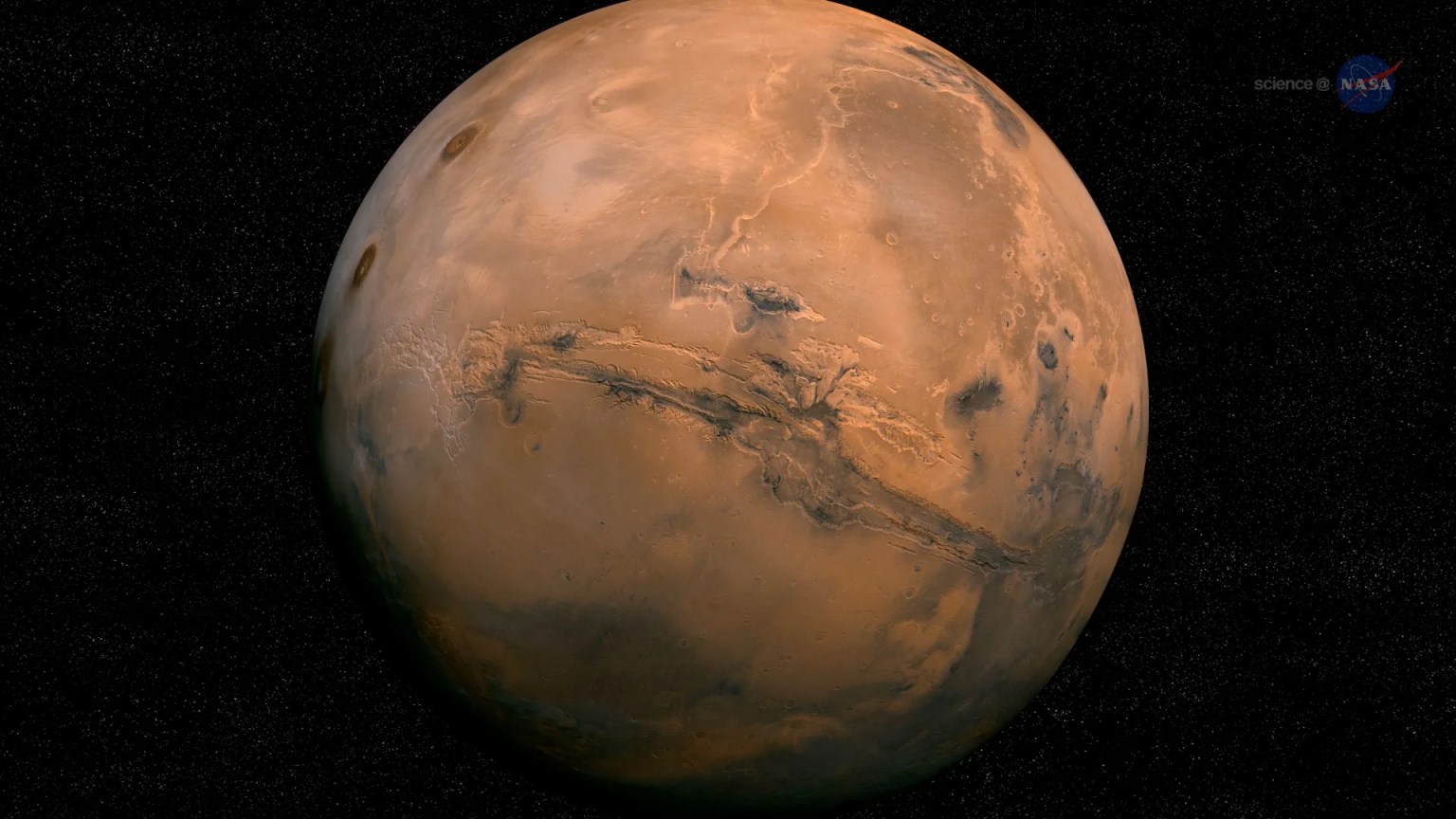
    Marte, el planeta rojo, ha capturado la imaginación humana durante siglos. Actualmente es el objetivo principal de las misiones de exploración espacial en busca de señales de vida pasada.

    Gigantes Gaseosos y Helados

    Júpiter es el coloso del sistema solar, tan masivo que podría contener más de 1.300 Tierras. Su famosa Gran Mancha Roja es una tormenta que ha durado siglos.

    Saturno destaca por sus impresionantes anillos, compuestos principalmente de hielo y roca. Este gigante gaseoso posee más de 80 lunas confirmadas.

    Urano es único por su inclinación axial extrema, lo que significa que prácticamente rueda sobre su órbita. Su color azul verdoso se debe al metano en su atmósfera.

    Neptuno, el planeta más lejano, presenta los vientos más veloces del sistema solar, alcanzando velocidades de 2.100 km/h.

    Otros Componentes del Sistema Solar

    Además de los planetas, nuestro vecindario cósmico contiene numerosos cuerpos celestes igualmente importantes para comprender su dinámica.

    El cinturón de asteroides se encuentra entre Marte y Júpiter, albergando millones de rocas espaciales de diversos tamaños. Ceres, el objeto más grande de esta región, fue reclasificado como planeta enano.

    Más allá de Neptuno existe el cinturón de Kuiper, hogar de Plutón y otros planetas enanos. Esta región helada contiene restos primigenios de la formación del sistema solar.

    Los cometas, viajeros helados que ocasionalmente nos visitan, provienen principalmente de la nube de Oort, una esfera teórica que envuelve todo el sistema solar a enormes distancias.

    La Exploración Espacial y el Futuro

    La humanidad ha enviado numerosas sondas para estudiar los confines de nuestro sistema planetario. Misiones como Voyager, que ya ha alcanzado el espacio interestelar, continúan enviando datos valiosos.

    Los planes actuales incluyen misiones tripuladas a Marte, la exploración de las lunas de Júpiter y Saturno en busca de vida, y el desarrollo de tecnologías que nos permitirán viajar más lejos que nunca.
    Comprender el sistema solar no solo satisface nuestra curiosidad innata, sino que también nos prepara para enfrentar los desafíos del futuro. Cada descubrimiento nos acerca más a responder la pregunta fundamental: ¿estamos solos en el universo? El conocimiento de nuestro vecindario cósmico es el primer paso para explorar las maravillas que aguardan más allá de sus fronteras.

  • Guía clara para entender el sitema solar: planetas, movimiento y curiosidades para observarlo hoy

    Mirar al cielo siempre despierta preguntas: ¿por qué Marte se ve rojizo?, ¿qué hace que las estaciones cambien?, ¿de dónde vienen los cometas? Entender el sitema solar es como abrir un mapa que conecta esas dudas con respuestas sorprendentes y, además, te ayuda a observarlo mejor desde tu propia casa. En esta guía vas a recorrer sus piezas principales, cómo se mueven y qué detalles prácticos puedes aplicar hoy mismo para identificar planetas y fenómenos visibles.

    sitema solar: qué es y cómo se organiza

    El sitema solar es el conjunto de cuerpos celestes que orbitan alrededor del Sol: planetas, lunas, asteroides, cometas y polvo interestelar. Aunque solemos imaginarlo como una fila ordenada de planetas, en realidad es una estructura dinámica, con regiones muy distintas y objetos que viajan en trayectorias variadas.

    En el centro está el Sol, una estrella que concentra casi toda la masa del sistema y cuya gravedad mantiene a los demás cuerpos ligados. A partir de ahí, encontramos planetas rocosos cerca del Sol, gigantes gaseosos y helados más lejos, y zonas como el cinturón de asteroides y el cinturón de Kuiper que actúan como “reservorios” de pequeños objetos.

    El Sol como motor del sistema

    Además de gravedad, el Sol aporta energía en forma de luz y viento solar. Esa energía influye en atmósferas, temperaturas y en la forma en que se comportan los cometas cuando se acercan, formando su coma y sus colas.

    Por eso, cuando hablamos de astronomía básica, comprender la relación Sol–planetas es clave: explica desde el clima espacial hasta las auroras en mundos con campos magnéticos potentes.

    Planetas del sitema solar: interiores, exteriores y sus diferencias

    Para orientarte rápido, conviene separar los planetas en dos grupos. Los interiores (Mercurio, Venus, Tierra y Marte) son rocosos, más pequeños y con superficies sólidas. Los exteriores (Júpiter, Saturno, Urano y Neptuno) son gigantes, dominados por gases o hielos, con sistemas de anillos y muchas lunas.

    En otras palabras, la distancia al Sol marca el tipo de materiales disponibles durante la formación planetaria. A medida que avanzamos hacia el exterior, las temperaturas más bajas permitieron acumular hielos y gases ligeros, creando planetas mucho más masivos.

    ¿Por qué Plutón ya no es planeta?

    Plutón se clasifica como planeta enano porque, aunque orbita el Sol y tiene forma casi esférica, no “limpió” su vecindario orbital de otros objetos. Comparte su región con cuerpos del cinturón de Kuiper, una zona poblada por restos helados.

    Este matiz, lejos de restarle interés, abre una puerta a entender cómo se define un planeta y cuántos mundos pequeños y fascinantes existen más allá de Neptuno.

    Órbitas y movimientos: la clave para entender estaciones y eclipses

    Ahora bien, para que el sitema solar cobre sentido, hay que mirar sus movimientos. Cada planeta gira sobre su eje (rotación) y recorre una órbita alrededor del Sol (traslación). La duración de la traslación determina el “año” de ese planeta.

    Las estaciones en la Tierra no se deben a estar “más cerca” o “más lejos” del Sol, sino a la inclinación del eje terrestre. Esa inclinación hace que, durante parte del año, un hemisferio reciba luz más directa y más horas de sol, mientras el otro recibe menos.

    Transiciones útiles: de las estaciones a los eclipses

    Con esa base, es más fácil entender los eclipses. Ocurren cuando Sol, Tierra y Luna se alinean de forma precisa. Los eclipses solares suceden en luna nueva; los lunares, en luna llena, pero no en cada ciclo porque la órbita lunar está inclinada respecto a la eclíptica.

    Si sigues el calendario astronómico de tu región, verás que estos eventos son excelentes oportunidades para conectar teoría con observación real.

    Cinturones y pequeños cuerpos del sitema solar: asteroides, cometas y meteoros

    Entre Marte y Júpiter se encuentra el cinturón de asteroides, una zona repleta de rocas y mundos menores. Más allá de Neptuno, el cinturón de Kuiper y la nube de Oort (teórica, a distancias enormes) albergan objetos helados y posibles fuentes de cometas de periodo largo.

    Los cometas son especialmente llamativos: cuando se acercan al Sol, sus hielos subliman y liberan gas y polvo. Eso crea la coma y la cola, que apunta aproximadamente en dirección opuesta al Sol por efecto del viento solar y la presión de radiación.

    Del cielo a tu mano: meteoros y “estrellas fugaces”

    Cuando un fragmento de polvo o roca entra en la atmósfera terrestre y se quema, vemos un meteoro. Si llega a tocar el suelo, se llama meteorito. Las lluvias de meteoros ocurren cuando la Tierra atraviesa restos dejados por cometas en su órbita.

    Para verlas mejor, busca un lugar oscuro, deja que tus ojos se adapten unos 20 minutos y evita mirar el móvil. Con paciencia, el cielo empieza a “encenderse” con trazos rápidos e inesperados.

    Cómo observar el sitema solar: pasos simples para empezar hoy

    Pasemos de la teoría a la práctica, porque observar el sitema solar es una de las formas más rápidas de enamorarte de la astronomía. A simple vista ya puedes identificar planetas brillantes como Venus o Júpiter, que no titilan tanto como las estrellas.

    Primero, usa una app de mapas celestes o una carta estelar impresa para ubicar la eclíptica, la “autopista” aparente por donde se mueven el Sol, la Luna y los planetas. Luego, confirma posiciones durante varias noches: notarás cómo cambian lentamente, y esa es la traslación en acción.

    Equipo recomendado sin complicaciones

    Unos binoculares 10×50 son una gran entrada: permiten ver las lunas principales de Júpiter, fases de Venus y detalles de la Luna con mucha nitidez. Si más adelante quieres un telescopio, un reflector newtoniano de 130–150 mm suele ofrecer gran relación calidad-precio para planetaria y cielo profundo.

    Además, un trípode o una montura estable mejora más de lo que parece. La estabilidad es el “secreto” para que los detalles finos no se pierdan con el movimiento.

    Curiosidades rápidas para recordar y compartir

    Mercurio tiene días muy largos: su rotación y traslación se sincronizan de forma peculiar, haciendo que el “día solar” sea enorme. Saturno, por su parte, podría flotar en agua si existiera una bañera lo bastante grande, porque su densidad media es menor que la del agua.

    Y un detalle que siempre impresiona: la mayoría de las lunas del sistema no son esferas perfectas, sino mundos con montañas, grietas, volcanes de hielo y océanos subterráneos potenciales. Explorar el sitema solar es, en realidad, explorar una colección de paisajes extremos.

    Si quieres llevarte algo útil hoy mismo, sal al anochecer y localiza el objeto más brillante que no parpadea: probablemente sea un planeta. Anota su posición respecto a una constelación cercana y repite el ejercicio tres noches seguidas; verás el movimiento orbital con tus propios ojos y entenderás el sitema solar como un mecanismo vivo, no como un dibujo estático.

  • Perros más peligrosos: qué hay detrás del mito y cómo gestionar el riesgo

    Si buscas información sobre los perros mas peligrosos, es clave separar mito de realidad. Los incidentes no se explican solo por la raza: influyen el manejo, la socialización y el entorno. Aun así, entender los factores de riesgo te ayudará a tomar decisiones responsables y a prevenir mordeduras.

    Qué significa “peligroso” cuando hablamos de perros

    Antes de señalar razas, conviene definir el riesgo. Un perro “peligroso” no es un villano por naturaleza, sino un individuo con mayor probabilidad de causar daño grave si falla la prevención. Intervienen tamaño, fuerza de mordida, umbral de reactividad y, sobre todo, la conducta aprendida.

    Por ello, expertos en comportamiento canino recomiendan evaluar cada caso por su temperamento, historial y contexto. Dicho esto, hay razas y tipos que aparecen con más frecuencia en estadísticas por su potencia física y popularidad.

    Razas asociadas a los perros más peligrosos en estadísticas y titulares

    Las cifras varían por país y metodología, pero ciertos tipos caninos concentran titulares cuando se registran lesiones graves. Eso no convierte a todos sus individuos en un riesgo, pero sí exige un manejo impecable.

    Pit bull y tipos bull

    Con alta potencia y gran tenacidad, requieren socialización temprana y obediencia sólida. La selección inadecuada y el manejo negligente agravan problemas.

    Rottweiler

    Fuerte, seguro y guardián. Sin ejercicio y guía coherente puede desarrollar conductas territoriales difíciles de controlar.

    Dogo Argentino

    Atlético y decidido. Necesita enriquecimiento ambiental, estructura y adiestramiento profesional para canalizar su energía.

    Pastor Alemán

    Muy inteligente y de trabajo. La falta de estimulación mental y límites claros puede derivar en reactividad.

    Doberman

    Vigilante y sensible. Reacciona al estrés del entorno; el refuerzo positivo y el control de impulsos son esenciales.

    Akita Inu y Chow Chow

    Reservados y potentes. La socialización con personas y perros debe ser metódica y respetuosa de su espacio.

    Mastines y molosos grandes

    Imponen por tamaño y fuerza. Un manejo deficiente multiplica el potencial de daño en caso de incidente.

    Factores reales de riesgo más allá de la raza

    Ahora bien, el mayor predictor de problemas no es el pedigrí, sino el entorno humano. Aquí coinciden etólogos y adiestradores.

    Falta de socialización y experiencias negativas

    Ventanas críticas entre las 3 y 16 semanas moldean la respuesta del perro al mundo. Exposición controlada y positiva reduce miedos y agresión por inseguridad.

    Manejo irresponsable

    Correas inadecuadas, castigos físicos, encadenamiento o aislamiento incrementan la frustración. La supervisión y las reglas consistentes disminuyen riesgos.

    Dolor o problemas médicos

    Dolor crónico, hipotiroidismo o trastornos neurológicos pueden bajar el umbral de reactividad. Una revisión veterinaria es obligatoria cuando surgen cambios de conducta.

    Tamaño, fuerza y autocontrol

    Un perro grande mal entrenado genera más daño que uno pequeño con el mismo fallo de autocontrol. El trabajo en autocontrol y suelta es innegociable.

    Prevención y manejo responsable en perros potentes

    Para pasar de la teoría a la acción, conviene estandarizar rutinas y herramientas. Así disminuyen los errores humanos.

    Adiestramiento con refuerzo positivo

    Prioriza señas claras, recompensas y gestión de la distancia. Enseña conductas alternativas como enfoque al guía, junto y quieto con alta fiabilidad.

    Equipo correcto para el paseo

    Arnés anti-tirones bien ajustado, correa de 2-3 metros y, si la ley o el historial lo exigen, bozal tipo cesta bien acondicionado. Evita collares de castigo.

    Higiene mental y física

    Además de caminatas, añade olfato, rompecabezas, búsqueda de comida y juego estructurado. Cansar la mente reduce la impulsividad más que solo correr.

    Checklist de seguridad rápida

    1) Identificación y seguro de responsabilidad donde aplique. 2) Rutina de socialización controlada. 3) Señales de calma aprendidas. 4) Plan de manejo con zonas de escape y visitas supervisadas. 5) Contacto de un profesional en conducta canina.

    Cómo elegir y convivir con razas fuertes sin caer en el miedo

    Si te atraen las razas asociadas a riesgo, informa y planifica. Una elección consciente reduce incidentes y mejora la convivencia.

    Selecciona fuentes responsables

    Adopta con evaluación temperamental o compra a criadores éticos que prioricen estabilidad, no solo estética. Pide ver a los progenitores y su carácter.

    Evalúa tu estilo de vida

    Tiempo disponible, experiencia previa y entorno (niños, otros animales, vecinos) determinan la viabilidad. Ajusta expectativas y elige un individuo compatible.

    Construye un plan desde el día uno

    Agenda clases de obediencia, socialización gradual, normas claras y enriquecimiento diario. Documenta avances y ajusta con apoyo profesional cuando haga falta.

    Más que buscar listas absolutas de perros más peligrosos, vale adoptar una mentalidad preventiva: formación continua, manejo respetuoso y herramientas adecuadas. Hoy mismo puedes revisar tu rutina, acondicionar el bozal de forma amable, practicar señales básicas y programar una sesión con un educador canino para fortalecer la seguridad de todos.