Blog

  • NASA’s Roman Telescope Will Observe Thousands of Newfound Cosmic Voids

    Lee esta nota de prensa en español aquí.

    Our universe is filled with galaxies, in all directions as far as our instruments can see. Some researchers estimate that there are as many as two trillion galaxies in the observable universe. At first glance, these galaxies might appear to be randomly scattered across space, but they’re not. Careful mapping has shown that they are distributed across the surfaces of giant cosmic “bubbles” up to several hundred million light-years across. Inside these bubbles, few galaxies are found, so those regions are called cosmic voids. NASA’s Nancy Grace Roman Space Telescope will allow us to measure these voids with new precision, which can tell us about the history of the universe’s expansion.

    This narrated video sequence illustrates how NASA’s Nancy Grace Roman Space Telescope will be able to observe cosmic voids in the universe. These highly detailed measurements will help constrain cosmological models.
    Credit: Video: NASA, STScI; Visualization: Frank Summers (STScI); Script Writer: Frank Summers (STScI); Narration: Frank Summers (STScI); Audio: Danielle Kirshenblat (STScI); Science: Giulia Degni (Roma Tre University), Alice Pisani (CPPM), Giovanni Verza (Center for Computational Astrophysics/Flatiron Inst.)

    “Roman’s ability to observe wide areas of the sky to great depths, spotting an abundance of faint and distant galaxies, will revolutionize the study of cosmic voids,” said Giovanni Verza of the Flatiron Institute and New York University, lead author on a paper published in The Astrophysical Journal.

    Cosmic Recipe

    The cosmos is made of three key components: normal matter, dark matter, and dark energy. The gravity of normal and dark matter tries to slow the expansion of the universe, while dark energy opposes gravity to speed up the universe’s expansion. The nature of both dark matter and dark energy are currently unknown. Scientists are trying to understand them by studying their effects on things we can observe, such as the distribution of galaxies across space.

    “Since they’re relatively empty of matter, voids are regions of space that are dominated by dark energy. By studying voids, we should be able to put powerful constraints on the nature of dark energy,” said co-author Alice Pisani of CNRS (the French National Centre for Scientific Research) in France and Princeton University in New Jersey.

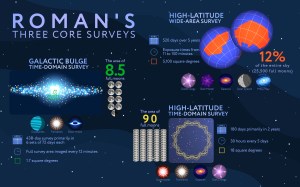
    To determine how Roman might study voids, the researchers considered one potential design of the Roman High-Latitude Wide-Area Survey, one of three core community surveys that Roman will conduct. The High-Latitude Wide-Area Survey will look away from the plane of our galaxy (hence the term high latitude in galactic coordinates). The team found that this survey should be able to detect and measure tens of thousands of cosmic voids, some as small as just 20 million light-years across. Such large numbers of voids will allow scientists to use statistical methods to determine how their observed shapes are influenced by the key components of the universe.

    To determine the actual, 3D shapes of the voids, astronomers will use two types of data from Roman — the positions of galaxies in the sky and their cosmological redshift, the latter of which is determined using spectroscopic data. To convert redshift to a physical distance, astronomers make assumptions about the components of the universe, including the strength of dark energy and how it might have evolved over time.

    Pisani compared it to trying to infer a cake recipe (i.e., the universe’s makeup) from the final dessert served to you. “You try to put in the right ingredients — the right amount of matter, the right amount of dark energy — and then you check whether your cake looks as it should. If it doesn’t, that means you put in the wrong ingredients.”

    In this case, the appearance of the “cake” is the shape found by statistically stacking all of the voids detected by Roman on top of each other. On average, voids are expected to have a spherical shape because there is no “preferred” location or direction in the universe (i.e., the universe is both homogeneous and isotropic on large scales). This means that, if the stacking is done correctly, the resulting shape will be perfectly round (or spherically symmetric). If not, then you have to adjust your cosmic recipe.

    Power of Roman

    The researchers emphasized that to study cosmic voids in large numbers, an observatory must be able to probe a large volume of the universe, because the voids themselves can be tens or hundreds of millions of light-years across. The spectroscopic data necessary to study voids will come from a portion of the Roman High-Latitude Wide-Area Survey that will cover on the order of 2,400 square degrees of the sky, or 12,000 full moons. It will also be able to see fainter and more distant objects, yielding a greater density of galaxies than complementary missions like ESA’s (European Space Agency’s) Euclid.

    “Voids are defined by the fact that they contain so few galaxies. So to detect voids, you have to be able to observe galaxies that are quite sparse and faint. With Roman, we can better look at the galaxies that populate voids, which ultimately will give us greater understanding of the cosmological parameters like dark energy that are sculpting voids,” said co-author Giulia Degni of Roma Tre University and INFN (the National Institute of Nuclear Physics) in Rome.

    The Nancy Grace Roman Space Telescope is managed at NASA’s Goddard Space Flight Center in Greenbelt, Maryland, with participation by NASA’s Jet Propulsion Laboratory in Southern California; Caltech/IPAC in Pasadena, California; the Space Telescope Science Institute in Baltimore; and a science team comprising scientists from various research institutions. The primary industrial partners are BAE Systems, Inc. in Boulder, Colorado; L3Harris Technologies in Melbourne, Florida; and Teledyne Scientific & Imaging in Thousand Oaks, California.

    By Christine Pulliam
    Space Telescope Science Institute, Baltimore, Md.
    cpulliam@stsci.edu
    Details

    Last Updated

    Dec 15, 2025

    Editor
    Ashley Balzer
    Contact
    Ashley Balzer
    Location
    Goddard Space Flight Center

  • Unexpected Trajectory: Erin Sholl’s Path to Human Spaceflight Safety

    Career paths are rarely a straight line and often include some unexpected curves. That is certainly true for Erin Sholl, deputy chief of the Space Transportation Systems Division within the Safety and Mission Assurance Directorate at NASA’s Johnson Space Center in Houston. From struggling with multiplication tables in elementary school to supporting the International Space Station from the Mission Control Center, her journey has been full of twists and turns.

    A woman receives a paper certificate on a stage with the American, Texas, and NASA flags. She stands with her husband, two children, and two other women in professional attire.
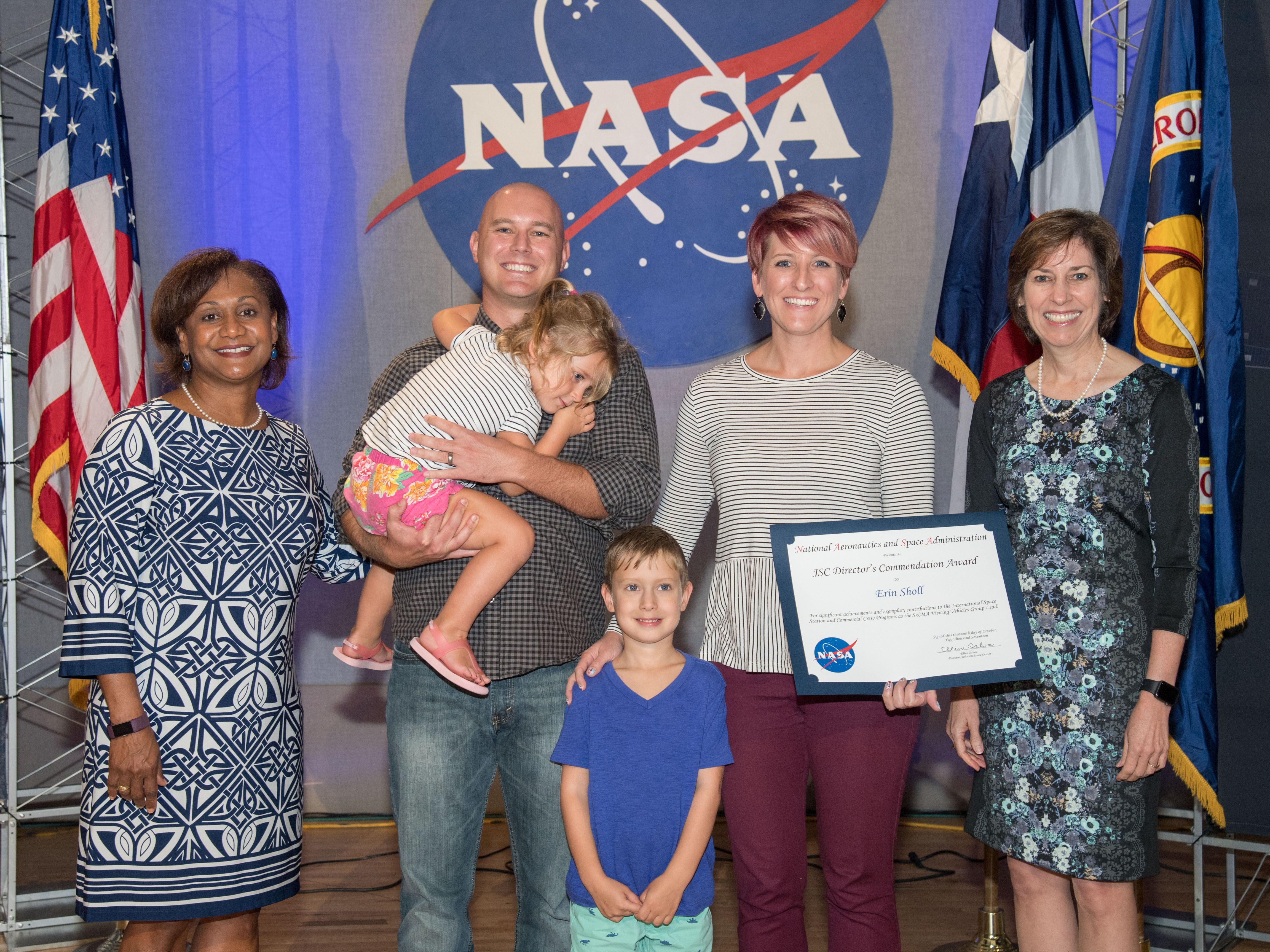
    Erin Sholl (second from right) received the Johnson Space Center Director’s Commendation Award in 2017 for significant achievements and exemplary contributions to the International Space Station and Commercial Crew Programs as the Safety and Mission Assurance Visiting Vehicles Group lead.
    NASA/James Blair

    Despite her early difficulties in math and science, Sholl eventually grew to love and excel in both subjects. She planned to study chemical engineering in college – inspired by a love of chemistry and a favorite high school teacher – but discovered a greater affinity for physics once she arrived at Pennsylvania State University. She switched her major to aerospace engineering and soon met a classmate who had interned at Johnson. After that, Sholl declared, “The dream was born!”

    Her first position at Johnson was as a trajectory operations officer for the Flight Operations Directorate. She spent six years supporting the space station on console in the Mission Control Center, describing the experience as “something out of the movies.” When Sholl went looking for a new challenge, she landed in the Safety and Mission Assurance Directorate.

    A woman sits in front of a bank of computer screens in the Mission Control Center at Johnson Space Center.
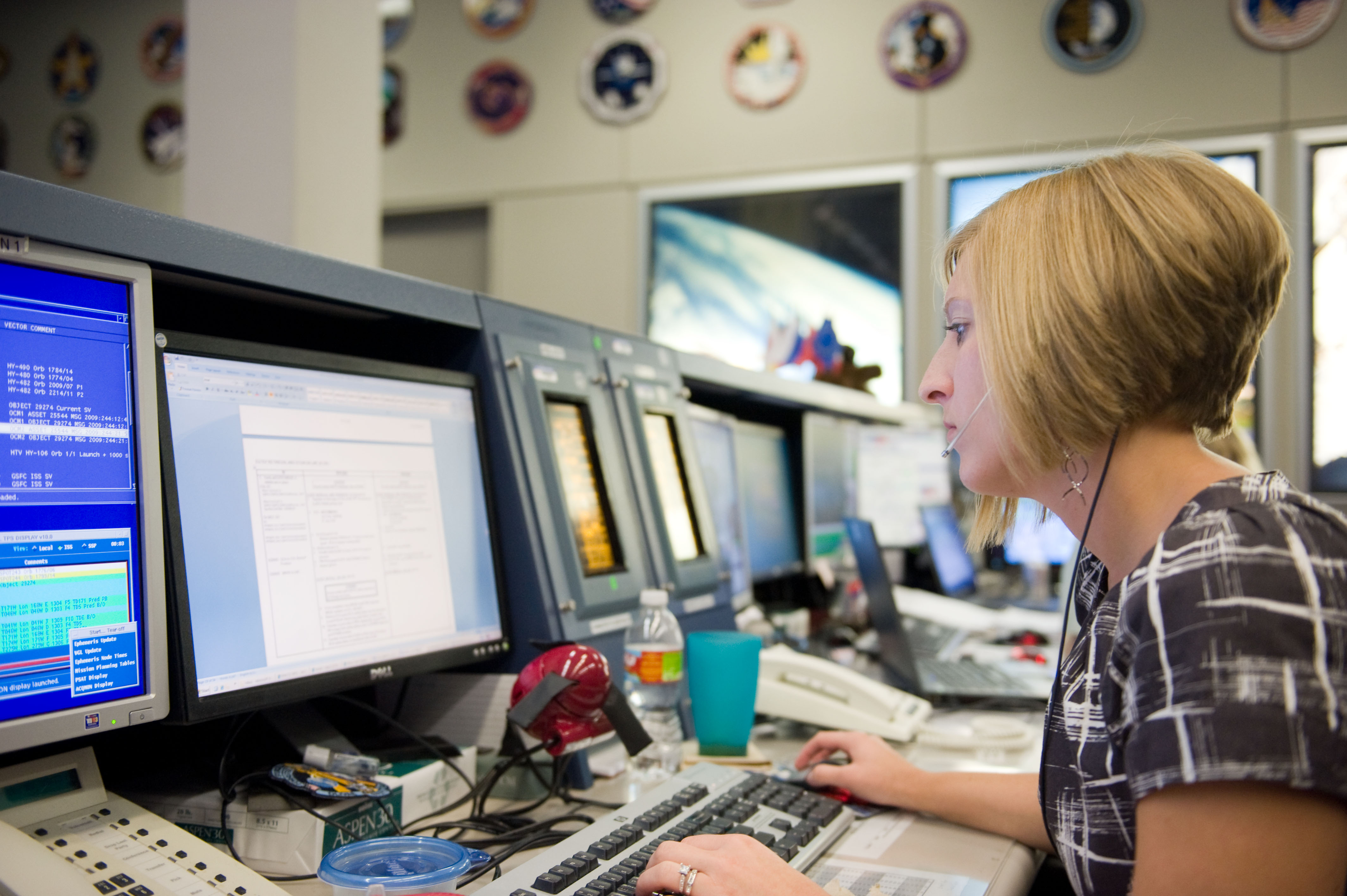
    Erin Sholl working on console as a trajectory operations officer in the Mission Control Center during the STS-128/17A mission in 2009.
    NASA/Lauren Harnett

    “I was drawn to the Operations and Visiting Vehicles Branch because it had many similar aspects to my previous position – real-time operations and visiting vehicles,” she said. “I worked various roles over the next 12 years, gradually taking on more responsibility, and eventually becoming a group lead, then branch chief.” Sholl also served as acting deputy chief for the Space Habitation Systems Division, which oversees the Operations and Visiting Vehicles Branch. Her performance drew the attention of the Space Transportation Systems Division’s chief. “He asked me to come be his deputy, and that is where I still am today!”

    The Space Transportation Systems Division provides system safety, reliability, and risk analysis for human spaceflight programs. The division works with the different program offices to reduce risk through technical assessments and guidance on Safety and Mission Assurance requirements throughout program and project lifecycles.

    Sholl works closely with the division chief to support strategic planning, budgeting, and operations. “A key part of my role is connecting with people – both inside and outside the division – to ensure smooth communication and representation of the team’s needs,” she said. She leverages her relationship-building and strategic thinking skills to lead initiatives that advance the division’s and the directorate’s goals and to mentor employees.

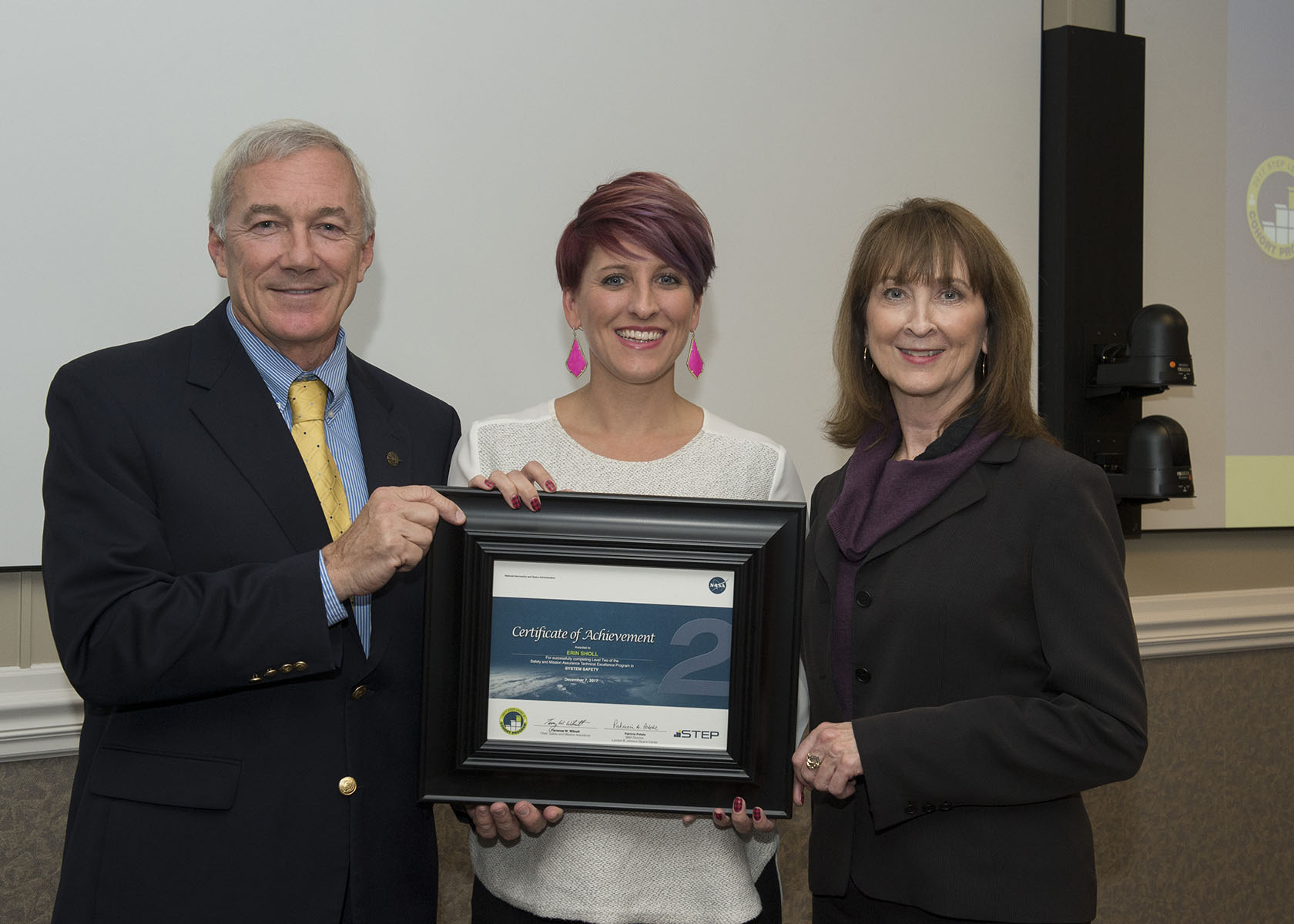
    A woman receives a framed honor from two colleagues, a man and a woman.
    Erin Sholl (center) receives a certificate of achievement from Terrence Wilcutt, former director of the Office of Safety and Mission Assurance (SMA) at NASA Headquarters, and Patricia Petete, former director of SMA at Johnson, after completing requirements for the Safety and Mission Assurance Technical Excellence Program in System Safety.
    Image courtesy of Erin Sholl

    Sholl believes strongly in the power of mentorship. “Having various mentors, both formal and informal, has been so important throughout my career,” she said. “Listening to what these people were saying about my strengths led me to a path I’d never considered because I hadn’t seen those things in myself.” Being a mentor and advocate for team members is one of Sholl’s favorite parts of the leadership positions she has held, particularly as branch chief. “I really felt like I could connect with my people and advocate for them in a way that felt meaningful,” she said.

    She encourages young professionals to seek out mentors or opportunities to shadow colleagues in different roles. “Relationships are the key to everything,” she said. “The more people you meet and the more you learn about different paths in space exploration, the better off you will be in your career.”
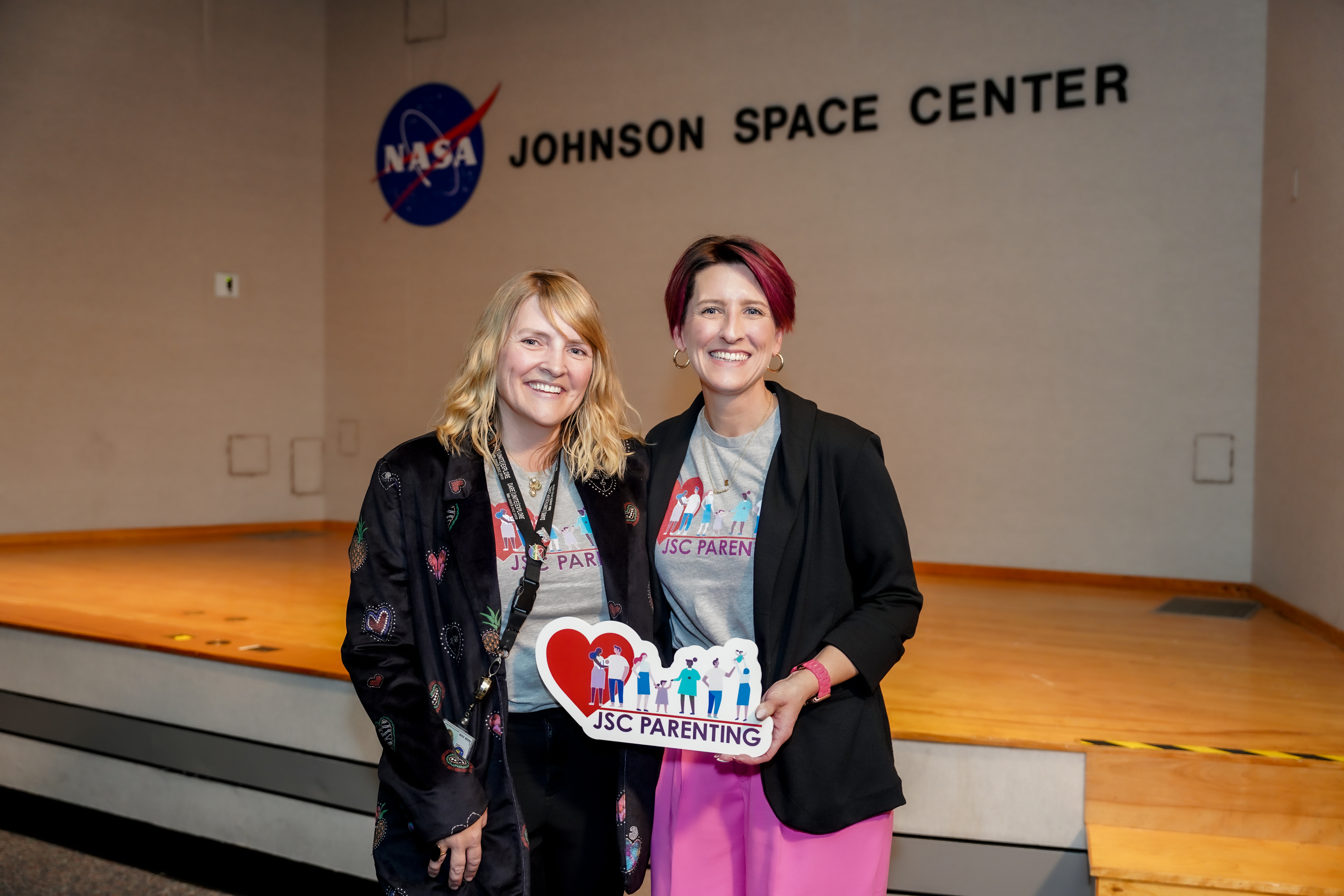
    Two women hold a sign reading JSC Parenting while standing in front of a wooden stage.
    Susan Schuh, Flight Crew Integration Operational Habitability (OpsHab) team lead and Erin Sholl host a JSC Parenting community event in 2023.
    Image courtesy of Erin Sholl

    Sholl noted that professional relationships can be bolstered by activities outside of the office. She played a key role in establishing and growing JSC Parenting, a virtual community of about 600 employees who share information and support each other on issues related to caregiving, schooling, and balancing work with family life. “My leadership within the community enhances my professional leadership and positively impacts my colleagues,” she said.

    Sholl also emphasized the importance of being open to trying new things, even if an opportunity seems to diverge from your expected career path. “I volunteer for everything because I am always eager to learn more and find out what else I might be good at and how else I can serve my team,” she said. “I think it’s easy to feel intimidated hearing about other people’s career paths, because they often sound so perfectly planned and successful. You rarely hear about the pivots, setbacks, or decisions made for personal reasons.”

    The reality, she added, is more complex. “I tried for many roles I didn’t get, and it took a lot of trial and error to find my path to a career I really love.”

  • New Timing for Stubble Burning in India

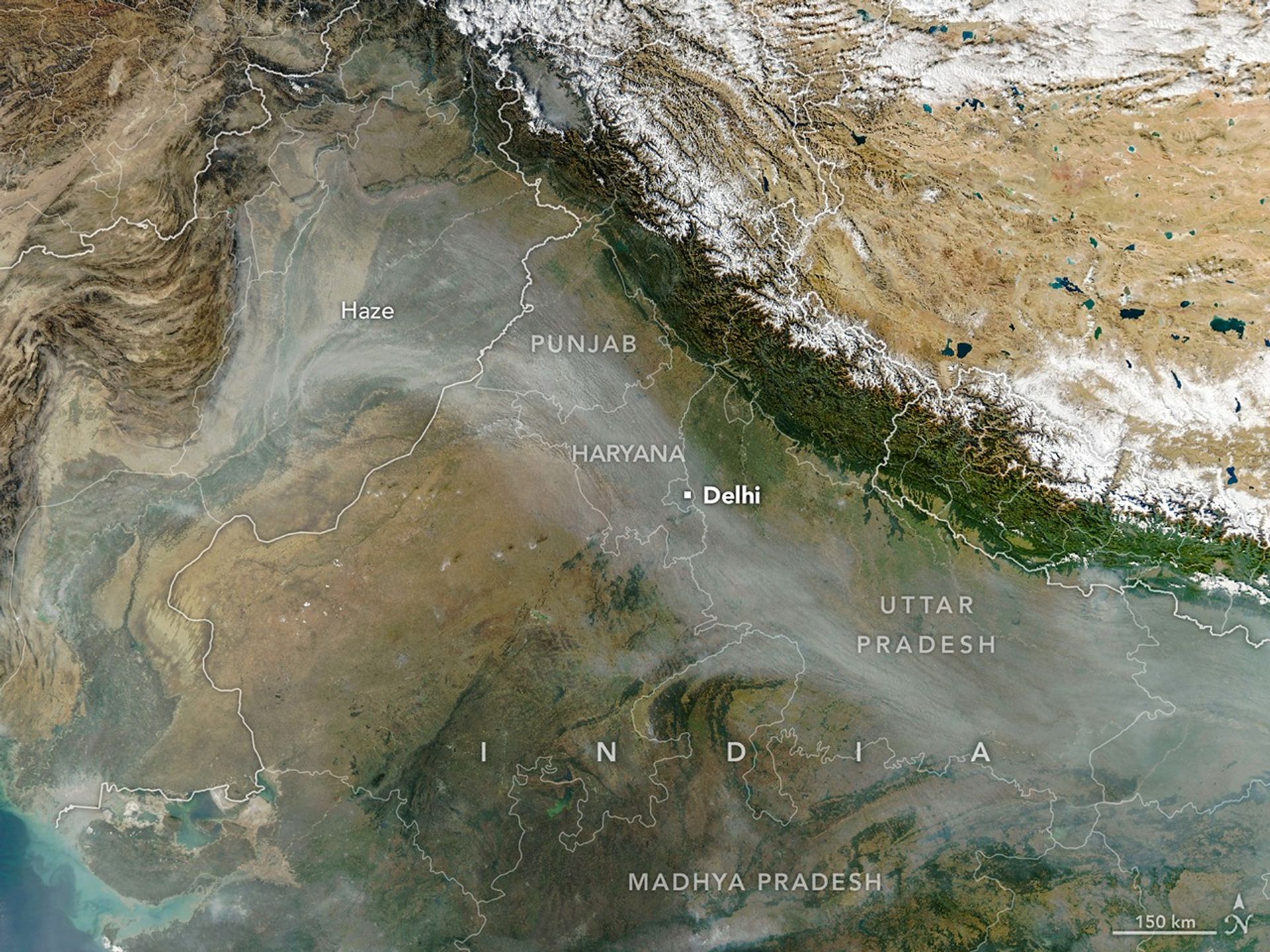
    A satellite image of northern India shows a plume of smoke and haze spreading across the Indo-Gangetic Plain. Gray haze is visible over the Indian states of Punjab, Haryana, Uttar Pradesh, and Madhya Pradesh, which are labeled. The snow-covered mountains of the Tibetan Plateau are visible to the north.
    November 11, 2025

    Every year for decades, long rivers of smoke and haze have spread across the Indo-Gangetic Plain in northern India from October to December. That’s when farmers in Punjab, Haryana, Uttar Pradesh, Madhya Pradesh, and other states burn off plant “stubble” after the rice harvest.

    When winds are weak and the atmosphere becomes stagnant, the haze can push levels of air pollution several times higher than limits recommended by the World Health Organization. Smoke typically mixes with particles and gases from other sources, such as industry, vehicles, domestic fires (heating and cooking), fireworks, and dust storms, to form the haze, though scientists consider stubble burning to be a major factor.

    In some ways, the seasonal timing of stubble fires in 2025 followed typical patterns. Air quality deteriorated in Delhi and several other cities for about a month after crop fires intensified during the last week of October, explained Hiren Jethva, a Morgan State University atmospheric scientist based at NASA’s Goddard Space Flight Center. For about a decade, Jethva has tracked the stubble burning season in India using satellites, and has made predictions about the intensity of the upcoming fire season based on vegetation observations.  

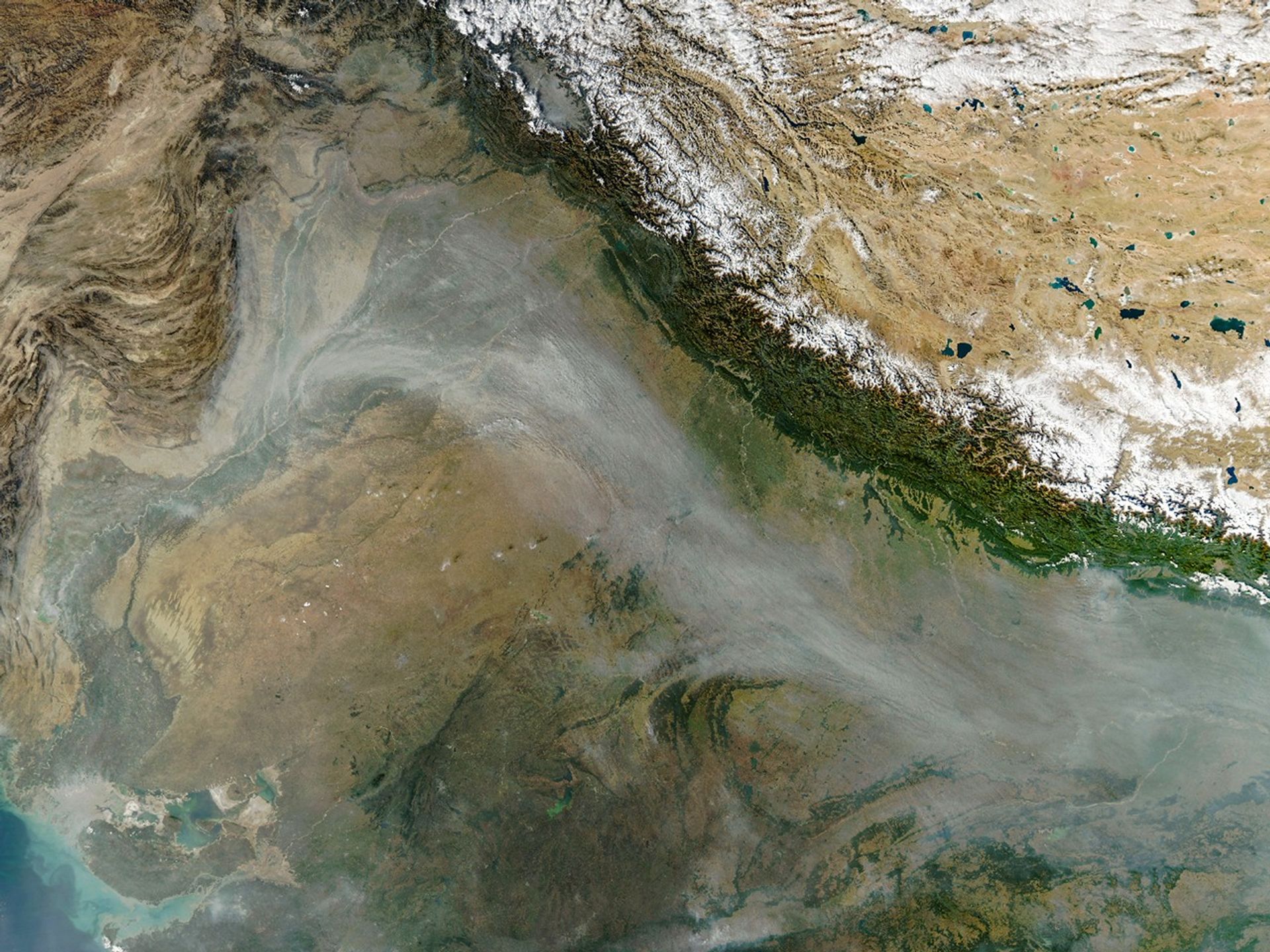
    The MODIS (Moderate Resolution Imaging Spectroradiometer) on NASA’s Aqua satellite captured this image of a smoky haze darkening skies over much of the plain on November 11, 2025. According to news reports, it was the first of several days in 2025 when pollution levels exceeded 400 on India’s air quality index, the strongest rating on the scale. As in past years, the poor air quality prompted officials in some areas to close schools and institute more stringent air quality controls on construction.

    However, the daily timing of burning departs from what Jethva has seen in the past. He started tracking the number of fires years ago by primarily tallying observations from MODIS—which pass over locations on Earth each morning and afternoon on the Terra and Aqua satellites, respectively. Then, most fires were lit in the early afternoon between 1 p.m. and 2 p.m. local time.

    But in the past few years, stubble fires have occurred progressively later in the day, Jethva said. He identified the shift by analyzing observations from GEO-KOMPSAT-2A, a South Korean geostationary satellite launched in late 2018 that collects data every 10 minutes.

    Most stubble fires now happen between 4 p.m. and 6 p.m., he said, meaning that fire-monitoring systems that rely solely on MODIS, or similar sensors like VIIRS (Visible Infrared Imaging Radiometer Suite), miss many of the fires. “Farmers have changed their behavior,” he said.

    His analysis of GEO-KOMPSAT-2A observations indicates that the stubble burning activity in Punjab and Haryana was moderate in 2025 compared to other recent years. This year had higher numbers of fires compared to 2024, 2020, and 2019 but fewer fires than 2023, 2022, and 2021, he found.

    Indian Space Research Organization researchers have also pointed out the shift in the timing of stubble burning. In a Current Science study published in 2025, one group reported that MSG (Meteosat Second Generation) satellite observations showed a shift in peak fire activity from about 1:30 p.m. in 2020 to about 5:00 p.m. in 2024. In December 2025, researchers with the International Forum for Environment, Sustainability, & Technology (iForest) released a multi-satellite analysis that came to a similar conclusion.

    Meanwhile, parsing out precisely how much stubble fires contribute to poor air quality in Delhi compared to other sources of pollution remains a topic of active study and debate among scientists. “Studies report contributions ranging from 10 to 50 percent,” said Pawan Gupta, a NASA research scientist who specializes in air quality.

    Gupta estimates that the stubble burning contribution ranges from 40 to 70 percent on a given day, dropping to 20 to 30 percent if averaged over a month or burning season, and under 10 percent if averaged annually. “Meteorological conditions—like a shallow boundary layer height and low temperature—during the burning season add extra complexity,” he said.

    The timing of the fires may influence the degree to which stubble burning affects air quality. Some modeling research suggests that evening fires may lead to a stronger overnight buildup of particle pollution than early-afternoon fires because the planetary boundary layer, the lowest part of the atmosphere, tends to be shallower and have weaker winds at night, allowing pollutants to accumulate.

    NASA Earth Observatory image by Michala Garrison, using MODIS data from NASA EOSDIS LANCE and GIBS/Worldview. Story by Adam Voiland.

    References and Resources

    You may also be interested in:

    Stay up-to-date with the latest content from NASA as we explore the universe and discover more about our home planet.

    Widespread Smoke from Canadian Fires

    3 min read

    Fires burning in boreal forests created hazy skies across North America in summer 2025.

    Article

    Seeing the Monroe Canyon Fire in a New Light

    5 min read

    As wildland fires raged in the American West, NASA airborne technology was there to image it in incredible detail.

    Article

    B.C. Wildfires Send Smoke Skyward

    2 min read

    Lightning likely ignited several large fires that sent smoke pouring over the Canadian province in early September 2025.

    Article
  • NASA Astronaut Jonny Kim to Discuss Eight-Month Space Station Mission

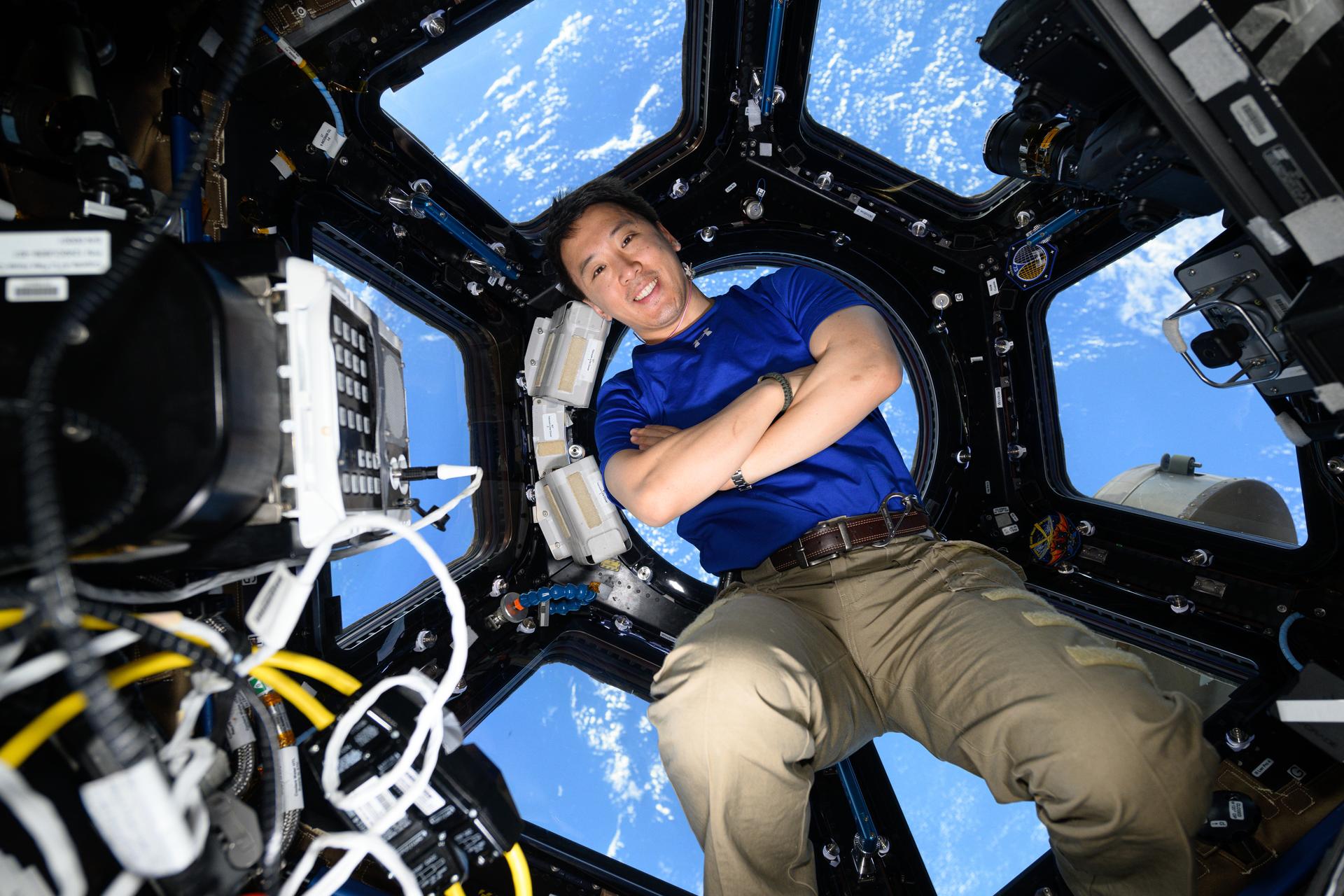
    NASA astronaut Jonny Kim poses inside the International Space Station’s cupola as it orbits 265 miles above the Indian Ocean near Madagascar.
    Credit: NASA

    NASA astronaut Jonny Kim will recap his recent mission aboard the International Space Station during a news conference at 3:30 p.m. EST Friday, Dec. 19, from the agency’s Johnson Space Center in Houston.

    Watch the news conference live on NASA’s YouTube channel. Learn how to stream NASA content through a variety of online platforms, including social media.

    Media interested in participating in person must contact the NASA Johnson newsroom no later than 5 p.m. Thursday, Dec. 18, at 281-483-5111 or jsccommu@mail.nasa.gov.

    Media wishing to participate by phone must contact the Johnson newsroom no later than two hours before the start of the event. To ask questions by phone, media must dial into the news conference no later than 15 minutes prior to the start of the call. NASA’s media accreditation policy is available online.

    Kim returned to Earth on Dec. 9, along with Roscosmos cosmonauts Sergey Ryzhikov and Alexey Zubritsky. He logged 245 days as an Expedition 72/73 flight engineer during his first spaceflight. The trio completed 3,920 orbits of the Earth over the course of their nearly 104-million-mile journey. They also saw the arrival of nine visiting spacecraft and the departure of six.

    During his mission, Kim contributed to a wide range of scientific investigations and technology demonstrations. He studied the behavior of bioprinted tissues containing blood vessels in microgravity for an experiment helping advance space-based tissue production to treat patients on Earth. He also evaluated the remote command of multiple robots in space for the Surface Avatar study, which could support the development of robotic assistants for future exploration missions. Additionally, Kim worked on developing in-space manufacturing of DNA-mimicking nanomaterials, which could improve drug delivery technologies and support emerging therapeutics and regenerative medicine. 

    Learn more about International Space Station research and operations at:

    http://www.nasa.gov/station

    -end-

    Jimi Russell
    Headquarters, Washington
    202-358-1100
    james.j.russell@nasa.gov

    Shaneequa Vereen
    Johnson Space Center, Houston
    281-483-5111
    shaneequa.y.vereen@nasa.gov

  • NASA’s Webb, Curiosity Named in TIME’s Best Inventions Hall of Fame

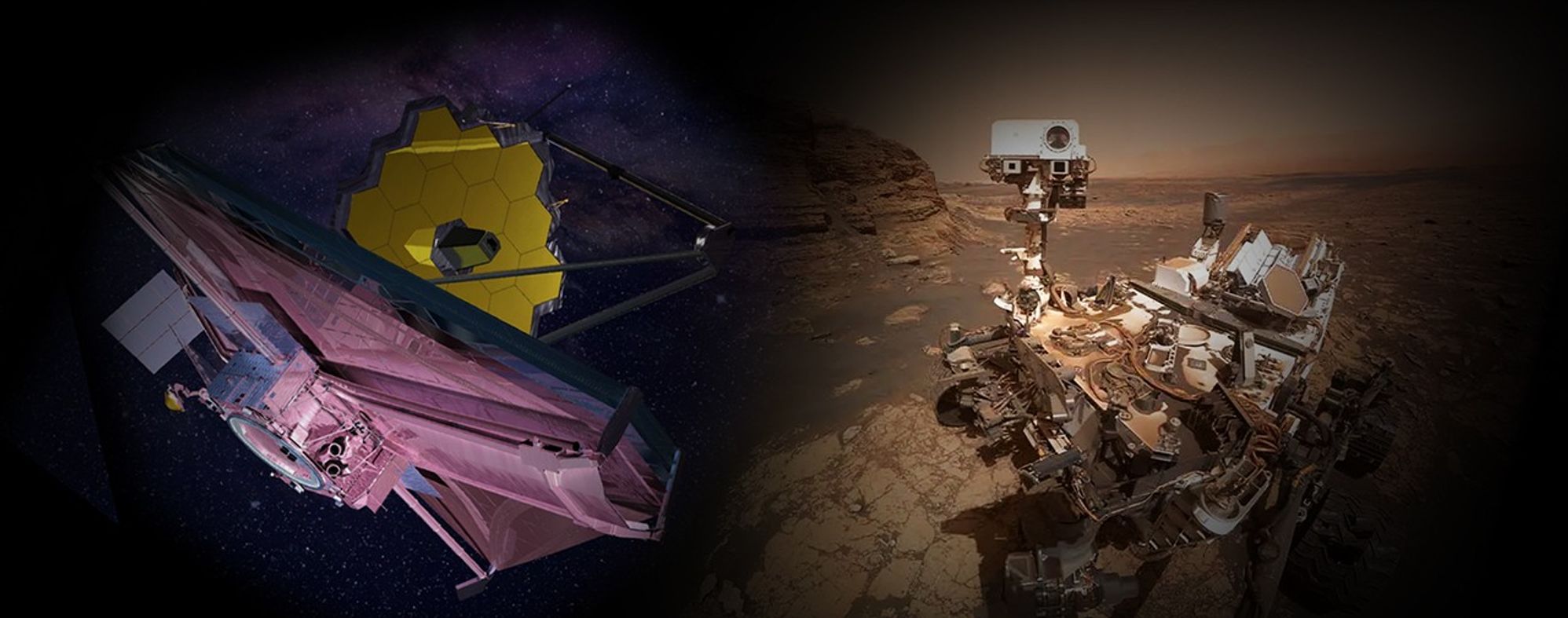
    Image composited from an image of Curiosity in a rocky Mars landscape and Webb Telescope  over a star filled background
    NASA’s James Webb Space Telescope and NASA’s Curiosity rover, have earned places in TIME’s “Best Inventions Hall of Fame”.
    NASA GSFC, NASA JPL

    Two icons of discovery, NASA’s James Webb Space Telescope and NASA’s Curiosity rover, have earned places in TIME’s “Best Inventions Hall of Fame,” which recognizes the 25 groundbreaking inventions of the past quarter century that have had the most global impact, since TIME began its annual Best Inventions list in 2000. The inventions are celebrated in TIME’s December print issue.

    “NASA does the impossible every day, and it starts with the visionary science that propels humanity farther than ever before,” said Nicky Fox, associate administrator, Science Mission Directorate, NASA Headquarters in Washington. “Congratulations to the teams who made the world’s great engineering feats, the James Webb Space Telescope and the Mars Curiosity Rover, a reality. Through their work, distant galaxies feel closer, and the red sands of Mars are more familiar, as they expanded and redefined the bounds of human achievement in the cosmos for the benefit of all.”

    Decades in the making and operating a million miles from Earth, Webb is the most powerful space telescope ever built, giving humanity breathtaking views of newborn stars, distant galaxies, and even planets orbiting other stars. The new technologies developed to enable Webb’s science goals – from optics to detectors to thermal control systems – now also touch Americans’ everyday lives, improving manufacturing for everything from high-end cameras and contact lenses to advanced semiconductors and inspections of aircraft engine components.

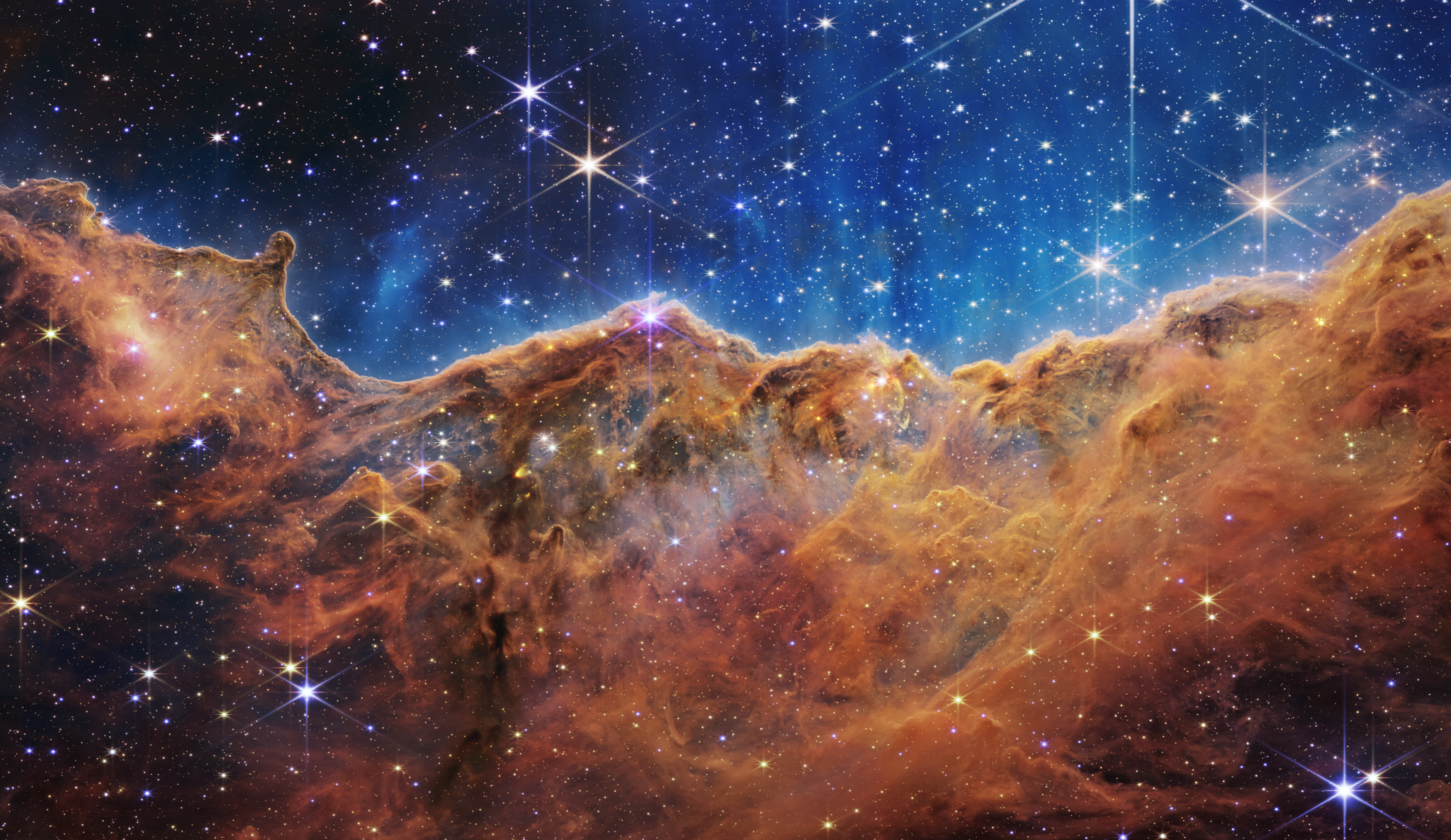
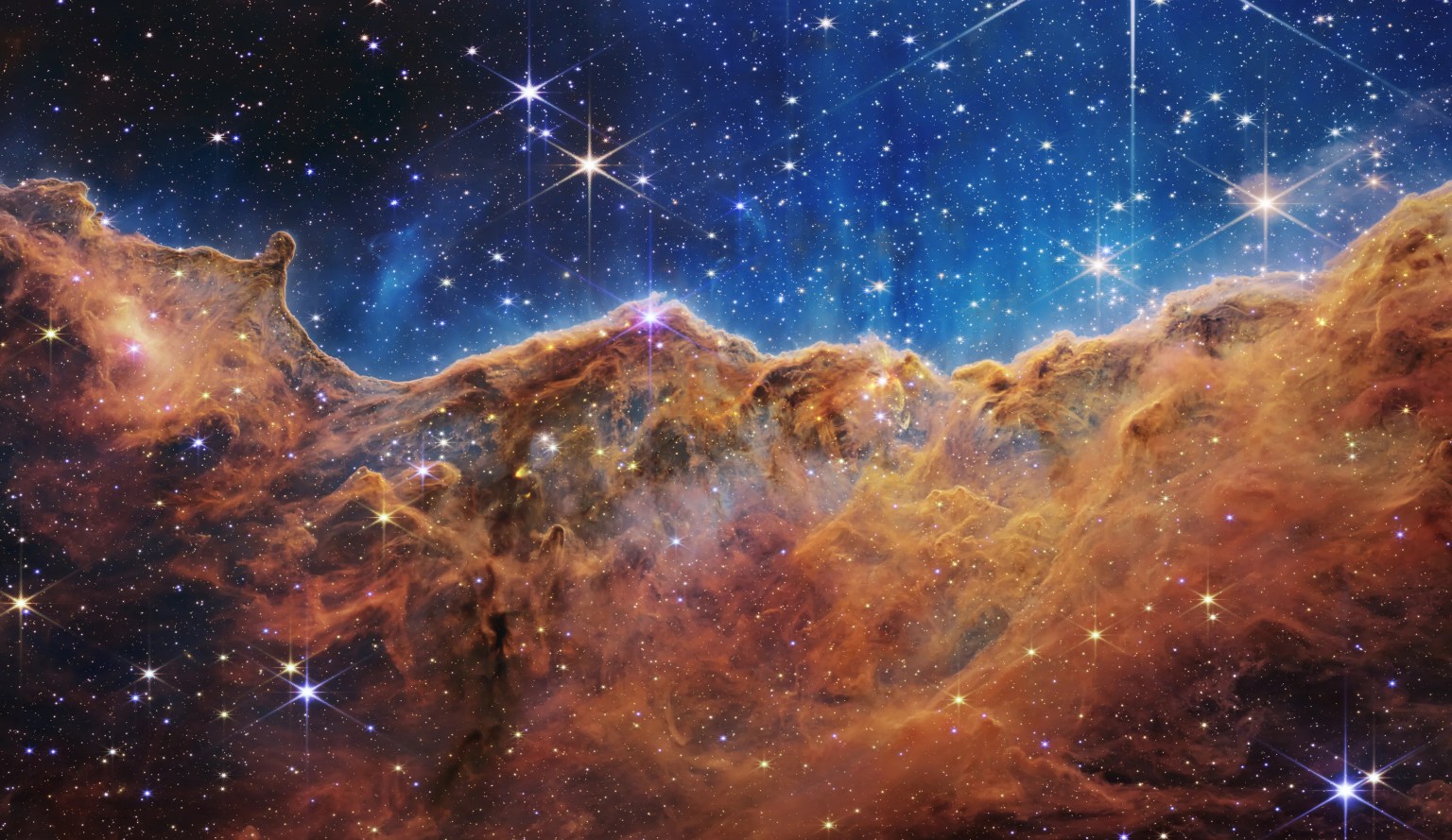
    This landscape of “mountains” and “valleys” speckled with glittering stars is actually the edge of a nearby, young, star-forming region called NGC 3324 in the Carina Nebula. Captured in infrared light by NASA’s James Webb Space Telescope, this image reveals for the first time previously invisible areas of star birth.
    NASA, ESA, CSA, and STScI

    Meanwhile on Mars, the unstoppable Curiosity rover, NASA’s car-size science lab, has spent more than a decade uncovering clues that the Red Planet once could have supported life, transforming our understanding of our planetary neighbor. These NASA missions continue to make breakthroughs that have reshaped our understanding of the universe and our place in it. Curiosity has also paved the way for future astronauts: Its Radiation Assessment Detector has studied the Martian radiation environment for nearly 14 years, and its unforgettable landing by robotic jetpack allowed heavier spacecraft to touch down on the surface — a capability that will be needed to send cargo and humans to Mars.

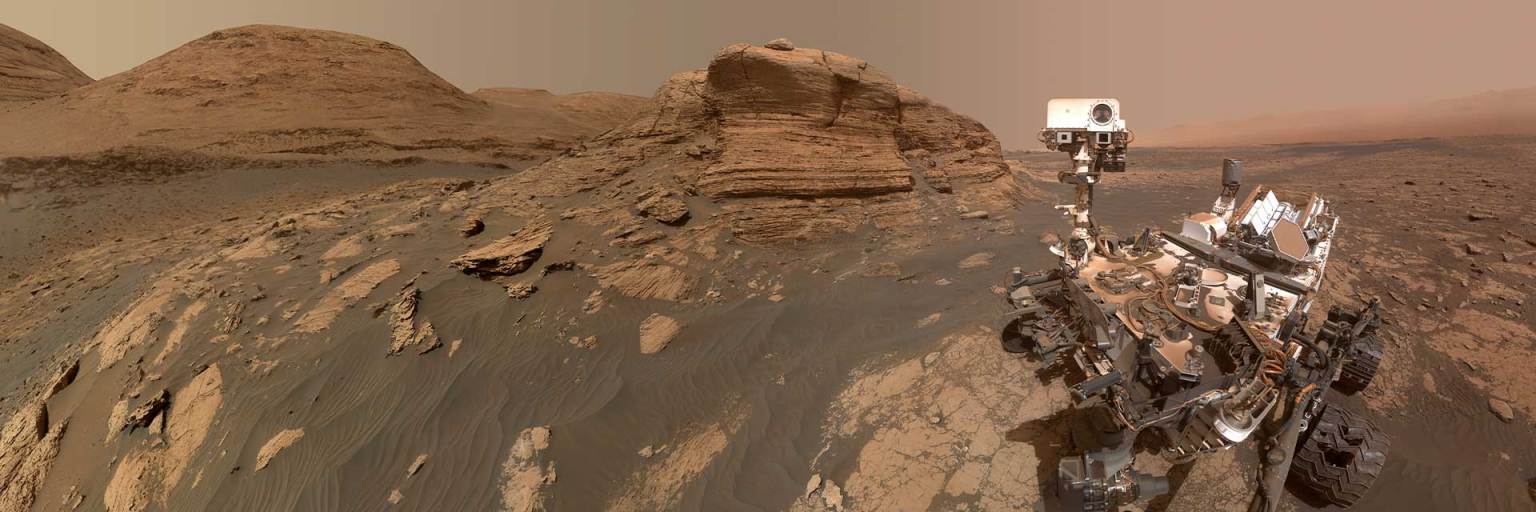
    Mars rover sitting on the red soil of mars and facing the camera for a selfie
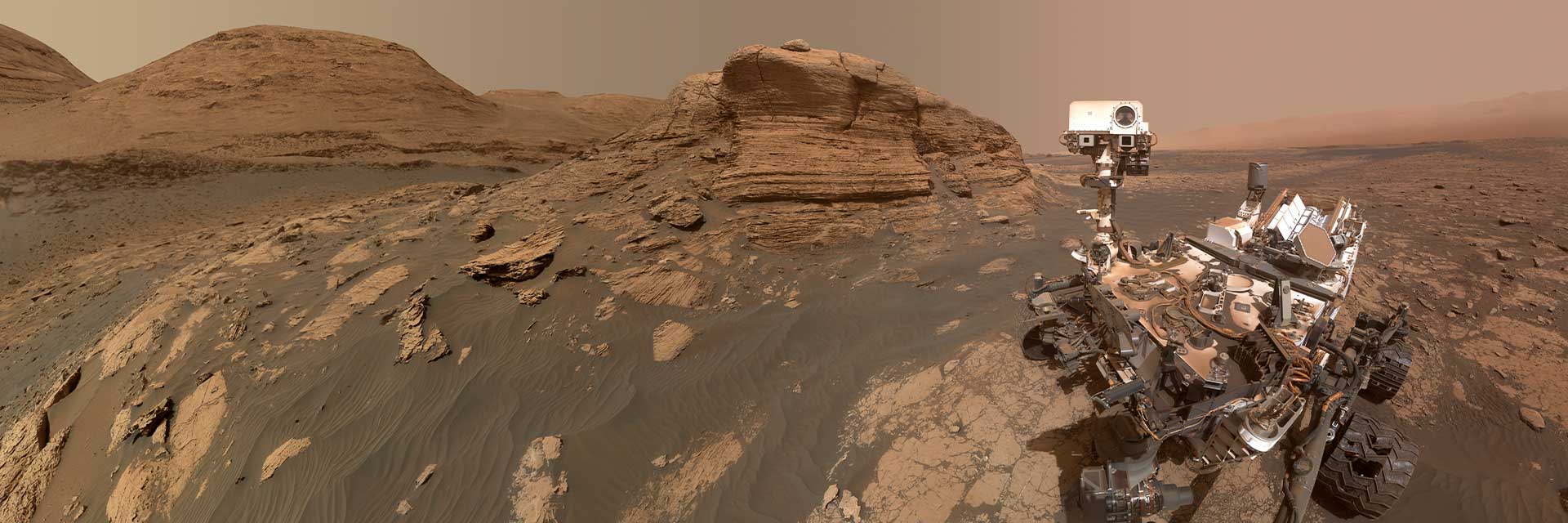
    NASA’s Curiosity Mars rover used two different cameras to create this selfie in front of Mont Mercou, a rock outcrop that stands 20 feet (6 meters) tall. The panorama is made up of 60 images taken by the Mars Hand Lens Imager (MAHLI) on the rover’s robotic arm on March 26, 2021, the 3,070th Martian day, or sol, of the mission. These were combined with 11 images taken by the Mastcam on the mast, or “head,” of the rover on March 16, 2021, the 3,060th Martian day of the mission.
    NASA/JPL-Caltech/MSSS

    To compile this “Hall of Fame” list, TIME solicited nominations from TIME editors and correspondents around the world, paying special attention to high-impact fields, such as health care and technology. TIME then evaluated each contender on a number of key factors, including originality, continued efficacy, ambition, and impact.

    The James Webb Space Telescope is the world’s premier space science observatory. Webb is solving mysteries in our solar system, looking beyond to distant worlds around other stars, and probing the mysterious structures and origins of our universe and our place in it. Webb is an international program led by NASA with its partners, ESA (European Space Agency) and CSA (Canadian Space Agency).

    The Curiosity rover was built by NASA’s Jet Propulsion Laboratory, which is managed by Caltech in Pasadena, California. JPL leads the mission on behalf of NASA’s Science Mission Directorate in Washington as part of NASA’s Mars Exploration Program portfolio.

    To learn more about NASA’s science missions, visit:

    https://science.nasa.gov

  • A Rare Gourd

    Image credit: ESA/Hubble & NASA; Acknowledgement: Judy Schmidt

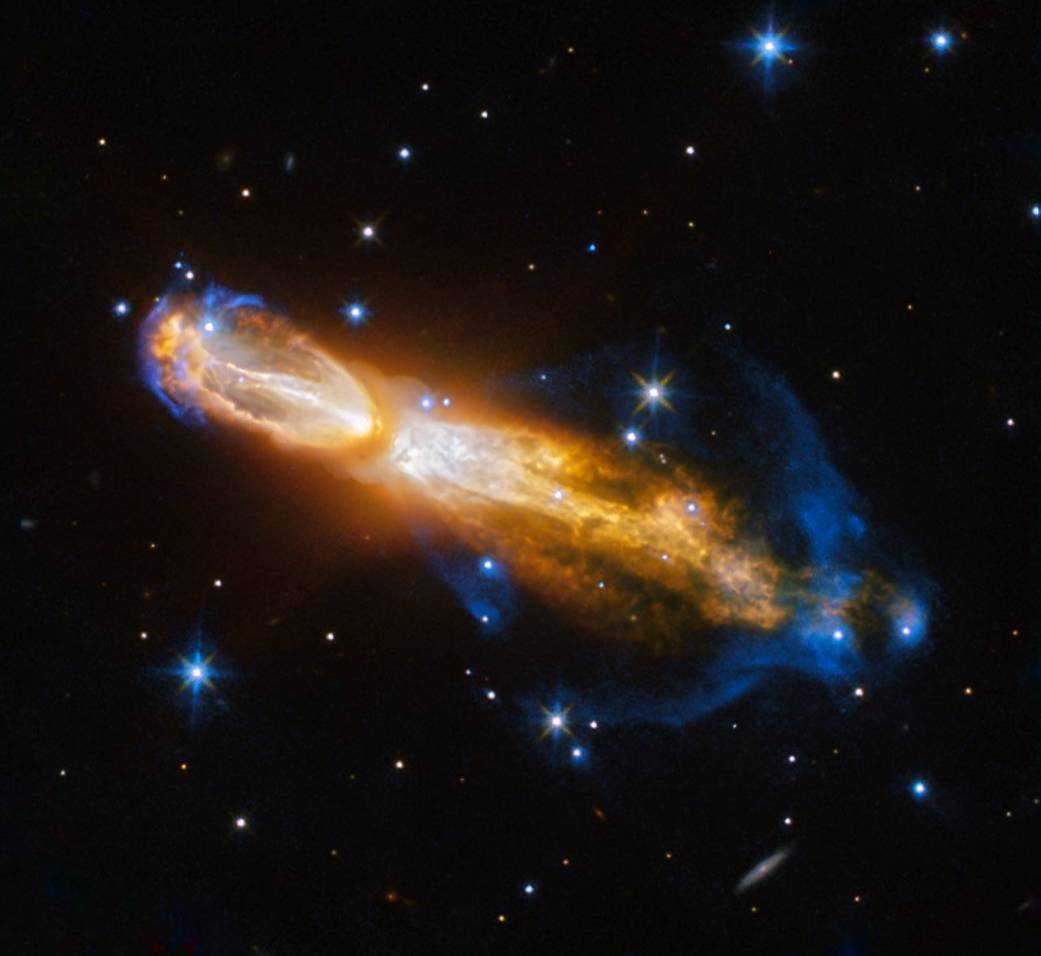
    NASA’s Hubble Space Telescope captured an uncommon sight – the death of a low-mass star – in this image of the Calabash Nebula released on Feb. 3, 2017.

    Here, we can see the star going through a rapid transformation from a red giant to a planetary nebula, during which it blows its outer layers of gas and dust out into the surrounding space. The recently ejected material is spat out in opposite directions with immense speed — the gas shown in yellow is moving close to a million kilometers an hour.

    Astronomers rarely capture a star in this phase of its evolution because it occurs within the blink of an eye – in astronomical terms. Over the next thousand years the nebula is expected to evolve into a fully-fledged planetary nebula.

  • NASA Announces Plan to Map Milky Way With Roman Space Telescope

    NASA’s Nancy Grace Roman Space Telescope team has released detailed plans for a major survey that will reveal our home galaxy, the Milky Way, in unprecedented detail. In one month of observations spread across two years, the survey will unveil tens of billions of stars and explore previously uncharted structures.

    This video begins with a view of the Carina Nebula — a giant, relatively nearby star-forming region in the southern sky. Roman will view the entire nebula as well as its surroundings, including a 10,000 light-year-long swath of the spiral arm it resides in. The observation will offer an unparalleled opportunity to watch how stars grow, interact, and sculpt their environments, and it’s just one of many thousands of highlights astronomers are looking forward to from the Galactic Plane Survey NASA’s Nancy Grace Roman Space Telescope will conduct.
    Credit: NASA’s Goddard Space Flight Center

    “The Galactic Plane Survey will revolutionize our understanding of the Milky Way,” said Julie McEnery, Roman’s senior project scientist at NASA’s Goddard Space Flight Center in Greenbelt, Maryland. “We’ll be able to explore the mysterious far side of our galaxy and its star-studded heart. Because of the survey’s breadth and depth, it will be a scientific mother lode.”

    The Galactic Plane Survey is Roman’s first selected general astrophysics survey — one of many observation programs Roman will do in addition to its three core surveys and Coronagraph technology demonstration. At least 25% of Roman’s five-year primary mission is reserved for astronomers worldwide to propose more surveys beyond the core programs, fully leveraging Roman’s capabilities to conduct groundbreaking science. Roman is slated to launch by May 2027, but the team is on track for launch as early as fall 2026.

    While ESA’s (European Space Agency’s) retired Gaia spacecraft mapped around 2 billion Milky Way stars in visible light, many parts of the galaxy remain hidden by dust. By surveying in infrared light, Roman will use powerful heat vision that can pierce this veil to see what lies beyond.

    “It blows my mind that we will be able to see through the densest part of our galaxy and explore it properly for the first time,” said Rachel Street, a senior scientist at Las Cumbres Observatory in Santa Barbara, California, and a co-chair of the committee that selected the Galactic Plane Survey design.

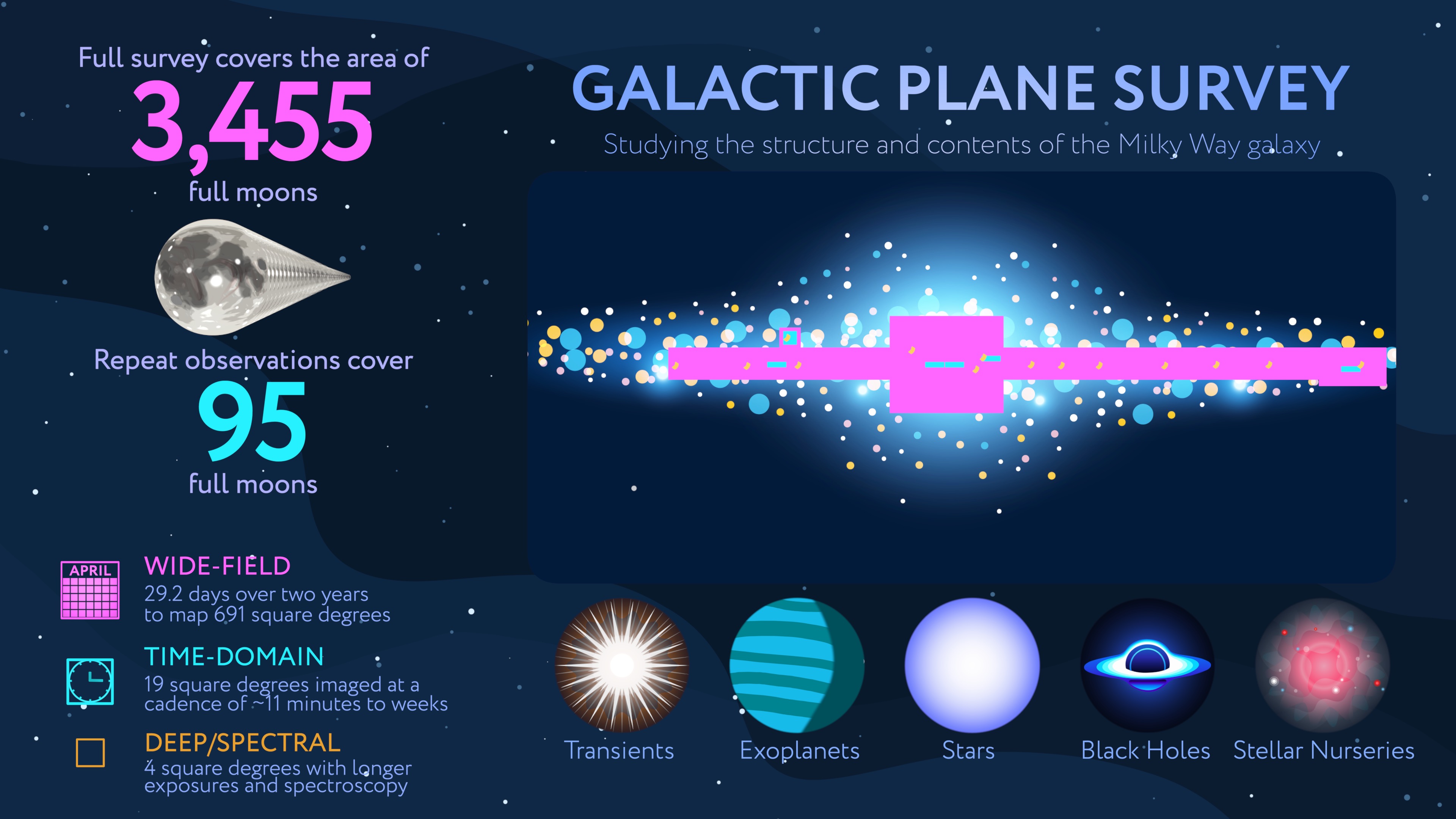
    Galactic Plane Survey Infographic
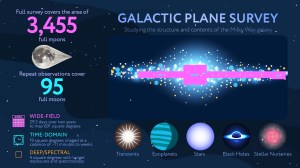
    This infographic describes the 29-day Galactic Plane Survey that will be conducted by NASA’s Nancy Grace Roman Space Telescope. The survey’s main component will cover 691 square degrees — a region of sky as large as around 3,500 full moons — in 22.5 days. Roman will also view a smaller area — 19 square degrees, the area of 95 full moons — repeatedly for about 5.5 days total to capture things that change over time. The survey’s final component will image a smattering of even smaller areas, adding up to about 4 square degrees (the area of 20 full moons) and 31 total hours, with Roman’s full suite of filters and spectroscopic tools. The survey will reveal our home galaxy in unprecedented detail including many in regions we’ve never been able to see before because they’re blocked by dust, unveiling tens of billions of stars and other objects.
    Credit: NASA’s Goddard Space Flight Center

    The survey will cover nearly 700 square degrees (a region of sky as large as about 3,500 full moons) along the glowing band of the Milky Way — our edge-on view of the disk-shaped structure containing most of our galaxy’s stars, gas, and dust. Scientists expect the survey to map up to 20 billion stars and detect tiny shifts in their positions with repeated high-resolution observations. And it will only take 29 days spread over the course of the mission’s first two years.

    Cosmic Cradles

    Stars are born from parent clouds of gas and dust. Roman will peer through the haze of these nesting grounds to see millions of stellar embryos, newborn stars still swaddled in shrouds of dust, tantrumming toddler stars that flare unpredictably, and young stars that may have planetary systems forming around them. Astronomers will study stellar birth rates across a wide range of masses and stitch together videos that show how stars change over time.

    “This survey will study such a huge number of stars in so many different stellar environments that we’ll be sampling every phase of a star’s evolution,” Street said.

    Observing so many stars in various stages of early development will shed light on the forces that shape them. Star formation is like a four way tug-of-war between gravity, radiation, magnetism, and turbulence. Roman will help us study how these forces influence whether gas clouds collapse into full-fledged stars, smaller brown dwarfs — in-between objects that are much heavier than planets but not massive enough to ignite like stars — or new worlds.

    The Galactic Plane Survey by NASA’s Nancy Grace Roman Space Telescope will scan the densest part of our galaxy, where most of its stars, gas, and dust reside — the most difficult region to study from our place inside the Milky Way since we have to look through so much light-blocking material. Roman’s wide field of view, crisp resolution, and infrared vision will help astronomers peer through thick bands of dust to chart new galactic territory.
    Credit: NASA’s Goddard Space Flight Center

    Some stars are born in enormous litters called clusters. Roman will study nearly 2,000 young, loosely bound open clusters to see how the galaxy’s spiral arms trigger star formation. The survey will also map dozens of ancient, densely packed globular clusters near the center of the galaxy that could help astronomers reconstruct the Milky Way’s early history.

    Comparing Roman’s snapshots of clusters scattered throughout the galaxy will enable scientists to study nature versus nurture on a cosmic scale. Because a cluster’s stars generally share the same age, origin, and chemical makeup, analyzing them allows astronomers to isolate environmental effects very precisely.

    Pulse Check

    When they run out of fuel, Sun-like stars leave behind cores called white dwarfs and heavier stars collapse to form neutron stars and black holes. Roman will find these stellar embers even when they’re alone thanks to wrinkles in space-time.

    Anything that has mass warps the underlying fabric of the universe. When light from a background star passes through the gravitational well around an intervening object on its journey toward Earth, its path slightly curves around the object. This phenomenon, called microlensing, can temporarily brighten the star. By studying these signals, astronomers can learn the mass and size of otherwise invisible foreground objects.

    A separate survey — Roman’s Galactic Bulge Time-Domain Survey — will conduct deep microlensing observations over a smaller area in the heart of the Milky Way. The Galactic Plane Survey will conduct repeated observations over a shorter interval but across the whole center of the galaxy, giving us the first complete view of this complex galactic environment. An unobscured view of the galaxy’s central bar will help astronomers answer the question of its origin, and Roman’s videos of stars in this region will enable us to study some ultratight binary objects at the very ends of their lives thanks to their interactions with close companions.

    “Compact binaries are particularly interesting because they’re precursors to gravitational-wave sources,” said Robert Benjamin, a visiting professor at the University of Wisconsin-Whitewater, and a co-chair of the committee that selected the Galactic Plane Survey design. When neutron stars and black holes merge, the collision is so powerful that it sends ripples through the fabric of space-time. “Scientists want to know more about the pathways that lead to those mergers.”


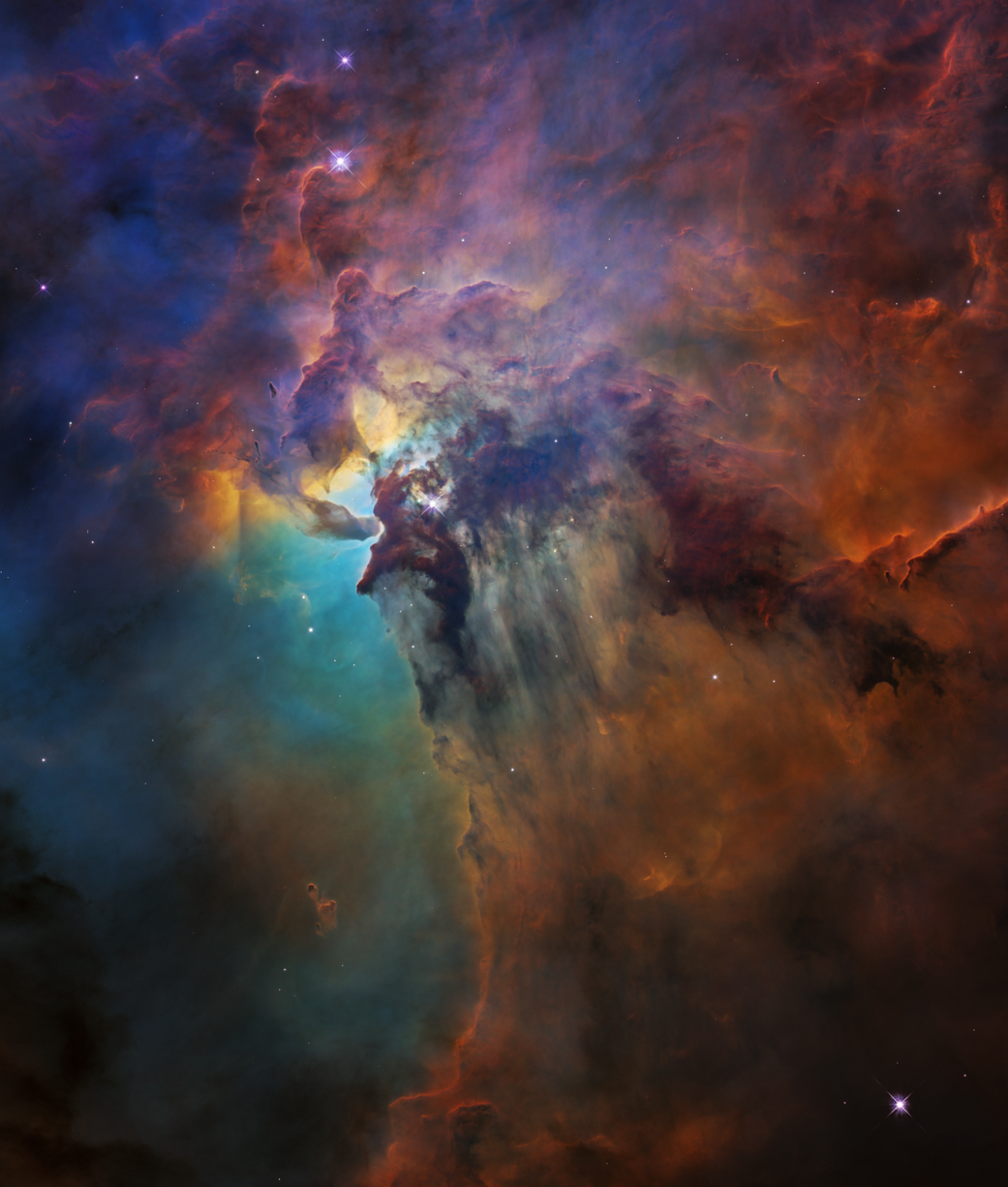
    optical
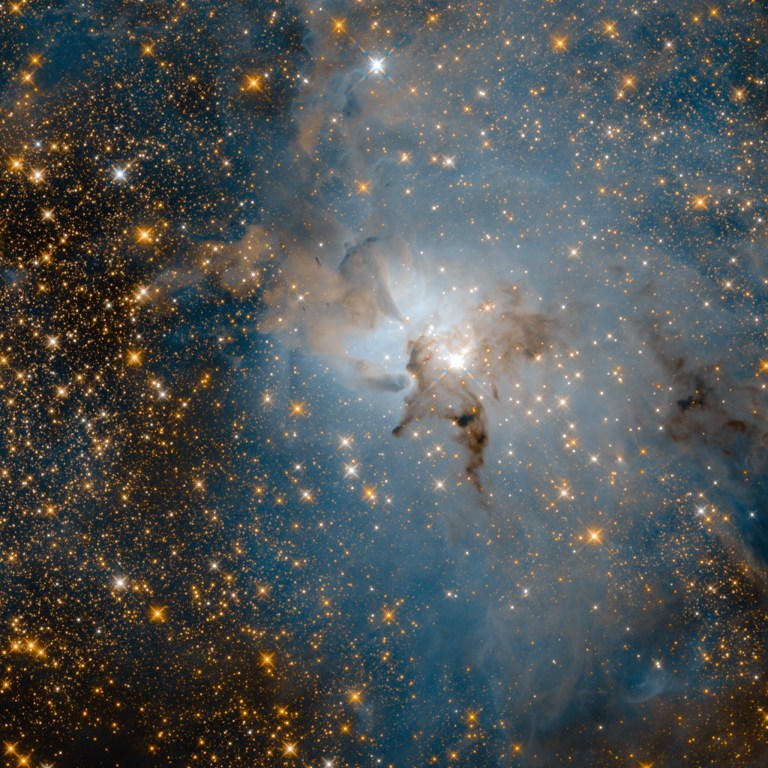
    infrared

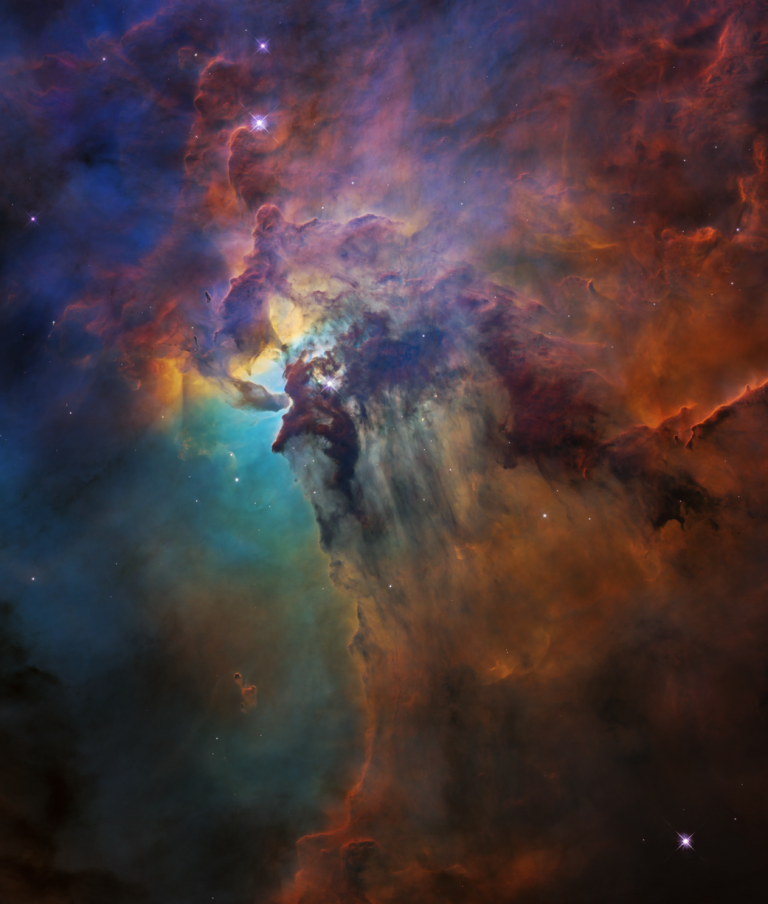
    Lagoon Nebula in optical light
    This colorful image, taken by the Hubble Space Telescope and published in 2018, celebrated the observatory’s 28th anniversary of viewing the heavens.

    Lagoon Nebula in infrared light

    Lagoon Nebula in optical light
    This colorful image, taken by the Hubble Space Telescope and published in 2018, celebrated the observatory’s 28th anniversary of viewing the heavens.

    Lagoon Nebula in infrared light

    optical

    infrared

    Optical vs infrared

    Two Views


    The Galactic Plane Survey by NASA’s Nancy Grace Roman Space Telescope will scan the densest part of our galaxy, where most of its stars, gas, and dust reside — the most difficult region to study from our place inside the Milky Way since we have to look through so much light-blocking material. Roman’s wide field of view, crisp resolution, and infrared vision will help astronomers peer through thick bands of dust to chart new galactic territory. Credit: NASA, ESA, and STScI

    Roman’s repeated observations will also monitor stars that flicker. Ground-based surveys detect thousands of bright stellar outbursts, but often can’t see the faint, dust-obscured stars that produce them. Roman will pinpoint the culprits plus take high-resolution snapshots of the aftermath.

    Some stars throb rhythmically, and the speed of their pulsing is directly linked to their intrinsic brightness. By comparing their true brightness to how bright they appear from Earth, astronomers can measure distances across the galaxy. Roman will find these blinking stars farther away than ever before and track them over time, helping astronomers improve their cosmic measuring sticks.

    “Pairing Roman’s Galactic Plane Survey with other Milky Way observations will create the best portrait of the galaxy we’ve ever had,” Benjamin said.

    Download additional images and video from NASA’s Scientific Visualization Studio.

    For more information about the Roman Space Telescope, visit:

    https://www.nasa.gov/roman

    By Ashley Balzer
    NASA’s Goddard Space Flight Center, Greenbelt, Md.

    Media contact:

    Claire Andreoli
    NASA’s Goddard Space Flight Center, Greenbelt, Md.
    301-286-1940

    Details

    Last Updated

    Dec 12, 2025

    Editor
    Ashley Balzer
    Contact
    Ashley Balzer
    Location
    Goddard Space Flight Center

  • Massive Stars Make Their Mark in Hubble Image

    2 min read

    Massive Stars Make Their Mark in Hubble Image

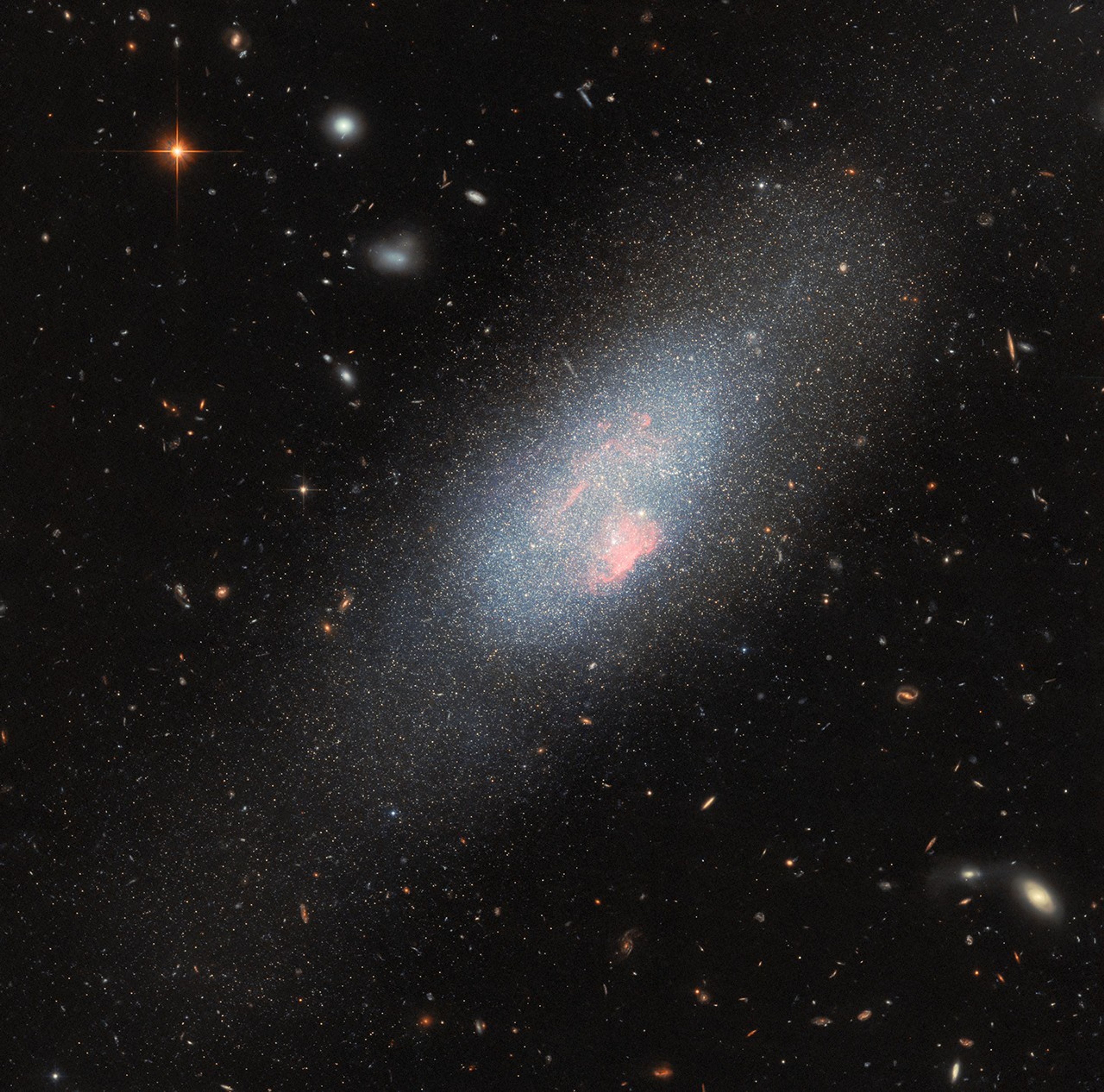
    A pale blue dwarf galaxy on the black backdrop of space with some faraway galaxies. The galaxy itself resembles a fuzzy cloud of tightly packed stars, with a broad halo of stars dispersed around it. Spread across the galaxy’s core are several small, glowing patches of gas where there is a concentration of very hot stars.
    This NASA/ESA Hubble Space Telescope image features the blue dwarf galaxy Markarian 178 (Mrk 178) against a backdrop of distant galaxies in all shapes and sizes. Some of these distant galaxies even shine through the diffuse edges of Mrk 178.
    ESA/Hubble & NASA, F. Annibali, S. Hong

    This NASA/ESA Hubble Space Telescope image features a glittering blue dwarf galaxy called Markarian 178 (Mrk 178). The galaxy, which is substantially smaller than our own Milky Way, lies 13 million light-years away in the constellation Ursa Major (the Great Bear).

    Mrk 178 is one of more than 1,500 Markarian galaxies. These galaxies get their name from the Armenian astrophysicist Benjamin Markarian, who compiled a list of galaxies that were surprisingly bright in ultraviolet light.

    While the bulk of the galaxy is blue due to an abundance of young, hot stars with little dust shrouding them, Mrk 178 gets a red hue from a collection of rare massive Wolf–Rayet stars. These stars are concentrated in the brightest, reddish region near the galaxy’s edge. Wolf–Rayet stars cast off their atmospheres through powerful winds, and the bright emission lines from their hot stellar winds are etched upon the galaxy’s spectrum. Both ionized hydrogen and oxygen lines are particularly strong and appear as a red color in this photo.

    Massive stars enter the Wolf–Rayet phase of their evolution just before they collapse into black holes or neutron stars. Because Wolf–Rayet stars last for only a few million years, researchers know that something must have triggered a recent burst of star formation in Mrk 178. At first glance, it’s not clear what could be the cause — Mrk 178 doesn’t seem to have any close galactic neighbors that may have stirred up its gas to form new stars. Instead, researchers suspect that a gas cloud crashed into Mrk 178, or that the intergalactic medium disturbed its gas as the galaxy moved through space. Either disturbance could light up this tiny galaxy with a ripple of bright new stars.

    Media Contact:

    Claire Andreoli (claire.andreoli@nasa.gov)
    NASA’s Goddard Space Flight CenterGreenbelt, MD

  • Pacific Moisture Drenches the U.S. Northwest

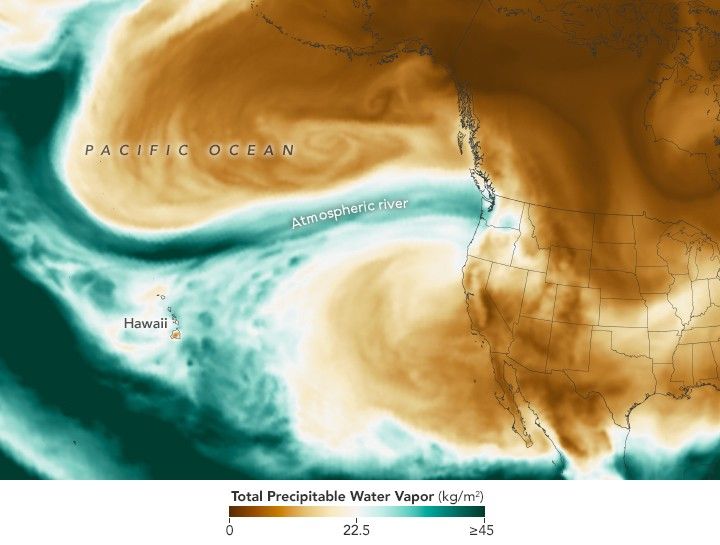
    A map shows atmospheric water vapor over the Pacific Ocean, with a dense green plume of moisture stretching from the tropical Pacific in the lower left toward the U.S. Pacific Northwest in the middle right.
    December 10, 2025

    Waves of heavy rainfall in early December 2025 spurred landslides and flooding in parts of the Pacific Northwest. The deluge was the result of a potent atmospheric river that took aim at the region starting around December 7.

    Atmospheric rivers are long, narrow bands of moisture that move like rivers in the sky, transporting water vapor from the tropics toward the poles. They occur around the planet, most often in autumn and winter, with the U.S. West Coast typically affected by moist air that originates near Hawaii. In this event, however, some of the moisture arrived from even farther away, originating roughly 7,000 miles (11,000 kilometers) across the Pacific from near the Philippines.

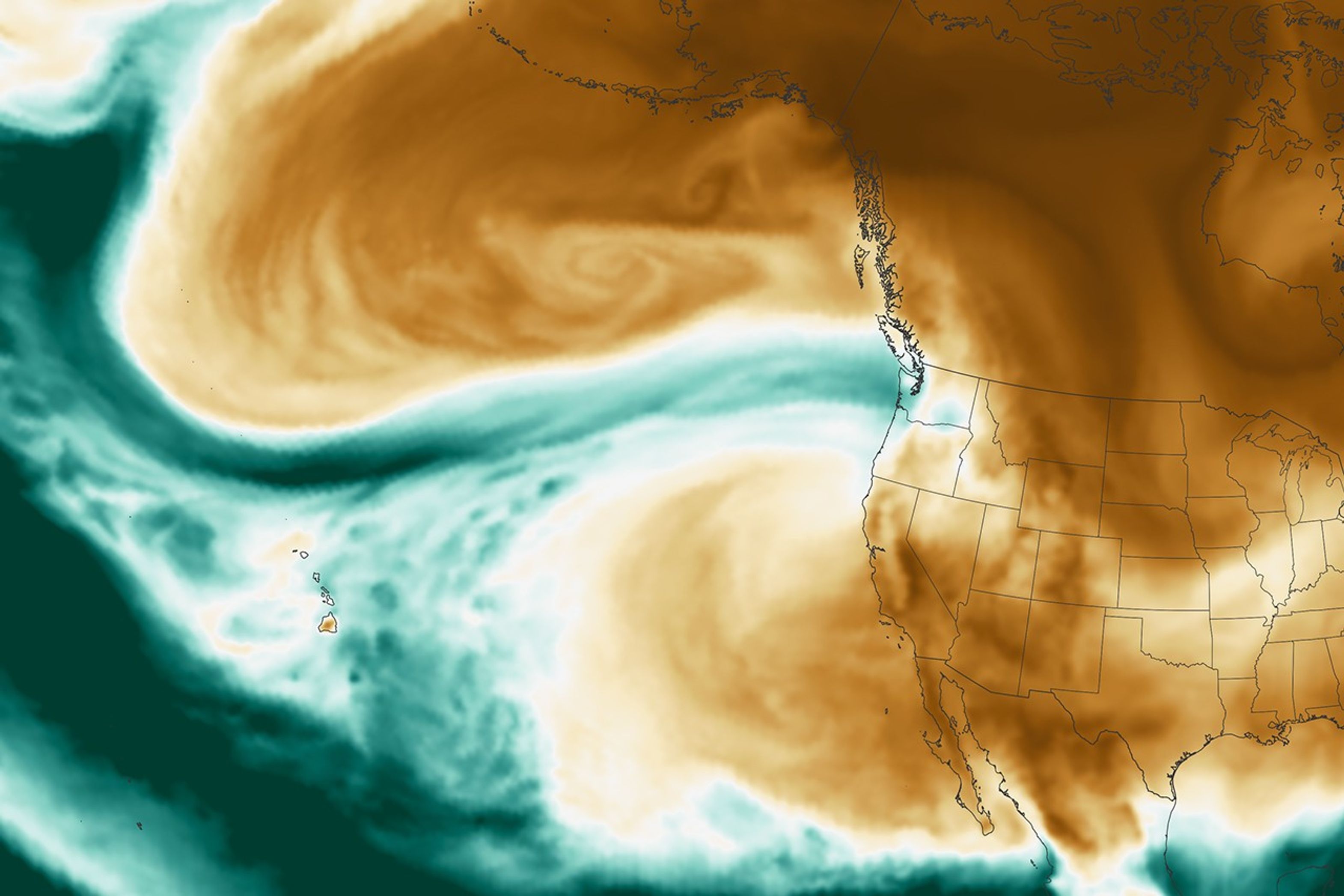
    This map shows the total precipitable water vapor in the atmosphere at 11:30 p.m. Pacific Time on December 10. It is derived from NASA’s GEOS (Goddard Earth Observing System) and uses satellite data and models of physical processes to approximate what is happening in the atmosphere.

    Precipitable water vapor represents the amount of water contained in a column of air, assuming all the water vapor condensed into liquid. The map’s green areas indicate the highest amounts of moisture. Note that not all precipitable water vapor falls as rain; at least some remains in the atmosphere. Nor is it a cap on how much rain can fall, since rainfall can increase as more moisture flows into a column of air. Still, it serves as a useful indicator of areas where excessive rainfall is likely.

    According to the National Weather Service, preliminary ground-based measurements showed that several locations in western Washington received more than 10 inches (250 millimeters) of rain over a 72-hour period ending on the morning of December 11. Seattle-Tacoma International Airport set a daily rainfall record on December 10, with 1.6 inches (40 millimeters). 

    River flooding was ongoing on December 11, with the Skagit River and Snohomish River seeing record or near-record flood levels that day. Floodwater and mudslides have closed numerous roadways, including the eastbound lanes of I-90 out of western Washington.

    NASA’s Disasters Response Coordination System has been activated to support the ongoing response efforts by the Washington State Emergency Operations Center. The team will be posting maps and data products on its open-access mapping portal as new information becomes available.

    NASA Earth Observatory images by Lauren Dauphin, using GEOS data from the Global Modeling and Assimilation Office at NASA GSFC. Story by Kathryn Hansen.

    References & Resources

    You may also be interested in:

    Stay up-to-date with the latest content from NASA as we explore the universe and discover more about our home planet.

    Iraq Reservoirs Plunge to Low Levels

    5 min read

    A multi-year drought has put extra strain on farmers and water managers in the Middle Eastern country.

    Article

    Drought Parches the Yakima River Basin

    4 min read

    Farmers are facing the burden of dwindling reservoir water in this productive agricultural region of Washington state.

    Article

    Reservoirs Dwindle in South Texas

    3 min read

    Drought in the Nueces River basin is reducing reservoir levels, leaving residents and industry in the Corpus Christi area facing…

    Article
  • Aviones: tecnología, seguridad y el futuro de la aviación

    ¿Te has preguntado cómo los aviones han transformado el mundo en menos de un siglo? Desde vuelos transcontinentales hasta drones de reparto, las aeronaves siguen redefiniendo la movilidad humana y la logística global. Este artículo explora la tecnología, la seguridad y las tendencias que están modelando el futuro de la aviación con ejemplos prácticos y consejos útiles.

    ¿Cómo funcionan los aviones hoy en día?

    Los aviones modernos combinan aerodinámica, propulsión y sistemas digitales avanzados. Los motores a reacción generan empuje mientras las alas proporcionan sustentación gracias al diseño del perfil aerodinámico.

    Además, la aviónica —los sistemas electrónicos a bordo— controla la navegación, las comunicaciones y la gestión del vuelo. Estos avances hacen posible vuelos más eficientes y seguros en rutas cada vez más congestionadas.

    Motores y eficiencia de combustible

    Los nuevos motores turbofan reducen el consumo de combustible y las emisiones. Fabricantes como Rolls-Royce, GE y Pratt & Whitney invierten en materiales compuestos y turbinas de última generación.

    Por otro lado, las mejoras en aerodinámica y en la gestión de combustible permiten trayectos más largos con menor impacto ambiental. Esto es clave para aerolíneas que buscan reducir costes y emisiones.

    Sistemas de navegación y aviónica

    La aviónica integra GPS, radar meteorológico y pilotos automáticos avanzados. Estas herramientas disminuyen la carga de trabajo de la tripulación y aumentan la precisión en rutas complejas.

    Además, la conectividad en tiempo real facilita la coordinación con controladores aéreos y operaciones en tierra, mejorando la puntualidad y la seguridad.

    Seguridad aérea: protocolos y mejoras tecnológicas

    La seguridad sigue siendo la prioridad máxima en aviación comercial. Los procedimientos, el mantenimiento predictivo y la formación continua de las tripulaciones son pilares esenciales.

    Asimismo, las inspecciones basadas en datos permiten detectar fallos antes de que ocurran, reduciendo riesgos y costes operativos.

    Mantenimiento predictivo y análisis de datos

    Los aviones actuales generan miles de parámetros por vuelo. Estos datos se analizan con inteligencia artificial para anticipar necesidades de mantenimiento.

    Por consiguiente, las aerolíneas pueden programar revisiones más precisas y evitar cancelaciones inesperadas.

    Tendencias emergentes en la aviación y aviones del futuro

    La sostenibilidad, la electrificación y la automatización son tendencias que impulsan cambios profundos. Proyectos de aviones eléctricos y de hidrógeno ya están en fase de prueba.

    Además, la integración de drones y taxis aéreos urbanos promete transformar la movilidad en las ciudades durante la próxima década.

    Aviones eléctricos e híbridos

    Las aeronaves eléctricas ofrecen vuelos más silenciosos y menos contaminantes en rutas cortas. Empresas emergentes y grandes fabricantes compiten por demostrar viabilidad comercial.

    Sin embargo, los desafíos incluyen la densidad energética de las baterías y la infraestructura de recarga en aeropuertos.

    Taxis aéreos y movilidad urbana

    Los vehículos eléctricos de despegue y aterrizaje vertical (eVTOL) podrían resolver problemas de congestión urbana. Ciudades y reguladores ya estudian corredores aéreos seguros para estos servicios.

    En consecuencia, la colaboración entre gobiernos y empresas privadas será clave para introducir estas soluciones sin comprometer la seguridad.

    Cómo elegir vuelos y aviones para tus necesidades

    Si viajas con frecuencia, considera la eficiencia de la aerolínea, la flota y la reputación en seguridad. Los aviones más nuevos suelen ofrecer mejor conectividad y menor consumo de combustible.

    Además, compara rutas directas frente a escalas para optimizar tiempo y reduce tu huella de carbono eligiendo vuelos con menor consumo por pasajero.

    Consejos prácticos para viajeros

    Reserva con antelación para acceder a mejores tarifas y asientos. También revisa las políticas de equipaje y las opciones de compensación de emisiones.

    Por último, mantente informado sobre las novedades en aviación para aprovechar mejoras en confort y seguridad.

    Los aviones no solo conectan destinos, también conectan posibilidades tecnológicas y económicas. Siguiendo tendencias y adoptando prácticas responsables, pasajeros y operadores pueden beneficiarse de vuelos más eficientes y sostenibles. Actúa hoy comparando opciones de viaje, apoyando iniciativas limpias y eligiendo aerolíneas comprometidas con la innovación; así contribuirás a un futuro de la aviación más seguro y respetuoso con el planeta.